
 中文(繁體)
 中文(簡體)
 English



A-Level Biology: Course Overview, Key Topics, and Career Pathways
TUTORZONE SUBJECT GUIDE · A-LEVELS
A-level Biology is a core science subject within the UK secondary education system, exploring the structure, function, development, and inheritance of living organisms while fostering critical scientific thinking and strong practical skills. It is ideal for students interested in life sciences who plan to pursue degrees in medicine, biomedical sciences, environmental science, biotechnology, or related fields.
Direct Answer:What is A-level Biology?
A-level Biology is a core UK science subject exploring living organisms’ structure, function, development, and inheritance while building scientifi。
What Is Covered in A-Level Biology?
The A-level Biology syllabus typically includes several major areas of study that form the foundation of modern biology:
Cells and Biological Molecules
Students explore the fundamental unit of life — the cell — and learn about its structure and function. Key components such as the cell membrane, nucleus, mitochondria, and other organelles are examined in detail. This section also delves into biological macromolecules including proteins, carbohydrates, lipids, and nucleic acids, as well as their roles in metabolic processes.
Bioenergetics and Metabolism
This unit focuses on how organisms generate and use energy. Students study aerobic and anaerobic respiration, learning about biochemical pathways such as glycolysis, the Krebs cycle, and the electron transport chain. In addition, photosynthesis is explored to understand how plants convert light energy into chemical energy.
Genetics and Heredity
A key component of A-level Biology is understanding how genetic information is inherited and expressed. Topics include Mendelian inheritance, genotypes vs. phenotypes, genetic mutations, chromosomal inheritance, sex-linked traits, and genetic recombination. This section highlights how genetic variation drives biological diversity.
Biodiversity and Evolution
Students examine the importance of biological diversity in maintaining stable ecosystems. This unit introduces evolutionary theory, natural selection, species adaptation, and ecological interactions. Learners also gain insight into the classification of organisms and genetic diversity within and between species.
Physiology
This area covers the body systems of plants and animals, including the circulatory, respiratory, digestive, nervous, and endocrine systems. Students learn how these systems interact to maintain homeostasis — the stable internal environment vital for survival.
Practical Skills in Biology
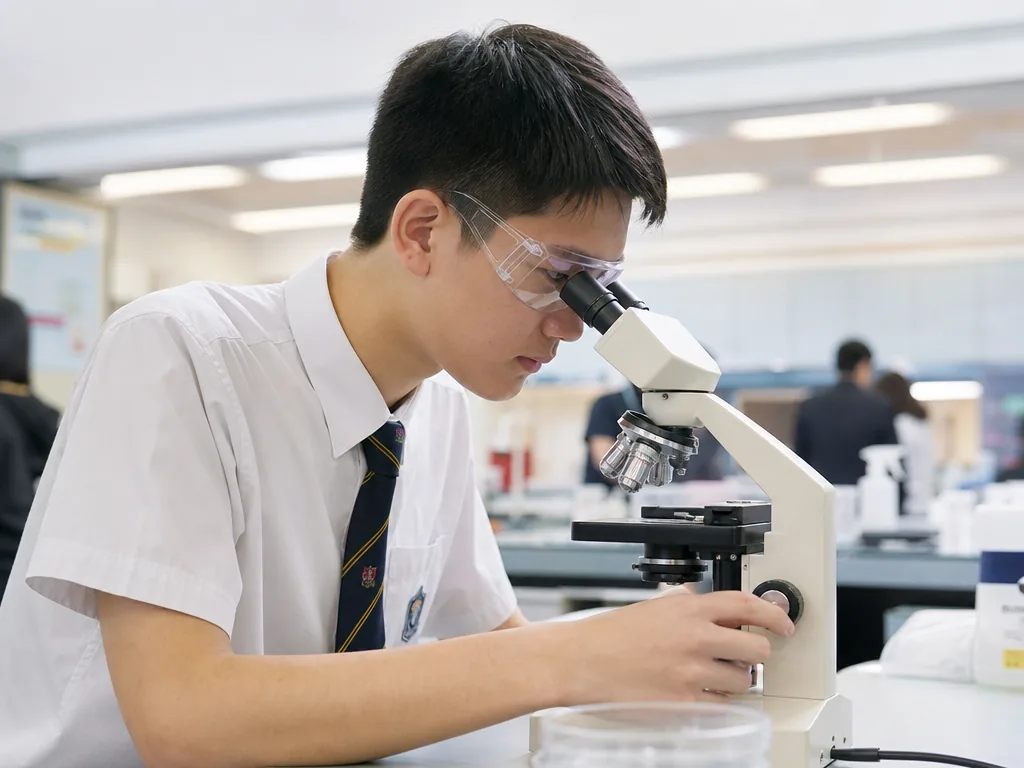
A-level Biology places strong emphasis on laboratory and investigative skills. Students conduct hands-on experiments to reinforce theoretical knowledge. They learn to use microscopes, analyze enzyme activity, carry out genetic tests, and more. Practical work also includes experimental design, data collection, hypothesis testing, and scientific evaluation.
How Is A-Level Biology Assessed?
A-level Biology assessment typically includes the following components:
Written Examinations
These are the primary form of assessment and usually consist of multiple papers that include multiple-choice questions, short-answer questions, and long-form essays. The exams test students’ ability to apply biological concepts, analyze scenarios, and explain processes in detail.
Practical Assessment
Students are required to complete a series of practical experiments, often accompanied by written reports. These are used to evaluate skills such as experimental setup, data analysis, and scientific reasoning.
Synoptic Assessment
Synoptic questions appear in exams to test students’ ability to synthesize knowledge from different areas of the syllabus. These tasks challenge students to apply concepts in unfamiliar contexts — a key skill in scientific research.

Learning Objectives of A-Level Biology
By the end of the A-level Biology course, students are expected to:
Understand biological principles
Gain in-depth knowledge of living systems, their structures, functions, and evolution.
Develop scientific skills
Learn to conduct experiments, analyze data, and use scientific methods to solve problems.
Think critically and apply knowledge
Use biological understanding to interpret data, evaluate evidence, and propose solutions to scientific questions.
Future Pathways and Career Opportunities
A-level Biology is a gateway to numerous university courses and career paths in science and healthcare. Students often go on to study:
- Medicine and Dentistry
- Biomedical Sciences
- Pharmacology
- Environmental Science
- Genetics and Molecular Biology
- Veterinary Science
- Agricultural Science
Professionals with a background in biology contribute to critical areas such as medical research, drug development, public health, climate change research, and conservation biology.
Final Thoughts
A-level Biology is more than just a subject — it’s a comprehensive course that nurtures curiosity about life and the natural world. Whether you’re aiming for a career in science or simply want to understand how living organisms function, A-level Biology offers the skills, knowledge, and practical experience to build a solid academic and professional future.
Frequently Asked Questions (FAQ)
Q: Is A-Level Biology essential for medicine?
Yes — most UK medical and dental schools require or strongly prefer A-level Biology (usually alongside Chemistry) for entry into medicine and dentistry programmes.
Q: What are the hardest topics in A-Level Biology?
Many students find genetics, respiration, and photosynthesis the most challenging, because they demand both memorising detailed biochemical pathways and applying them to unfamiliar scenarios.
Q: Can I take A-Level Biology without studying it at IGCSE/GCSE?
It is possible, but a solid foundation in IGCSE/GCSE Biology (and some Chemistry) is strongly recommended, since the course moves quickly through cell biology and biochemistry.
Q: How much practical work is involved?
Practical and investigative skills are a core part of the syllabus — students complete a series of laboratory experiments with written reports, building experimental design, data analysis, and scientific reasoning.
Further Resources & Next Steps
- Official Resources — Cambridge International AS & A Level Biology (9700) syllabus and past papers at cambridgeinternational.org.
- Further Reading — the Cambridge International AS and A Level Biology Coursebook (Mary Jones, Cambridge University Press).
- Parent Tips — encourage regular revision of key biological processes with clear diagrams and past-paper practice, and support hands-on experiments to build exam confidence.
Note: The information above is for reference only. Please consult professional education institutions for details.
This article was initially drafted and organised with AI. Editor / Professor Chan Kwok-wai; Managing Editor / Kong Yee-leung
Act Now: Find a Tutor / Register as a Tutor
For parents & students: looking for a home or online tutor for this subject? Click the button below to post a free tuition case (subject, level and preferred time) — TutorZone will match you with suitable tutors:
For tutors: do you teach this subject? Click the button below to register for free and receive more suitable cases — you pay only when a match is made: