
 中文(繁體)
 中文(簡體)
 English



Accordion: A Complete Guide to Its Origins, History and Greatest Players
TUTORZONE SUBJECT GUIDE · KEYBOARD INSTRUMENTS
From the three-thousand-year-old Chinese sheng to the tango halls of Buenos Aires, the accordion is one of the most versatile free-reed instruments in the world. This guide traces its origins and history, then introduces the greatest accordionists whose recordings every aspiring player should hear.
Direct Answer:What is the accordion and where does it come from?
The accordion is a versatile free-reed instrument tracing from the three-thousand-year-old Chinese sheng to the tango halls of Buenos Aires.
What Is the Accordion?
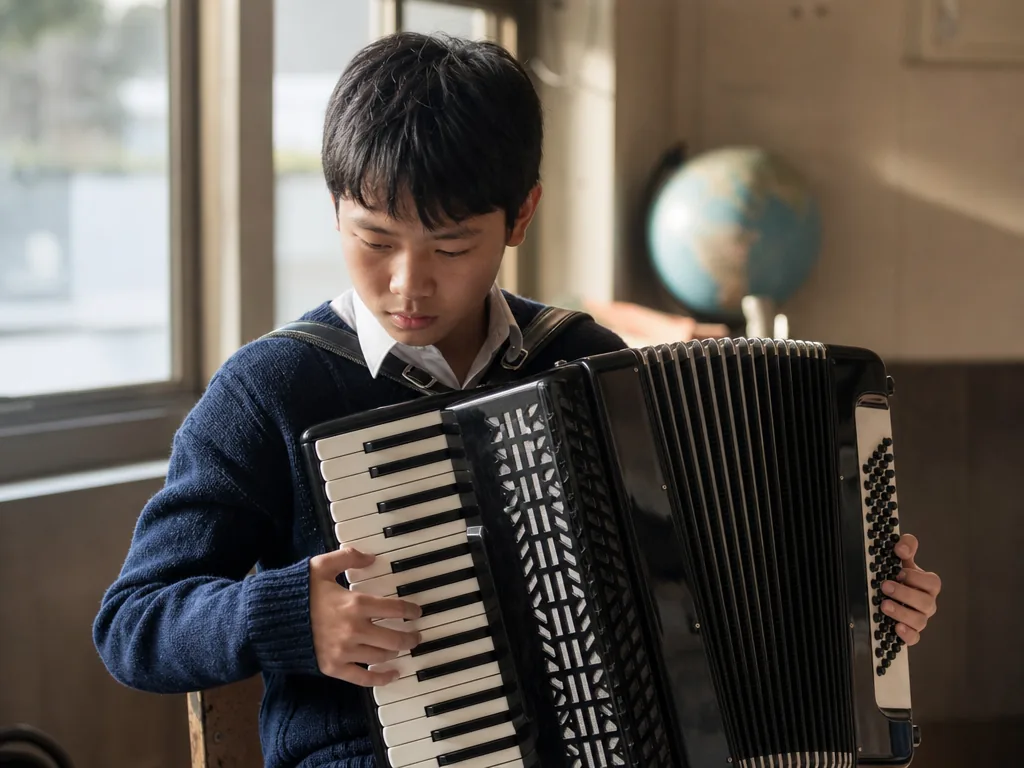
The accordion is a free-reed aerophone in which the player pushes and pulls the bellows with both hands to produce airflow, and presses keys or buttons to release notes.
Capable of both melody and harmony, it is an instrument suited to solo and accompaniment alike.
Origins and Evolution: A Journey Through Music and Folk Culture
Origins in China?
The accordion’s ancestors can be traced back to the ancient Chinese instrument the “sheng”, which is more than three thousand years old and produces sound through reeds in a way very similar to the modern accordion.
The Birth of the Modern Accordion (Early 19th Century)
- 1822: the German Christian Friedrich Ludwig Buschmann invented the “Handäoline” (hand harmonica), regarded as the prototype of the accordion.
- 1829: the Austrian Cyrill Demian registered the “accordion” patent in Vienna, combining automatic chord accompaniment with button operation for the first time, which became the basis of the modern accordion.
Development Across the Globe
- Across Europe: Italy, France and Germany manufactured and exported accordions in large numbers.
- It is widely used in folk music, tango, jazz, pop and classical music arrangements.
Outstanding Accordionists and Recommended Representative Works
Although the accordion has folk origins, many performers have taken it to the artistic and international stage, covering classical, tango, jazz and world music.
Astor Piazzolla (1921–1992)
Instrument: bandoneón.
Style: a revolutionary of the tango who fused classical and jazz elements to create the “Nuevo Tango”.
Classic works:
- Libertango
- Las Cuatro Estaciones Porteñas (The Four Seasons of Buenos Aires)
- Adiós Nonino
Richard Galliano (b. 1950)
Style: a blend of French chanson, jazz and classical music, and one of the most representative accordionists of our time.
Collaborations: has worked across genres with European chamber orchestras and jazz ensembles.
Representative works:
- Tango pour Claude
- Opale Concerto
- several tribute albums to Piazzolla (such as Piazzolla Forever)
Yuri Shishkin
Style: a Russian classical accordionist renowned for his astonishing technique, performing arrangements of works by Liszt and Rachmaninoff.
Representative works:
- Liszt’s Hungarian Rhapsody No. 2 arranged for accordion
- collections of Russian dance arrangements
James Crabb
Speciality: focuses on the intersection of the accordion and classical music, and is dedicated to the creation and arrangement of new music.
Collaborating composers: Magnus Lindberg, Brett Dean and others.
Ksenija Sidorova
Speciality: a new-generation Latvian accordionist who combines fashion and classical performance, active on the international stage.
Representative works:
- Carmen (accordion arrangement)
- numerous classical arrangements (such as Liszt and Saint-Saëns)
Frequently Asked Questions (FAQ)
Q: Is the accordion difficult for a beginner to learn?
The accordion looks complex, but its layout is logical: the right hand plays the melody on keys or buttons while the left hand supplies chords and bass. With regular practice, many learners can play simple folk tunes within a few months, and the instrument rewards relaxed posture and steady bellows control.
Q: What is the difference between a button accordion and a piano accordion?
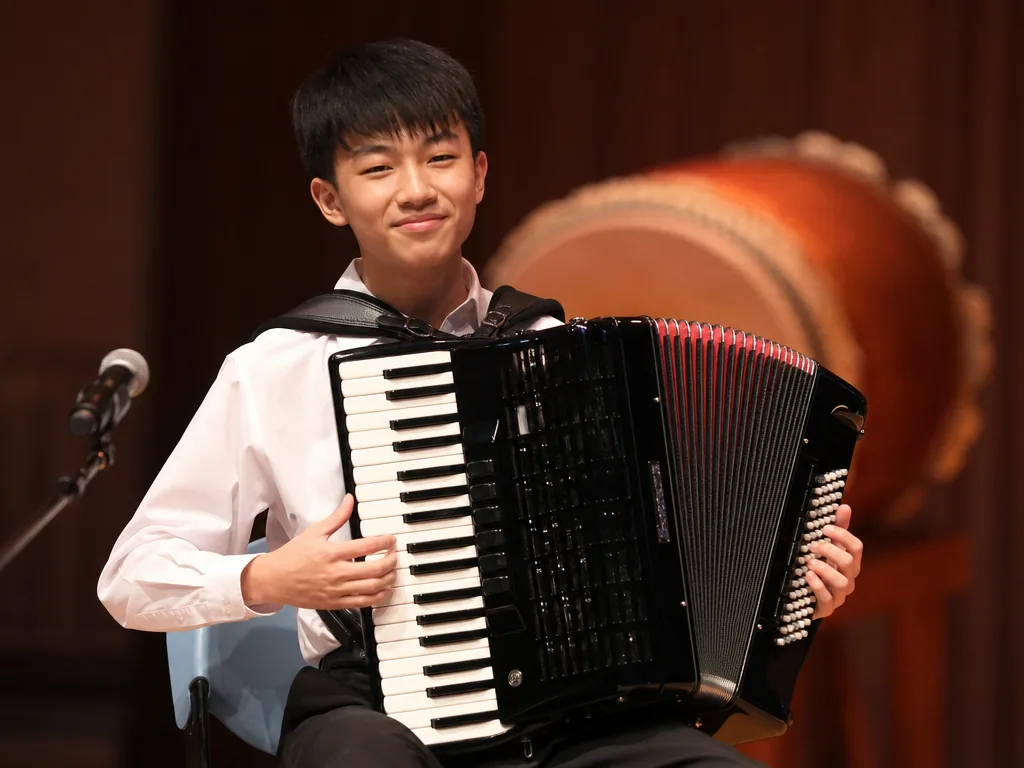
A piano accordion uses piano-style keys for the melody, while a button accordion uses round buttons arranged in rows. Both produce the same free-reed sound and share the same left-hand chord system, so the choice is mostly a matter of playing style and the musical tradition you wish to follow.
Q: Which accordion is best for a beginner?
Most teachers recommend starting on a smaller, lighter model — often a 24- or 48-bass piano accordion — so that a young student can hold it comfortably. It is wise to rent or borrow first and choose a size that fits the player’s body before buying.
Q: What kinds of music can the accordion play?
Far more than folk tunes: the accordion appears in tango, French chanson, jazz, pop and classical arrangements — from Piazzolla’s bandoneón works to Liszt’s Hungarian Rhapsody No. 2 and Saint-Saëns — so a student can explore many genres on a single instrument.
Further Resources & Next Steps
- Official Resources — The Accordionists and Teachers Guild (ATG) and the Confédération Internationale des Accordéonistes (CIA) publish repertoire guides and competition listings for players of every level.
- Further Reading — Begin with the representative works in this guide: Piazzolla’s Libertango and Adiós Nonino, Galliano’s Tango pour Claude, and Liszt’s Hungarian Rhapsody No. 2 arranged for accordion.
- Parent Tips — Choose a lightweight instrument that fits your child’s body and keep the straps properly adjusted, so relaxed posture and bellows control become a natural habit from the very first lesson.
Note: The information above is for reference only. Please consult professional education institutions for details.
This article was initially drafted and organised with AI. Editor / Professor Chan Kwok-wai; Managing Editor / Kong Yee-leung
Act Now: Find a Tutor / Register as a Tutor
For parents & students: looking for a home or online tutor for this subject? Click the button below to post a free tuition case (subject, level and preferred time) — TutorZone will match you with suitable tutors:
For tutors: do you teach this subject? Click the button below to register for free and receive more suitable cases — you pay only when a match is made: