
 中文(繁體)
 中文(簡體)
 English



Acoustic Guitar: A Complete Guide to Its Origins, History and Greatest Players
TUTORZONE SUBJECT GUIDE · STRING INSTRUMENTS
From its ancient stringed ancestors to the steel-string era, the acoustic guitar has shaped folk, classical and rock alike. This guide traces its origins and history, and profiles the masters — and classic works — that defined its sound.
Direct Answer:What is the acoustic guitar?
The acoustic guitar is a natural, portable string instrument that evolved from ancient stringed ancestors into the steel-string era, shaping folk, 。

The Origins and Development of the Acoustic Guitar
The Birth of the Acoustic Guitar
The acoustic guitar is a common stringed instrument, widely used in a variety of musical styles — from folk and classical to rock — thanks to its natural tone and portability. Its development is intertwined with cultures around the world, evolving over several centuries from the ancient Spanish guitar and Middle Eastern stringed instruments to the modern acoustic guitar.
From the ancient Spanish guitar and Middle Eastern stringed instruments to the modern steel-string era, the acoustic guitar’s development is intertwined with cultures around the world.
The Early Origins of the Acoustic Guitar
- Around 3000 BC — The guitar’s ancestors can be traced back to stringed instruments such as the ancient Middle Eastern oud and the Spanish tarragon, whose structure and playing methods directly influenced the development of the modern guitar.
- 15th century — The Spanish vihuela and guitar gradually took shape and became popular Renaissance instruments. These instruments share a similar structure to the modern guitar but were smaller with a narrower range.
16th–19th Centuries: The Evolution of the Guitar
- 16th century — Spanish craftsmen began making classical guitars, using wood for the soundbox, which markedly improved volume and tone quality.
- 19th century — Improvements in guitar construction, such as changes in body shape and an increase in the number of strings (from four to six), further advanced the acoustic guitar. Antonio de Torres was a key figure whose designs are regarded as the foundation of the modern classical guitar.
20th Century: The Birth of the Modern Acoustic Guitar
- Early 20th century — With the birth of the steel-string guitar, the acoustic guitar began to be widely used in pop, jazz, folk and other styles. This period also saw the rise of guitar makers such as Martin and Gibson.
- 1950s — With the rise of rock music, the guitar gradually became the signature instrument of popular music.
World-Class Masters and Their Representative Works
The acoustic guitar is not only a tool of musical expression but can also convey deep emotion and technique. Here are several musicians who have had a profound influence in the field of the acoustic guitar, along with their representative works:
1. Andrés Segovia (1893–1987)Spanish
Contributions — Regarded as one of the founders of the modern classical guitar. Segovia’s playing style and interpretation of the acoustic guitar earned the instrument a status in classical music equal to that of the piano and stringed instruments.
Representative works:
- Córdoba — a guitar piece by Spanish composer Isaac Albéniz that Segovia turned into a classic.
- Segovia’s arrangements of Bach’s Cello Suites — his interpretations brought Bach’s works into the guitar realm and became guitar classics.
2. Jimi Hendrix (1942–1970)American
Contributions — Considered one of the greatest guitarists in rock history. Although Hendrix is known primarily for the electric guitar, his musical style and innovations also had a profound influence on the acoustic guitar.
Representative works:
- The Wind Cries Mary — showcases Hendrix’s delicate emotion on the acoustic guitar; although he was famous for the electric guitar, this piece also demonstrates his ultimate pursuit of guitar tone.
- Little Wing — one of his most representative works, blending virtuoso acoustic and electric guitar techniques.
3. Eric Clapton (b. 1945)British
Contributions — A guitar legend of blues and rock, Clapton’s technique and emotional expression have influenced countless guitarists. Although famous for the electric guitar, his love of and interpretations on the acoustic guitar are equally beloved.
Representative works:
- Tears in Heaven — with a deeply emotional and healing guitar melody, one of Clapton’s classics.
- Layla — blends rock, blues and acoustic guitar technique and is a classic in music history.
4. Tommy Emmanuel (b. 1955)Australian
Contributions — Hailed as one of the greatest modern fingerstyle acoustic guitar masters. Tommy Emmanuel’s style blends fingerstyle guitar, blues and jazz, and is highly technical and emotionally expressive.
Representative works:
- Angelina — showcases his fingerstyle technique in a fresh, emotional musical style.
- Classical Gas — one of Tommy’s most famous covers, fusing classical guitar with modern fingerstyle technique and great musicality.
5. John Williams (b. 1932)British
Contributions — John Williams is one of the greatest classical guitarists of the present day, with a deeply expressive style and superb technique.
Representative works:
- Cavatina — originally from the soundtrack of the film The Deer Hunter; Williams’s performance made it a classic of acoustic guitar playing.
- Arrangements of Bach’s works — his performances of Bach arrangements brought classical music into the guitar realm.
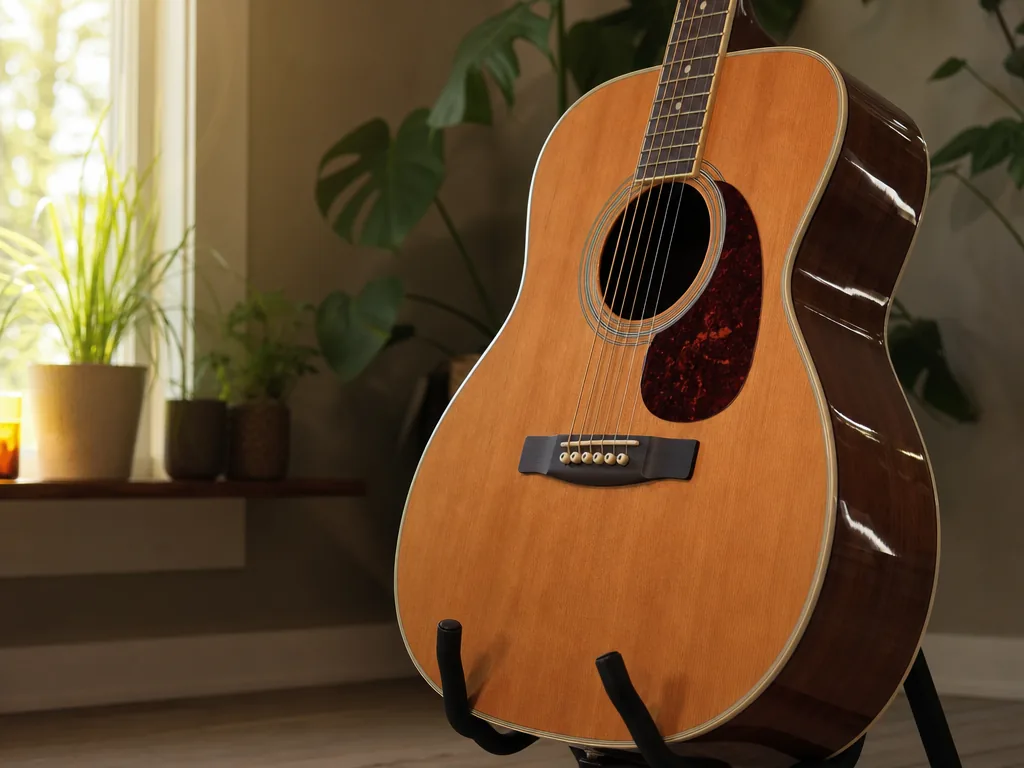
Classic Acoustic Guitar Works Recommended
| Composer/Musician | Work | Style | Characteristics |
|---|---|---|---|
| Isaac Albéniz | Córdoba | Spanish classical guitar | A classic Spanish guitar piece, Segovia’s celebrated interpretation |
| Jimi Hendrix | The Wind Cries Mary | Rock guitar | Hendrix’s tender acoustic guitar playing |
| Eric Clapton | Tears in Heaven | Blues/rock | A deeply emotional and healing guitar melody |
| Tommy Emmanuel | Angelina | Fingerstyle guitar | An emotionally rich fingerstyle guitar piece |
| John Williams | Cavatina | Classical guitar | A famous film theme, an intensely expressive guitar performance |
Frequently Asked Questions (FAQ)
Q: What is the difference between a classical guitar and an acoustic guitar?
Classical guitars use nylon strings and a smaller, warmer body suited to classical and fingerstyle repertoire, while “acoustic” usually refers to steel-string guitars with a brighter, louder tone used in folk, pop and rock.
Q: When did the acoustic guitar take its modern form?
Largely during the 19th century, when builders such as Antonio de Torres refined the body shape and settled on six strings, establishing the foundation of the modern classical guitar.
Q: Who should beginners look to for inspiration?
Start with Segovia for classical foundations, Tommy Emmanuel for fingerstyle, and Clapton’s acoustic work such as “Tears in Heaven” for a melodic, accessible entry point.
Q: Are the works in this guide suitable for learners?
Many, such as “Cavatina” and “Angelina”, are staples of the study repertoire. Beginners may want a teacher to help build technique before tackling them.
Further Resources & Next Steps
- Official Resources——Graded acoustic and classical guitar syllabuses from examination boards such as ABRSM and Trinity College London.
- Further Reading——Biographies and recorded performances of Segovia, Clapton and Tommy Emmanuel, plus Isaac Albéniz’s Córdoba.
- Parent Tips——Encourage short, regular practice focused on clean chord changes and fingerpicking basics rather than long, tiring sessions.
Note: The information above is for reference only. Please consult professional education institutions for details.
This article was initially drafted and organised with AI. Editor / Professor Chan Kwok-wai; Managing Editor / Kong Yee-leung
Act Now: Find a Tutor / Register as a Tutor
For parents & students: looking for a home or online tutor for this subject? Click the button below to post a free tuition case (subject, level and preferred time) — TutorZone will match you with suitable tutors:
For tutors: do you teach this subject? Click the button below to register for free and receive more suitable cases — you pay only when a match is made: