
 中文(繁體)
 中文(簡體)
 English



Basic Music Notation: A Complete Guide to Reading Sheet Music
TUTORZONE SUBJECT GUIDE · MUSIC THEORY
Sheet music can look like a foreign language at first glance, but every symbol on the page has a clear job to do. This guide walks you through the building blocks of music notation — clefs, notes, rests, rhythm, time and key signatures, dynamics and articulations — so you can read a score with confidence.
Direct Answer:How do I read sheet music?
Reading sheet music means learning clefs, notes, rests, rhythm, time and key signatures, dynamics, and articulations.
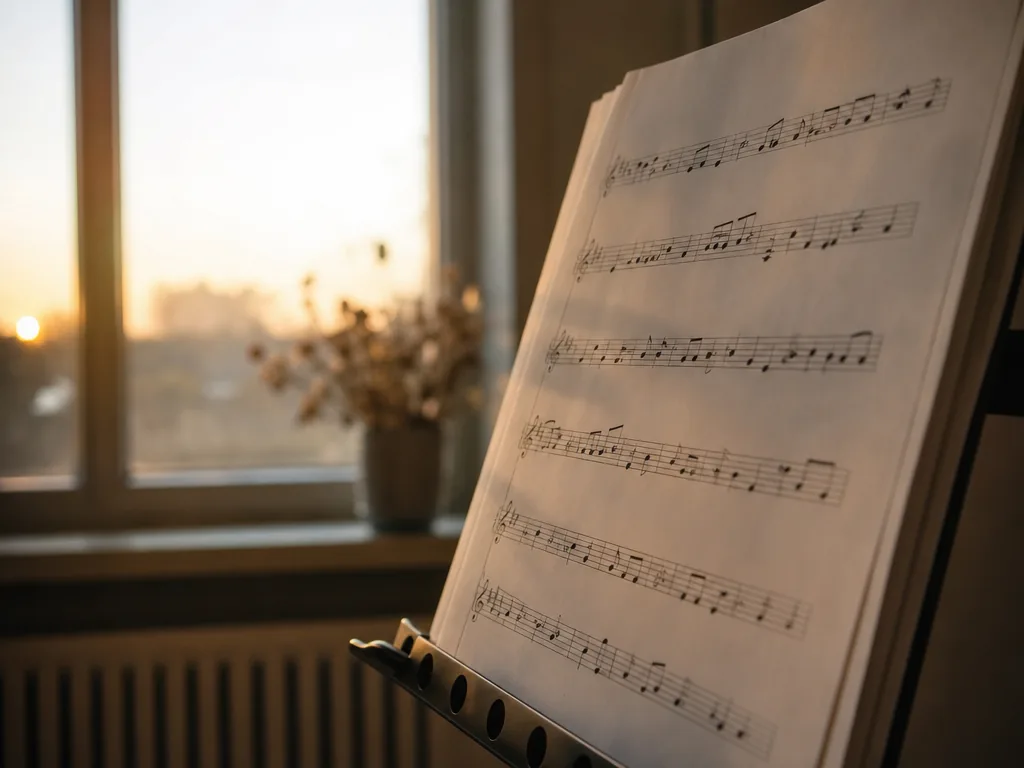
What Is Basic Music Notation?
In music theory, notation is the written record of musical expression. It uses a series of specific symbols and markings to indicate musical elements such as pitch, rhythm, volume and expression. Basic notation is the “blueprint” of music, helping performers to make the composer’s ideas and emotions concrete and to express them.
Notation can not only record a melody but also guide how to play various instruments; it is especially crucial in complex musical works.
Basic notation is the “blueprint” of music: it turns the composer’s ideas and emotions into a plan a performer can follow.
The Main Elements of Basic Notation
Basic notation is made up of several important elements that give performers all the information they need to play accurately. These elements include clefs, notes, rhythm, time signatures and key signatures. Here is a detailed explanation of each:
Clef
The clef is one of the most basic elements of notation and indicates the pitch range to which the notes correspond. Common clefs include:
- Treble Clef —— the most common clef, usually used to record notes in the higher register, such as the right-hand part of the violin, flute or piano.
- Bass Clef —— usually used to record notes in the lower register, such as the cello, double bass or the piano’s left-hand part.
- Alto Clef —— used for the higher middle register, commonly found in viola music.
- Tenor Clef —— used for the higher bass register, commonly found in tenor voice parts or certain instruments (such as the bassoon).
Notes
Notes are the most important part of notation; they represent pitch and duration. Different kinds of notes have different shapes, which determine their length. Common notes include:
- Whole Note —— usually lasts four beats.
- Half Note —— usually lasts two beats.
- Quarter Note —— usually lasts one beat.
- Eighth Note —— usually lasts half a beat.
- Sixteenth Note —— usually lasts a quarter of a beat.
The duration of a note determines its rhythm in the music. The length of notes is related to the time signature and helps the performer determine how long each note should last.
Rests
Rests are the counterpart of notes and represent moments of silence in the music. Rests are similar in shape to notes and are distinguished by the length of silence they represent. Common rests include:
- Whole Rest —— represents a whole bar of silence.
- Half Rest —— represents half a bar of silence.
- Quarter Rest —— represents one beat of silence.
- Eighth Rest —— represents half a beat of silence.
Time Signature
The time signature appears at the beginning of the score and indicates the number of beats in each bar and the basic note value of each beat. It is made up of two numbers:
- Upper number —— indicates how many beats there are in each bar.
- Lower number —— indicates the basic note value of each beat. For example, 4/4 time means four beats per bar, with each beat a quarter note; 3/4 time means three beats per bar, with each beat a quarter note.
The time signature establishes the rhythmic structure of a piece and plays a vital role in its overall sense of rhythm.
Key Signature
The key signature appears at the beginning of the score and indicates the key of the whole piece. It tells the performer which notes should be sharpened or flattened throughout the piece. For example, the key signature of C major has no sharps or flats, while that of G major has one sharp, F#. The key signature helps performers adjust notes automatically as they play, avoiding the need to mark sharps or flats on every occasion.
Dynamics
Dynamics indicate the volume of the music. Common dynamic markings include:
- f (forte) —— loud.
- p (piano) —— soft.
- mf (mezzo forte) —— moderately loud.
- mp (mezzo piano) —— moderately soft.
- crescendo —— gradually getting louder.
- decrescendo —— gradually getting softer.
These markings guide the performer in adjusting the volume and expressing the music’s emotion according to the composer’s intentions.
Articulations
Articulation markings indicate how notes should be played:
- staccato —— short, crisp notes, usually with a detached effect.
- legato —— smooth, connected notes, with no obvious break between them.
- accent —— emphasises a particular note so that it stands out.
- tenuto —— the note is held for its full duration, slightly longer.
These articulation markings help the performer understand the style and emotion of the music.
How to Read Basic Notation
The basic steps to reading notation include:
- Identify the clef —— use the clef to understand the pitch represented by each line and space.
- Understand the time signature —— use the time signature to determine the number of beats in each bar and the note length of each beat.
- Read the notes —— use the shape and position of each note to understand its pitch and duration.
- Interpret the key signature —— use the key signature to understand which notes need to be sharpened or flattened.
- Follow the dynamics —— adjust the volume according to the dynamic markings to express the music’s emotion.
- Apply the articulations —— adjust how each note is played according to the articulation markings to convey the music’s style.

Types of Notation
In music, notation takes different forms depending on the instrument, performance setting and musical genre. Common forms of notation include:
- Piano score —— uses the treble and bass clefs to record the right-hand and left-hand parts respectively.
- Ensemble score —— records the parts of all the instruments in an orchestra or ensemble.
- Numbered notation —— a simplified form of notation that usually records only the melody and chords, suitable for simple performances.
- Guitar tablature —— notation designed specifically for guitar, usually using the six strings of the guitar to indicate pitch.
Summary
Basic notation is a core component of music theory. Through a series of symbols and markings, it helps performers bring music to life. Understanding the basic structure and elements of notation helps music learners better understand musical form and performance technique.
Whether a professional musician or an amateur enthusiast, mastering the reading and understanding of notation is the foundation of performing music.
Frequently Asked Questions (FAQ)
Q: What is the difference between the treble clef and the bass clef?
The treble clef (G clef) is used for higher-register notes — for example, the right-hand part of the piano, or the violin and flute. The bass clef (F clef) is used for lower-register notes, such as the cello, double bass or the piano’s left-hand part.
Q: How long should each note be held?
It depends on the note’s shape and the time signature. A whole note typically lasts four beats, a half note two beats, a quarter note one beat, an eighth note half a beat, and a sixteenth note a quarter of a beat. The time signature tells you what each beat is worth in the bar.
Q: Why are key signatures important?
The key signature tells you which notes should be sharpened or flattened throughout the piece. For example, C major has no sharps or flats, while G major has one sharp (F#). Reading the key signature lets you adjust notes automatically instead of marking sharps or flats every time they appear.
Q: What is the difference between dynamics and articulations?
Dynamics indicate how loud or soft to play (for example, f for forte/loud and p for piano/soft), while articulations indicate how individual notes should be played — staccato, legato, accent or tenuto. Together they help the performer express the music’s emotion and style.
Further Resources & Next Steps
- Official Resources —— The Associated Board of the Royal Schools of Music (ABRSM) publishes graded music theory syllabuses and past papers that cover notation in detail.
- Further Reading —— “The AB Guide to Music Theory” by Eric Taylor is a widely used introduction to notation and music theory for beginners.
- Parent Tips —— Encourage short, daily sight-reading practice; learning to name notes on the staff fluently is best built in small, regular sessions rather than long cramming.
Note: The information above is for reference only. Please consult professional education institutions for details.
This article was initially drafted and organised with AI. Editor / Professor Chan Kwok-wai; Managing Editor / Kong Yee-leung
Act Now: Find a Tutor / Register as a Tutor
For parents & students: looking for a home or online tutor for this subject? Click the button below to post a free tuition case (subject, level and preferred time) — TutorZone will match you with suitable tutors:
For tutors: do you teach this subject? Click the button below to register for free and receive more suitable cases — you pay only when a match is made: