 中文(繁體)
 中文(簡體)
 English



Cello: A Complete Guide to Its Origins, History and Greatest Players
TUTORZONE SUBJECT GUIDE · STRING INSTRUMENTS
The cello — Italian violoncello — is the warm, full-bodied middle-to-low voice of the string family, equally at home as a melody and an accompaniment instrument. From 16th-century Italy to modern film scores, this guide traces its origins, introduces five legendary cellists, and recommends the essential works every listener and student should know.
Direct Answer:What is the cello?
The cello, or violoncello, is the warm, full-bodied middle-to-low voice of the string family, used as both melody and accompaniment since 16th-cent。
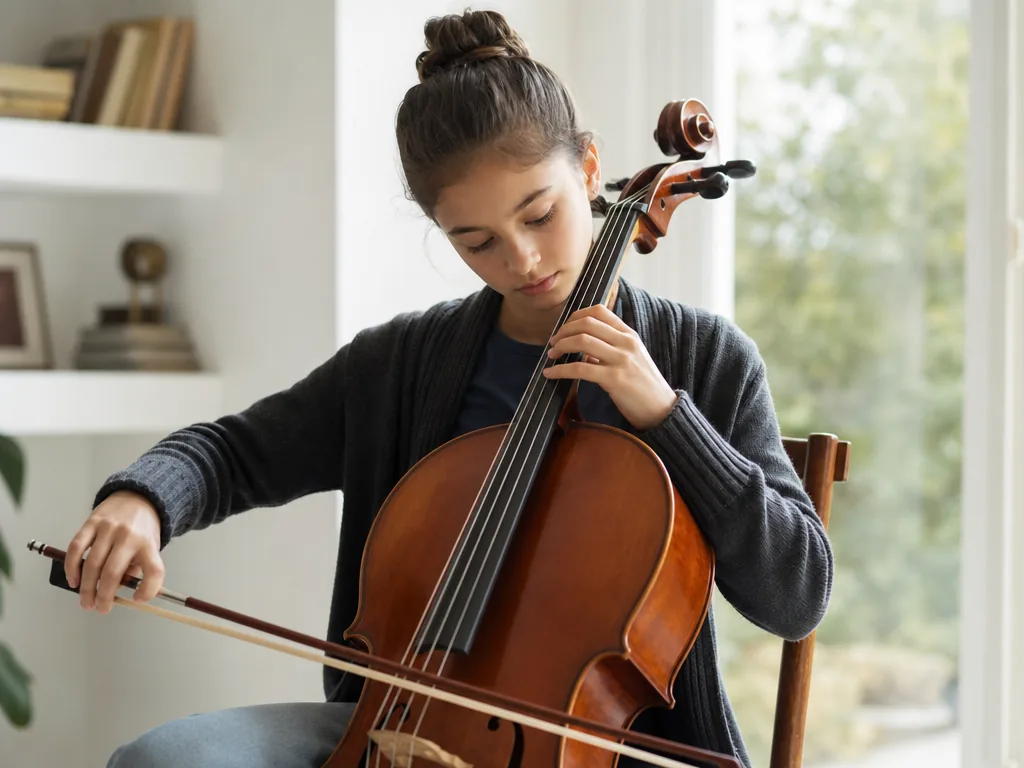
Historical Origins and Development of the Cello
The cello (Italian: Violoncello) is a mid-to-low register instrument in the string family, renowned for its warm, full, deep, voice-like quality. It is a soulful instrument of both melody and accompaniment in classical music, and is also favoured in film scores and contemporary music.
It is a soulful instrument of both melody and accompaniment in classical music, and is also favoured in film scores and contemporary music.
Originating in 16th-Century Italy
The cello originated in northern Italy in the 16th century, initially called the “bass violin”. It is the bass member of the violin family, replacing the earlier viol (viola da gamba) instruments.
Technical and Structural Evolution
- 17th century——The cello began to appear in chamber and religious music, gradually replacing the viol.
- 18th century——With the development of the Baroque period, the cello entered the orchestral and concerto stage.
- 19th–20th centuries——The Romantic period saw a peak in cello composition, producing many classic solo works.
- Modern era——The cello spans jazz, pop and film scores — its moving melodies can be heard in films such as Resident Evil and Coco.
World-Class Cellists and Their Masterpieces
Here are several influential cellists in history, along with their most representative works and contributions:
1. Pablo Casals (1876–1973)
Nationality: Spanish
Contributions:
- Brought Bach’s Cello Suites into the mainstream, rediscovering and recording them.
- Pioneered modern cello playing, emphasising tone, emotion and interpretation.
Representative works:
- Performance and recording: J.S. Bach’s Cello Suites
- Composition: Hymn of the United Nations
2. Mstislav Rostropovich (1927–2007)
Nationality: Russian
Contributions:
- Regarded as one of the greatest cellists of the 20th century.
- Inspired and premiered cello works by many contemporary composers (such as Shostakovich and Prokofiev).
Representative works:
- Shostakovich’s Cello Concertos No. 1 & No. 2
- Prokofiev’s Symphony-Concerto for Cello and Orchestra
3. Jacqueline du Pré (1945–1987)
Nationality: British
Contributions:
- Known for her emotional intensity and poetic style in a short but brilliant musical life.
Representative works:
- Edward Elgar’s Cello Concerto (her version with Barenboim is the most celebrated)
- Schumann’s Cello Concerto
4. Yo-Yo Ma (b. 1955)
Nationality: American (of Chinese descent)
Contributions:
- One of today’s most popular cellists, with outstanding achievements in cross-genre collaboration and educational outreach.
Representative works:
- Bach’s Cello Suites (Sony recording, a global bestseller)
- Albums Silk Road Ensemble and Songs of Comfort and Hope
5. Mischa Maisky (b. 1948)
Nationality: Latvian/Israeli
Contributions:
- Possesses a passionate, romantic style and great technique, working closely with conductors such as Abbado and Karajan.
Representative works:
- Schubert’s Trout Quintet
- Bach’s Cello Suites (his passionate interpretation)
Classic Cello Works Recommended
| Composer | Work | Characteristics |
|---|---|---|
| J.S. Bach | Cello Suites | Fusing technique and musicality; essential repertoire for performers |
| Elgar | Cello Concerto Op. 85 | A song of mourning after the First World War, deeply moving |
| Dvořák | Cello Concerto Op. 104 | A masterpiece of the Romantic era with highly infectious melodies |
| Shostakovich | Cello Concerto No. 1 | Complex political backdrop interwoven with inner tension |
| Haydn | Cello Concertos in C major and D major | Virtuosic Classical-period works in a fresh, elegant style |
Frequently Asked Questions (FAQ)
Q: Is the cello difficult for a beginner to learn?
The cello has a gentle learning curve at first — it rests naturally between the knees and is played with a comfortable, low bow arm. As with any string instrument, good posture and a teacher’s guidance early on make intonation and tone much easier to master.
Q: What is the difference between a cello and a double bass?
The cello is smaller and plays in a mid-to-low register, usually reading bass clef, while the double bass is much larger and sounds a full octave lower. The cello is a core member of the string quartet, whereas the double bass anchors the orchestra’s bass line.
Q: At what age can a child start learning the cello?
Children often begin around age 5 to 7 using a fractional (smaller-sized) instrument. Many teachers use the Suzuki method, which lets very young learners start by ear before reading notation.
Q: How do I choose a first cello?
For beginners, renting is usually the safest choice — cellos come in fractional sizes matched to the player’s height. Have a teacher or luthier check the setup (bridge, strings and bow) and upgrade once the student’s technique is established.
Further Resources & Next Steps
- Official Resources——The Associated Board of the Royal Schools of Music (ABRSM) publishes graded cello syllabuses and exams; the Hong Kong Academy for Performing Arts offers local programmes and concerts.
- Further Reading——The Cambridge Companion to the Cello, edited by Robin Stowell (Cambridge University Press), is an authoritative single-volume guide to the instrument’s history, repertoire and technique.
- Parent Tips——Encourage short, regular practice sessions rather than long cramming; listening to cello recordings together — from Bach’s Suites to Yo-Yo Ma’s Silk Road albums — builds a child’s ear and motivation.
Note: The information above is for reference only. Please consult professional education institutions for details.
This article was initially drafted and organised with AI. Editor / Professor Chan Kwok-wai; Managing Editor / Kong Yee-leung
Act Now: Find a Tutor / Register as a Tutor
For parents & students: looking for a home or online tutor for this subject? Click the button below to post a free tuition case (subject, level and preferred time) — TutorZone will match you with suitable tutors:
For tutors: do you teach this subject? Click the button below to register for free and receive more suitable cases — you pay only when a match is made: