
 中文(繁體)
 中文(簡體)
 English



Clavichord: Complete Overview, History and Learning Guide
TUTORZONE SUBJECT GUIDE · PERCUSSION
The clavichord is the quiet, expressive keyboard that paved the way for the modern piano — a string keyboard prized by Baroque and Classical composers for its delicate tone and precise control. This guide traces its origins, development, greatest players and lasting musical value, and shows how to begin learning it today.
Direct Answer:What is a clavichord?
The clavichord is a quiet, expressive string keyboard that preceded the piano, prized by Baroque and Classical composers for its delicate tone and 。
What Is the Clavichord?
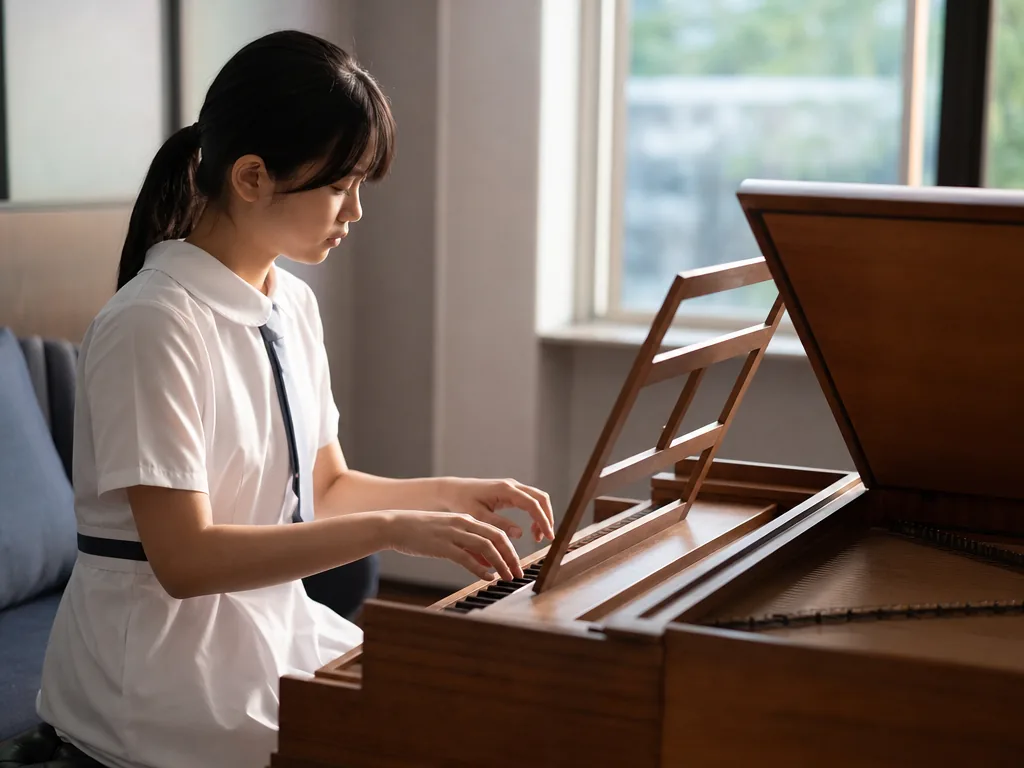
The clavichord is an ancient keyboard instrument belonging to the string family, originating in the Middle Ages and reaching its peak from the Renaissance to the Baroque period. Its tone is distinctive, and it is usually used in chamber music or private settings, because its volume is small and cannot compare with large ensembles such as orchestras. Nevertheless, the clavichord holds an extremely important place in history: it is not only the predecessor of the piano but also had a profound influence on classical composers.
An Instrument of Intimacy
Its small volume suits chamber music and private study rather than large ensembles or orchestras.
Ancestor of the Piano
It is the direct predecessor of the modern piano and shaped the keyboard writing of classical composers.
Subtle and Expressive
Its soft, singing tone allows fine pitch control and delicate emotional shading.
The Origins of the Clavichord
The origins of the clavichord can be traced back to Europe around the 14th century, and its earliest forms may have originated from similar instruments in the Middle East. During its development, the clavichord went through many variations and improvements, finally reaching maturity in the 16th century. During this period the clavichord evolved from a simple early instrument into one with a richer tone and higher technical demands.
The greatest feature of the clavichord is its tone. Unlike the piano, which produces sound by striking the strings with hammers, the clavichord strikes the strings directly with small tangents. The sound produced in this way is softer and more expressive and allows subtle pitch adjustments, which is why it was especially favoured by composers and performers.
Unlike the piano, the clavichord strikes the strings directly with small tangents, producing a softer, more expressive sound with subtle pitch control.
The Development of the Clavichord
- The 15th and 16th centuries——The clavichord became popular during the Renaissance and was widely used in chamber music. Clavichords of this period usually had a relatively small range of about four to five octaves.
- The 17th century——The clavichord played an important role in Baroque music composition, and many composers wrote a large number of works for the instrument. Clavichords of this period were usually more refined in design, with an improved range and technique.
- The 18th century——With the development of the piano, the clavichord was gradually replaced, but it still held a place in the work of some musicians.
Notable Clavichord Players and Their Masterpieces
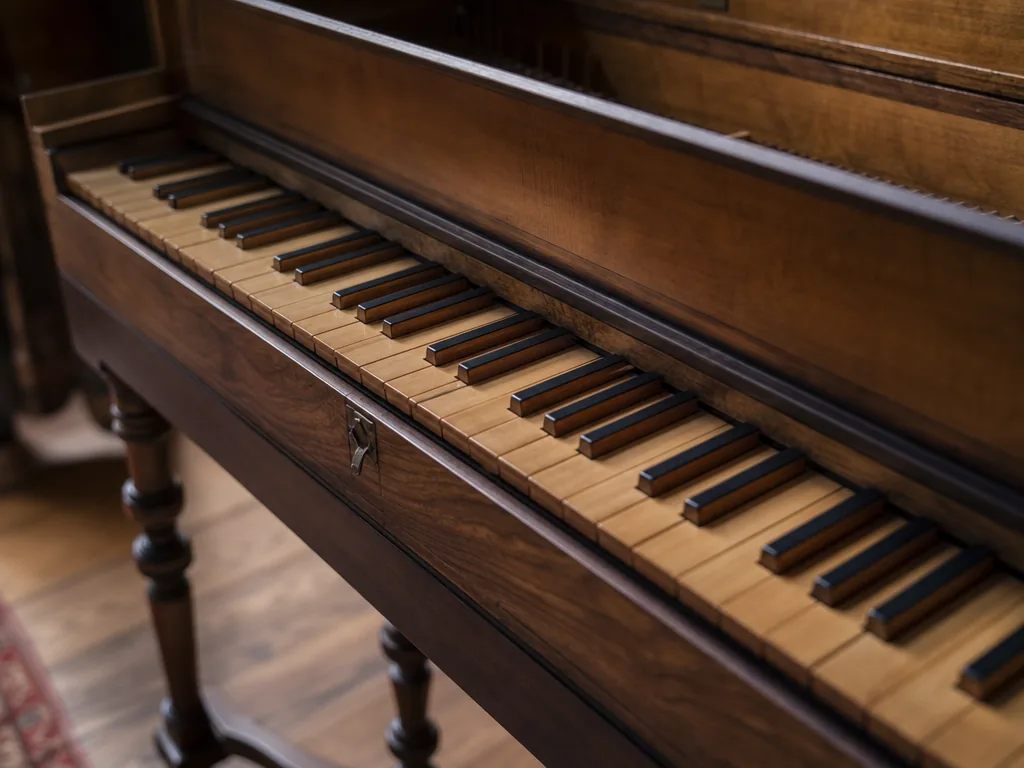
Although the clavichord is no longer a mainstream instrument in contemporary performance, its historical players and composers have left a valuable legacy for music history. Below are some composers who made important contributions to the clavichord and their masterpieces:
Johann Sebastian Bach
Bach’s works had a profound influence on the clavichord, and he wrote a large number of solo and chamber works for the instrument. Bach’s musical technique and emotional expression often require the clavichord’s delicate tone. In particular, the Well-Tempered Clavier, although usually written for the piano, is often adapted for clavichord performance.
Masterpiece: Although Bach’s works are not all written specifically for the clavichord, some of his smaller pieces, such as the Musical Offering and The Art of Fugue, are very well suited to clavichord performance.
Heinrich Schütz
Schütz was a German Baroque composer whose musical style is very expressive on the clavichord, especially his chamber music. Schütz’s musical style is very well suited to a gentle instrument like the clavichord; his works are not only emotional but also rich in rhythm and harmony.
Masterpiece: His Psalms of David is a masterpiece that is highly expressive in clavichord performance.
Joseph Haydn
Although Haydn did not write specifically for the clavichord, his piano sonatas and some chamber works (such as string quartets) are suitable for clavichord performance. Haydn’s music has strong emotional expression and places great emphasis on rhythm and dynamism, making the clavichord an ideal instrument for expressing his works.
Masterpiece: Haydn’s piano sonatas and many chamber works, especially in Baroque and Classical-period concerts, are often chosen for performance on the clavichord.
Franz Schubert
Although Schubert’s music was mainly written for the piano and voice, some of his works are very suitable for performance on the clavichord. Especially in his early piano works, the clavichord can present a finer, softer tone, further highlighting the emotion of his works.
Masterpiece: Schubert’s Impromptus and piano sonatas can also be performed on the clavichord, and such versions are quite popular in some modern concerts.
The Musical Value of the Clavichord
The musical value of the clavichord is not limited to its tone; its expressiveness and technique also give composers and performers great creative space. Many Baroque and Classical composers explored the various possibilities of the clavichord in their works, and its subtle tone and delicate expression allow the emotional layers of music to be presented more precisely. Although modern clavichord performance is relatively rare, its artistic value and historical status are still highly respected by music scholars and classical music enthusiasts.
Frequently Asked Questions (FAQ)
Q: Is the clavichord the same as the piano?
No. Although the clavichord is the piano’s direct predecessor, it produces sound differently — small tangents strike the strings directly, giving a softer, more intimate tone, whereas the piano uses hammers and is far louder and better suited to large halls.
Q: Why is the clavichord’s sound so soft?
The instrument is small and strikes its strings lightly with tangents, so its volume is limited. This makes it ideal for chamber music and private settings rather than large ensembles such as orchestras.
Q: Which composers wrote music suitable for the clavichord?
Works by Johann Sebastian Bach, Heinrich Schütz, Joseph Haydn and Franz Schubert are all well suited to the instrument. Bach’s Well-Tempered Clavier, Musical Offering and The Art of Fugue are especially popular in clavichord performance.
Q: Is it hard to learn the clavichord today?
Its keyboard is familiar to pianists, but the delicate tangent action and subtle pitch control take patience to master. Lessons usually build on keyboard fundamentals with a focus on touch and expressive shading.
Further Resources & Next Steps
- Official Resources——Visit collections and museums that house period clavichords, and early-music societies that specialise in historical keyboard instruments.
- Further Reading——Standard music references such as The New Grove Dictionary of Music and Musicians, plus general histories of keyboard instruments covering the clavichord’s development.
- Parent Tips——Play recordings of Bach’s Well-Tempered Clavier on the clavichord and, if possible, take children to see a period instrument in a museum to spark their interest.
Note: The information above is for reference only. Please consult professional education institutions for details.
This article was initially drafted and organised with AI. Editor / Professor Chan Kwok-wai; Managing Editor / Kong Yee-leung
Act Now: Find a Tutor / Register as a Tutor
For parents & students: looking for a home or online tutor for this subject? Click the button below to post a free tuition case (subject, level and preferred time) — TutorZone will match you with suitable tutors:
For tutors: do you teach this subject? Click the button below to register for free and receive more suitable cases — you pay only when a match is made: