
 中文(繁體)
 中文(簡體)
 English

Design and Technology tutor
TUTORZONE SUBJECT GUIDE · LOCAL PRIMARY SCHOOL
Design and Technology (D&T) blends creativity with engineering in Hong Kong primary schools, giving students a hands-on foundation in STEM — from design thinking and making to simple mechanics, electronics and programming.
Direct Answer:What is Design and Technology in Hong Kong primary schools?
Design and Technology in Hong Kong primary schools blends creativity with engineering, giving students a hands-on STEM foundation in design thinkin。
What Is Design & Technology in Primary School?
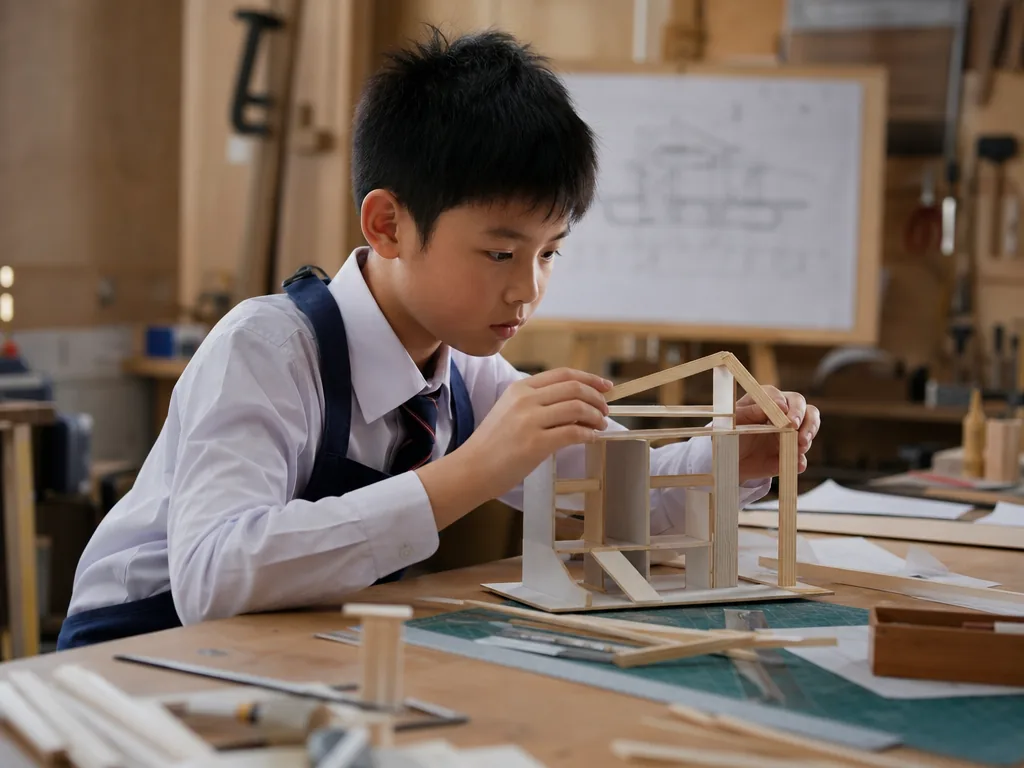
The Design and Technology (D&T) subject in Hong Kong primary schools plays a crucial role in STEM education, aiming to nurture students’ creativity, critical thinking, and problem-solving abilities. This hands-on subject empowers students to address real-world challenges and provides foundational knowledge in engineering, technology, and innovation. D&T equips students with the skills needed to integrate mathematics, science, and art, paving the way for future academic and professional pursuits.
Note: while not every primary school offers Design and Technology as a standalone subject, the proportion of schools offering this subject separately is increasing. Some schools integrate it into General Studies or extracurricular activities.
Key Learning Objectives
The D&T curriculum aims to foster essential skills in students, including:
Problem-Solving Skills
Teaching students to solve practical problems through the design process.
Technological Literacy
Helping students understand the fundamental principles of engineering and technology.
Creative Thinking
Encouraging students to transform ideas into tangible solutions.
Interdisciplinary Knowledge
Integrating mathematics, science, and art to tackle real-life challenges.
Curriculum Structure: Four Core Modules
1. Design Fundamentals
- Design Process——needs analysis (e.g., “Design a bookshelf”), sketching (either hand-drawn or digital), and prototyping using eco-friendly materials.
- Design Principles——functionality, aesthetics, and safety evaluation, plus cost and material selection (e.g., cardboard vs. wood).
2. Materials and Making
- Common Materials Operations——paper crafts (e.g., 3D cards, structural models), woodworking (e.g., simple joints, laser cutting), and plastic forming (e.g., recycling PET bottles).
- Tool Usage——basic tools such as scissors, glue guns, and rulers; advanced tools such as 3D printing pens and soldering irons (for higher grades).
3. Mechanics and Structures
- Simple Mechanical Principles——levers (e.g., creating a balance scale), gears (e.g., manual toy cars), and pulley systems (e.g., mini cranes).
- Structural Stability——bridge design challenges (e.g., using straws for weight support) and earthquake-resistant models (earthquake simulation tests).
4. Electronics and Programming
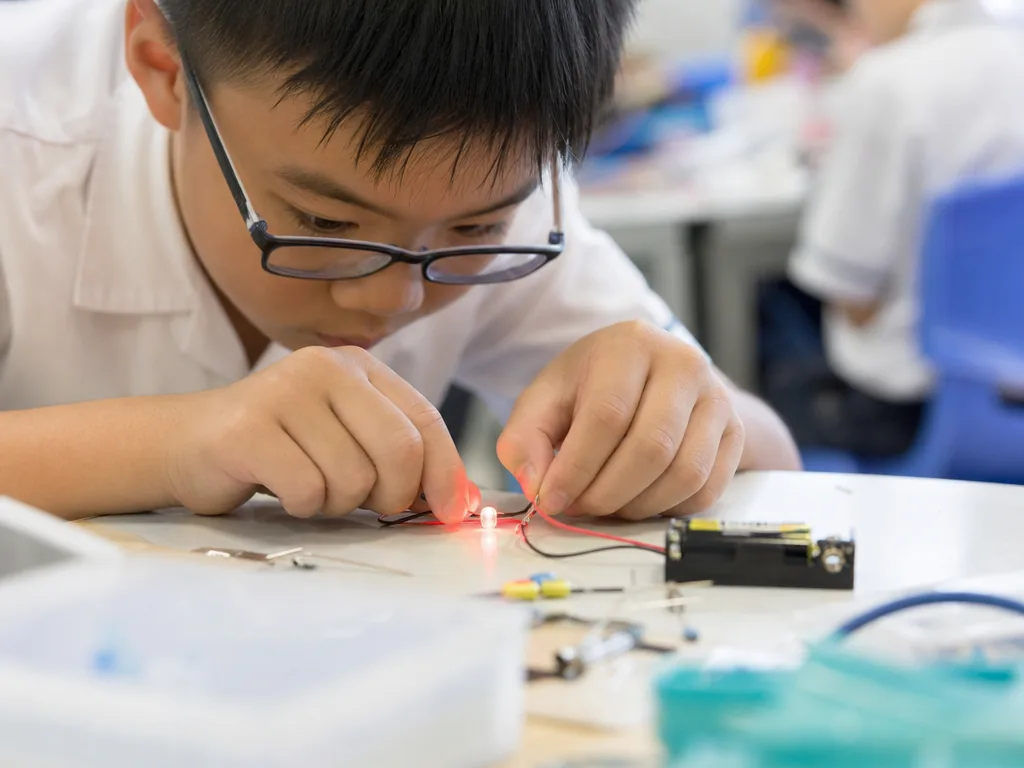
- Basic Circuits——exploring conductive materials (e.g., graphite circuit drawing) and creating closed circuits (e.g., LED light switches).
- Introduction to Programming——visual programming with Scratch (e.g., controlling robots) and Micro:bit applications (e.g., temperature sensor projects).
Teaching Methods
The teaching approach for Design and Technology includes various engaging methods designed to foster creativity and practical skills:
Project-Based Learning (PBL)
Students engage in hands-on projects that integrate different disciplines. For example, designing a rainwater collection system covers science (water cycle), mathematics (volume calculations), and art (design appearance).
Collaborative Learning
Group projects allow students to take on roles such as designer, engineer, and tester, promoting teamwork and communication.
Industry Connections
Visits to maker spaces like the HK Maker Club introduce students to real-world applications and inspire innovation.
Assessment Criteria
Process Assessment (60%)
- Design Journals——recording design iterations and improvements.
- Class Participation——demonstrating tool safety and technique proficiency.
Outcome Assessment (40%)
- Prototype Testing——evaluating the functionality of projects (e.g., “Paper bridge weight-bearing contest”).
- Oral Presentations——explaining the design and functionality of the final product.
Teaching Materials and Resources
D&T lessons make use of a variety of teaching materials and tools:
- School-based Textbooks——tailored by teachers to meet the specific needs and abilities of students.
- Tool Kits——basic: LittleBits electronic modules; advanced: LEGO Education SPIKE.
- Virtual Tools——Tinkercad, a 3D modeling software for design and prototyping.
Transition to Secondary D&T
As students progress from primary to secondary school, the D&T curriculum becomes more advanced. Secondary school students will learn:
- Advanced material processing (metal, ceramics).
- Programmable controls (e.g., Arduino).
Some secondary schools also offer Design and Applied Technology (D&T) as an elective in the DSE exams.
Recent Developments in D&T Education
Hong Kong’s education system has seen several key developments in D&T education:
- Innovation and Technology Policies——the Education Bureau’s Primary IT Innovation Laboratories project supports hands-on learning.
- Inter-school Competitions——events like the Hong Kong Youth Science and Technology Innovation Contest showcase student projects.
- Gender Equality——efforts to encourage female participation in mechanical design and engineering fields, breaking traditional gender stereotypes.
Parental Support and Involvement
Parents can help support their child’s learning by engaging in activities like:
- Home Projects——encourage students to build projects using recycled materials (e.g., self-watering systems).
- Visits and Activities——take part in workshops, such as the Engineering Challenges at the Hong Kong Science Museum.
- Safety Supervision——ensure safety when using tools like hot glue guns at home.
Educational Value of D&T
The Design and Technology subject stands out as one of the few in Hong Kong that blends creativity with engineering. The key educational values include:
- Fostering a “Maker” Mindset——encourages students to become creators rather than just consumers of technology.
- Preparing for Future Skills——equips students with foundational skills needed for the automation and AI era.
- Promoting Inclusive Learning——provides opportunities for non-academic inclined students to excel.
By blending creativity with engineering, Design and Technology nurtures the makers, problem-solvers and innovators of tomorrow.
Frequently Asked Questions (FAQ)
Q: Does every Hong Kong primary school teach Design and Technology as a standalone subject?
Not yet — but the proportion of schools offering it separately is increasing. Where it is not taught on its own, schools often integrate D&T into General Studies or extracurricular activities.
Q: How is Design and Technology assessed?
Assessment is typically split into process (around 60%), covering design journals and class participation, and outcome (around 40%), covering prototype testing and oral presentations of the final product.
Q: What tools and materials will my child work with?
Lessons usually start with paper, cardboard and wood plus basic tools like scissors, glue guns and rulers. Older pupils may progress to 3D printing pens, soldering irons, LittleBits modules, LEGO Education SPIKE and Tinkercad.
Q: How does primary D&T prepare my child for secondary school?
It builds the foundations that secondary courses extend into advanced material processing (metal, ceramics) and programmable controls such as Arduino, and it can lead toward Design and Applied Technology as a DSE elective.
Further Resources & Next Steps
- Official Resources——the Hong Kong Education Bureau website (edb.gov.hk) and its Primary IT Innovation Laboratories project.
- Further Reading——Tinkercad for 3D modeling, Scratch and Micro:bit for beginner programming, and the Hong Kong Science Museum Engineering Challenges.
- Parent Tips——build simple projects at home with recycled materials (like a self-watering system) and always supervise hot glue guns and other tools for safety.
Note: The information above is for reference only. Please consult professional education institutions for details.
This article was initially drafted and organised with AI. Editor / Professor Chan Kwok-wai; Managing Editor / Kong Yee-leung
Act Now: Find a Tutor / Register as a Tutor
For parents & students: looking for a home or online tutor for this subject? Click the button below to post a free tuition case (subject, level and preferred time) — TutorZone will match you with suitable tutors:
For tutors: do you teach this subject? Click the button below to register for free and receive more suitable cases — you pay only when a match is made:
