
 中文(繁體)
 中文(簡體)
 English



Double Bass: A Complete Guide to Its Origins, History and Greatest Players
TUTORZONE SUBJECT GUIDE · STRING INSTRUMENTS
The deepest voice in the orchestra and the heartbeat of jazz — the double bass spans more than four centuries of music. Here is its history, its greatest players and the works every learner should hear.
Direct Answer:What is the double bass?
The double bass is the deepest voice in the orchestra and the heartbeat of jazz, spanning more than four centuries of music and anchoring the low end.
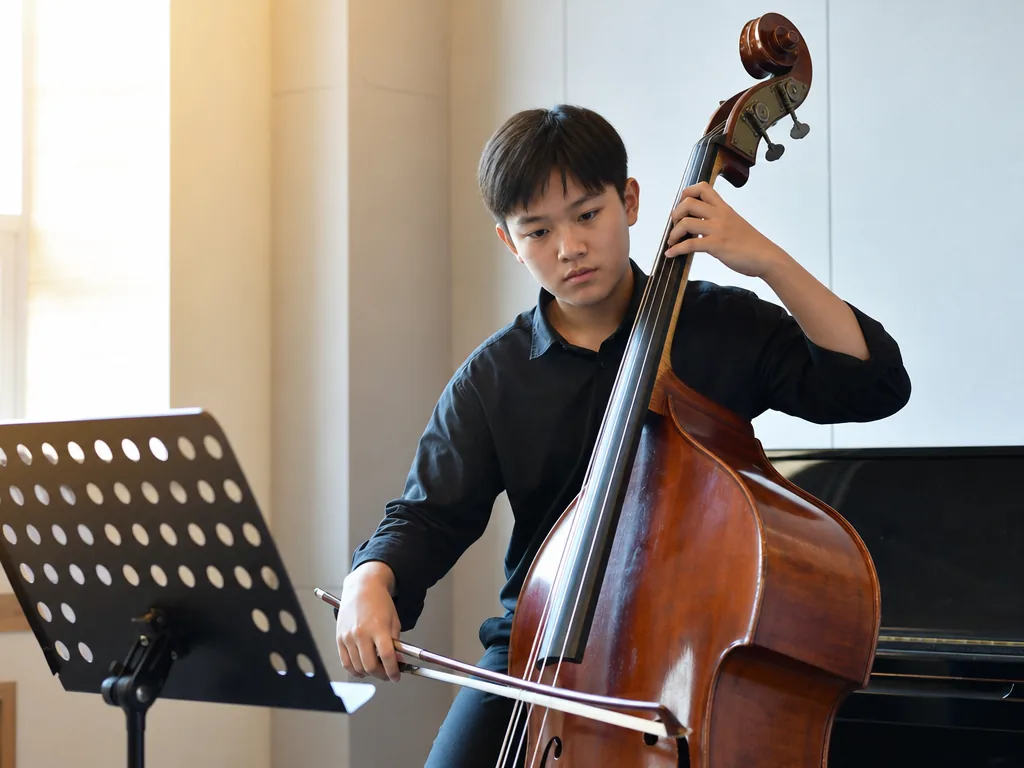
The Origins and History of the Double Bass
The double bass (also known as the contrabass or upright bass) is the largest and lowest-pitched member of the string instrument family, and plays an indispensable role in symphony orchestras and jazz.
The largest and lowest-pitched member of the string family, the double bass plays an indispensable role in symphony orchestras and jazz.
Origins: Evolved from the Viol Family
The history of the double bass can be traced back to 16th-century Renaissance Europe. Its design combines elements of the violin family and the viol family:
- Body——Similar to the viol, commonly with rounded shoulders and a flat back.
- Number of strings and tuning——Most commonly four strings (E-A-D-G), with five-string versions adding a low C.
- Tuning——One octave lower than instruments such as the violin, providing the bass foundation in music.
Function and Evolution
| Period | Key developments |
|---|---|
| 17th–18th centuries | Used in church and court music, often collaborating with the harpsichord and cello |
| 19th century | Orchestral scoring became standardised, and the double bass gained in status |
| 20th century to the present | Widely used in jazz, blues, rock, modern classical and improvised music |
Outstanding Double Bassists and Their Representative Works
Although the double bass is less commonly heard as a solo instrument than the violin, some master musicians have opened up entirely new dimensions of solo playing and composition for it.
1. Giovanni Bottesini (1821–1889)
An Italian double bass giant of the Romantic period, known as “the Paganini of the double bass”.
- Representative works——Double Bass Concerto No. 2; Fantasia on Bellini’s “La Sonnambula”; Gran Duo Concertante, written for two double basses.
- Contributions——Raised the double bass’s status as a solo instrument with brilliant technique and elegant melodies.
2. Gary Karr (b. 1939)
A leading contemporary American double bassist who brought double bass solo playing to the global stage.
- Representative works——His arrangement of Saint-Saëns’s The Swan; performances of cello works by Marcello and Bach.
- Contributions——Founded the Karr Foundation, donating instruments to young double bassists, and recorded more than 20 albums spanning classical, folk, pop and other genres.
3. Edgar Meyer (b. 1960)
A modern American double bassist working across classical, bluegrass, jazz and folk.
- Representative works——Double Concerto, with Béla Fleck and violinist Joshua Bell; the cross-genre album Appalachia Waltz, with Yo-Yo Ma and Chris Thile.
- Contributions——Blends a wide range of musical styles, making the double bass the protagonist of both melody and rhythm.
4. Rinat Ibragimov (1960–2020)
A Russian double bass master and principal bass of the London Symphony Orchestra.
- Representative recordings——Bach’s Cello Suites (arranged version); the Koussevitzky Concerto.
- Style——Extraordinary technical control and a warm, refined tone.
Classic Double Bass Works Recommended
| Composer | Work | Characteristics |
|---|---|---|
| Giovanni Bottesini | Double Bass Concerto No. 2 | Brilliant and romantic, technically demanding |
| Serge Koussevitzky | Double Bass Concerto | A classic challenge for orchestral principals |
| Frank Proto | A Carmen Fantasy | A modern adaptation, highly theatrical |
| J.S. Bach | Cello Suites (arranged performance) | The ultimate classics, showcasing musicianship and technique |
How to Rank “Double Bass” Content Highly in Search
- Use long-tail keywords:
- “double bass origins and history”
- “famous double bassists”
- “classic double bass works”
- Optimise content formatting:
- Use clear H2/H3 headings
- Use tables and lists to organise information
- Insert internal links, for example “viola vs double bass comparison”
- Multimedia:
- Embed double bass performance videos
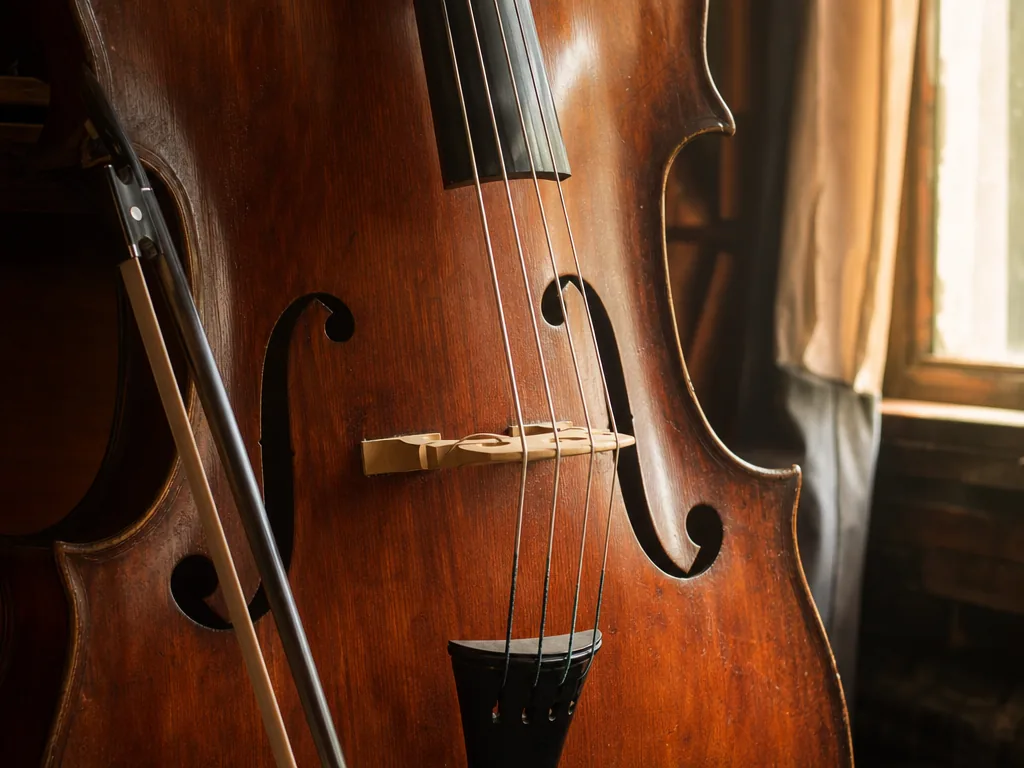
- Include instrument images and playing-posture tutorials
Frequently Asked Questions (FAQ)
Q: Is the double bass the same as a cello?
No. Both are low-register string instruments played upright, but the double bass is the largest and lowest-pitched member of the string family, tuned in fourths (E-A-D-G), while the cello is smaller and tuned in fifths (C-G-D-A). The double bass sounds about one octave lower than the cello.
Q: How many strings does a double bass have?
Most double basses have four strings tuned E-A-D-G. Five-string versions add an extra low C, extending the range even lower and giving players more notes in the bass register.
Q: At what age can a child start learning the double bass?
Many teachers suggest starting around age 8 to 10, once a child is tall enough to manage a smaller (1/4 or 1/2 size) instrument. Fractional-size basses let younger learners build posture and technique safely.
Q: Can the double bass be a solo instrument?
Yes. Players such as Giovanni Bottesini, Gary Karr and Edgar Meyer showed that the double bass can carry melody as well as rhythm, and a rich solo repertoire — including concertos and transcriptions of cello works — exists for it.
Further Resources & Next Steps
- Official Resources——Explore the Karr Foundation’s work in donating instruments to young double bassists, and check major orchestra websites for performances and educational materials.
- Further Reading——Begin with Bottesini’s Double Bass Concerto No. 2 and Koussevitzky’s Double Bass Concerto, then listen to Bach’s Cello Suites in arranged double bass performances.
- Parent Tips——Choose a fractional-size instrument that fits your child’s height, and find a teacher who builds posture and bowing technique from the very first lessons.
Note: The information above is for reference only. Please consult professional education institutions for details.
This article was initially drafted and organised with AI. Editor / Professor Chan Kwok-wai; Managing Editor / Kong Yee-leung
Act Now: Find a Tutor / Register as a Tutor
For parents & students: looking for a home or online tutor for this subject? Click the button below to post a free tuition case (subject, level and preferred time) — TutorZone will match you with suitable tutors:
For tutors: do you teach this subject? Click the button below to register for free and receive more suitable cases — you pay only when a match is made: