
 中文(繁體)
 中文(簡體)
 English



DSE Chinese History: Complete Course Guide
TUTORZONE SUBJECT GUIDE · DSE
DSE Chinese History combines a deep knowledge of China’s past with the source-analysis skills of a working historian. This complete guide maps out the course structure, exam format and the study strategies that lead to strong results.
Direct answer: how is DSE Chinese History assessed?
Verified against the HKEAA 2027 framework: Chinese History — One compulsory question covering both parts (40 marks) plus 70% (2 hours 15 minutes); Six units; each sets three questions and you answer two ques 30% (1 hour 20 minutes). Chinese History has no School-Based Assessment: Papers 1 and 2 carry 70% and 30%.
DSE Chinese History Overview
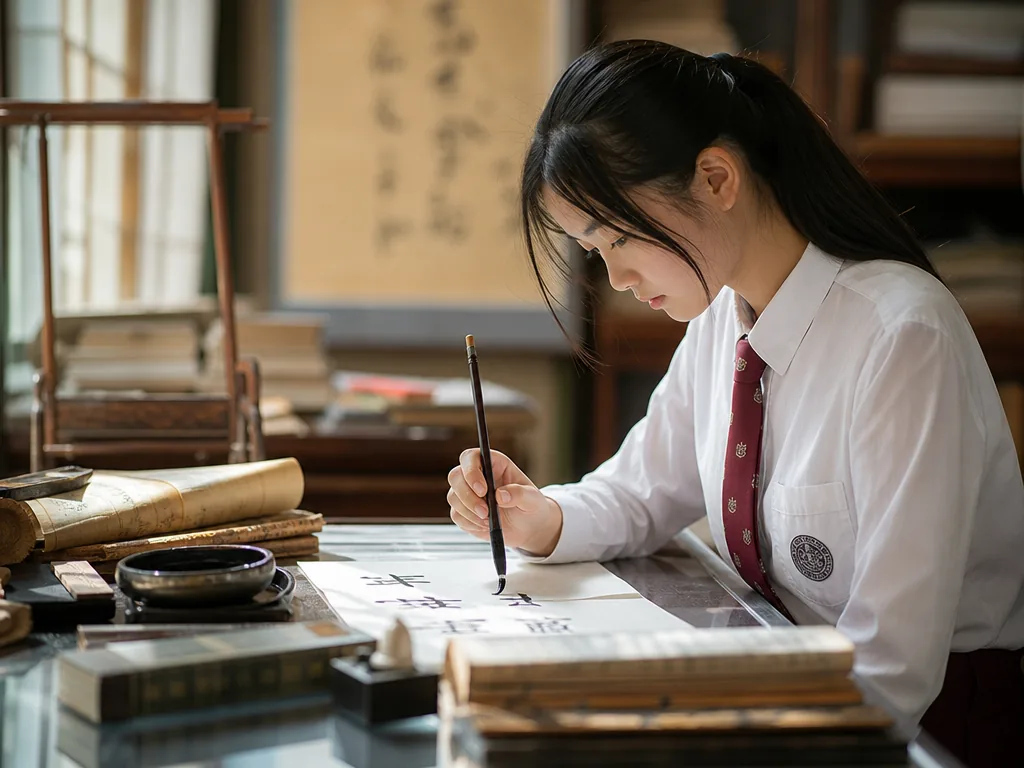
DSE Chinese History is an elective subject in the Hong Kong Diploma of Secondary Education (DSE) that focuses on the major events, figures and cultural developments of Chinese history and their influence on world history. The subject aims to help students understand the course of Chinese history from ancient times to the present day, and to develop their critical thinking and comprehensive analytical skills, enabling them to better appreciate China’s position and role in world history within a globalised context.
History and culture in equal measure
The subject stresses a deep understanding of Chinese historical development, while also focusing on the continuity and transformation of history and culture.
Theory and practice in tandem
Students not only learn historical knowledge but also interpret, analyse and compare historical sources, developing the fundamental methods of historical research.
Connecting historical context to the present
While studying history, students examine the links between historical events and contemporary society, so that studying history is not merely looking back at the past but also reflecting on today’s society.
Assessment: Paper 1 70% (2 hours 15 minutes) + Paper 2 30% (1 hour 20 minutes) — no SBA
Course Structure
The development of Chinese history
- From the pre-Qin era to the Han dynasty: covers China’s earliest feudal system, the era of divided feudal lords and the changes of the Spring and Autumn and Warring States periods, with particular focus on the unification of the Qin and Han dynasties and the establishment of a centralised system of government.
- From the Three Kingdoms to the Sui and Tang dynasties: focuses on the struggles for supremacy during the Three Kingdoms period and the golden ages of the Sui and Tang dynasties, and their influence on Chinese politics, the economy and culture.
- The Song, Yuan, Ming and Qing dynasties: analyses the civil administration and economic prosperity of the Song dynasty, the multi-ethnic regime and social changes of the Yuan dynasty, and the political decline and feudal economic changes of the Ming and Qing periods.
Chinese society and culture
- Confucian thought and political ideas: learn how Confucian thought shaped China’s political system and social structure, and how it developed and changed across different periods.
- China’s scientific, technological and cultural achievements: explore the major achievements of ancient China in science, technology, art, philosophy and literature, and analyse their contribution to world civilisation.
Modern Chinese history
- Modern and contemporary history: beginning with the Opium War, study the decline of the Qing dynasty, the founding of the Republic and the internal and external difficulties it faced, up to the establishment of the People’s Republic of China in 1949, and analyse modern China’s reform and opening-up and its impact on the international community.
Assessment: official weighting (2027 HKDSE)
| Component | What it contains | Weighting | Duration |
|---|---|---|---|
| Paper 1 — 歷代發展 (Diachronic development) | One compulsory question covering both parts (40 marks) plus one question from each of parts A and B (50 marks) | 70% | 2 hours 15 minutes |
| Paper 2 — 歷史專題 (Historical topics) | Six units; each sets three questions and you answer two questions from the one unit you choose | 30% | 1 hour 20 minutes |
Note: Chinese History has no School-Based Assessment: Papers 1 and 2 carry 70% and 30%.
Source: HKEAA 2027 HKDSE assessment framework for Chinese History (see the resource list below). Always check the framework for the year you are sitting.
Effective Study Strategies
Mastering the sequence of historical events
- The timeline method: build a timeline of historical events, marking out important events, figures and social changes to help memorise the course of historical development.
- Combining events with context: when studying each historical event, don’t just memorise the basic storyline — understand the background, causes and consequences of its occurrence.
In-depth analysis and critical thinking
- Problem-based learning: learn by posing specific historical questions (such as “Why was the Tang dynasty able to achieve its golden age?”). This helps students move beyond the surface when analysing history and understand the causes and effects behind the problems.
- The comparative method: compare China’s historical development with that of other countries, for example the differences between China’s imperial examination system and Western electoral systems, or the differences in social structure between China and the West during the same period.
Integrating historical sources
- Learning from multiple sources: beyond the textbook, read a wide range of historical documents, academic articles and historical films and footage to understand history from different perspectives.
- Training in historical essay writing: write history essays or reports regularly, synthesising what you have learned and using source analysis to support your own arguments.
Common Difficulties and How to Overcome Them
Confusing historical facts
Solution: draw timelines to arrange historical events in chronological order, and record the background, process and outcome of each event to understand the connections between them.
Lack of depth in event analysis
Solution: think deeply about the reasons behind each event when studying, and analyse the long-term impact of events on historical development from multiple angles (political, economic, cultural, etc.).
Disorganised structure in comparison questions
Solution: practise a four-part answer structure: 1) briefly outline the event or period; 2) analyse the characteristics of Chinese history; 3) compare the similarities and differences between China and other countries; 4) discuss its cultural and social significance.
Further Study and Career Pathways
Related university subjects
History, Cultural Studies, Political Science, International Relations, East Asian Studies and more.
Career pathways
Historian, museum curator, international relations specialist, cultural heritage conservation professional, media professional and more.
Exam Time Management
Time allocation by paper
- Paper 1: about 45 minutes per question (including 5 minutes’ planning time).
- Paper 2: about 60 minutes per question.
Action tips
- Regularly review historical events and build connection maps between them to aid memory.
- Write one history analysis essay each month to apply what you have learned in an integrated way.
- Attend history talks or discussion groups to strengthen your understanding of and critical engagement with history.
Why DSE Chinese History Matters
DSE Chinese History not only helps students gain a comprehensive understanding of China’s historical development, but also cultivates their critical thinking, source analysis and academic writing skills. The subject offers students an important window into Chinese civilisation and its place in world history, and lays a solid foundation for their future academic or professional careers.
Frequently Asked Questions
What is the weighting of DSE Chinese History?
Paper 1 (歷代發展) 70% in 2 hours 15 minutes, Paper 2 (歷史專題) 30% in 1 hour 20 minutes.
Does Chinese History have SBA?
No — there is no SBA and no project study in the DSE framework.
How does Paper 2 work?
You choose one of six units; that unit sets three questions and you answer two of them.
Further Resources & Next Steps
- HKEAA 2027 HKDSE assessment frameworks — the official Chinese History structure is Paper 1 70% / Paper 2 30%, with no SBA.
- Standard DSE Chinese History textbooks plus HKEAA past papers; use academic histories of the Ming, Qing and Republican periods for extra depth on Paper 2.
- TutorZone exam practice papers — model answers and marking guidance for written subjects.
Act Now: Find a Tutor / Register as a Tutor
For parents & students: looking for a home or online tutor for this subject? Click the button below to post a free tuition case (subject, level and preferred time) — TutorZone will match you with suitable tutors:
For tutors: do you teach this subject? Click the button below to register for free and receive more suitable cases — you pay only when a match is made: