 中文(繁體)
 中文(簡體)
 English



DSE Putonghua (Mandarin): Complete Guide to the HKDSE Putonghua Subject
TUTORZONE SUBJECT GUIDE · DSE
A complete guide to the HKDSE Putonghua (Mandarin) elective: what the subject covers, how it is assessed across listening, speaking, reading and writing, how it differs from Cantonese and from other language subjects, and how to prepare effectively.
Direct Answer:What is the HKDSE Putonghua (Mandarin) elective?
The HKDSE Putonghua elective covers listening, speaking, reading, and writing in Mandarin, differs from Cantonese and other language subjects, and 。
Subject Positioning and Objectives
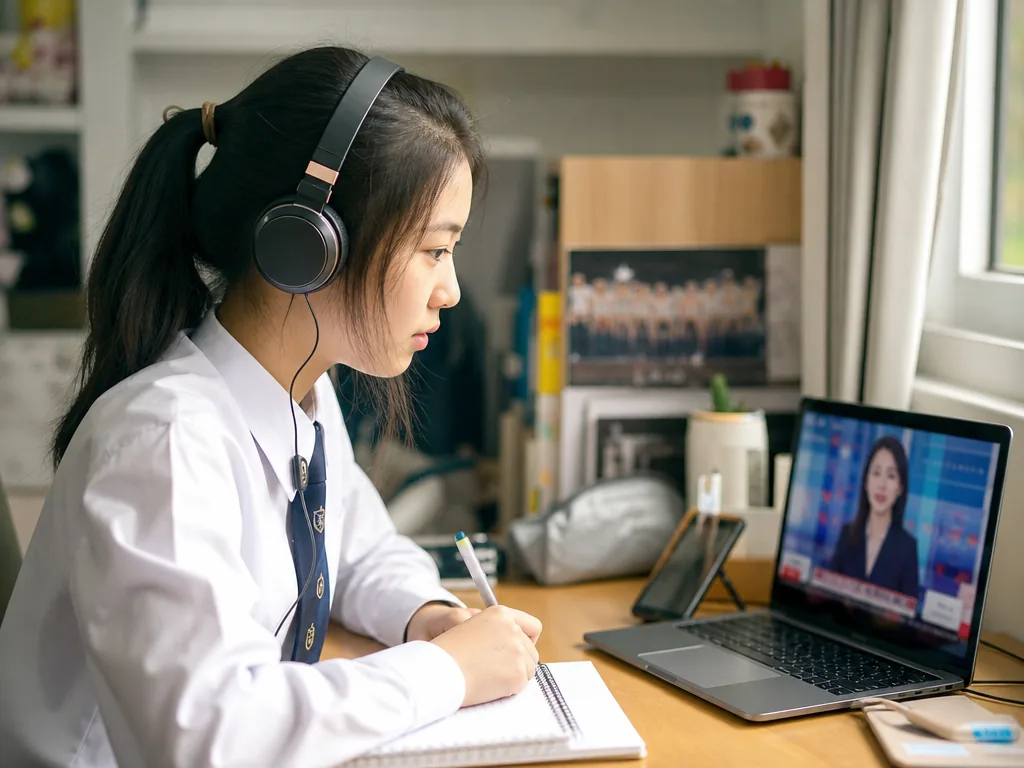
The HKDSE Putonghua (Mandarin) subject is an elective language subject in the Hong Kong Diploma of Secondary Education that aims to enhance students’ Putonghua communication skills and develop their understanding of Chinese language and culture. The course focuses on the integrated use of the four language skills — listening, speaking, reading and writing — and links them to real-life situations, helping students use Putonghua effectively in academic, work and social settings.
Course Content and Assessment Scope
1. Listening
Assessment format — listen to audio materials (e.g. conversations, news, radio programmes) and answer multiple-choice, fill-in-the-blank or short-answer questions.
Key skills:
- Understand Putonghua conversations in different contexts (e.g. everyday communication, public announcements).
- Grasp key information such as time, location and relationships between speakers.
- Identify phonetic differences (e.g. the retroflex er-suffix and the neutral tone).
2. Speaking
Assessment format:
- Reading aloud — correct pronunciation, intonation and fluency.
- Dialogue — situational conversation with the examiner (e.g. shopping, asking for directions).
- Short speech — a 1–2 minute talk on a given topic (e.g. environmental protection, technology).
Marking focus:
- Accuracy of pronunciation (distinguishing retroflex from non-retroflex initials and front from back nasals).
- Appropriate word choice (avoiding literal Cantonese expressions, e.g. saying “pāi zhào” [“take a photo”] rather than the Cantonese “jing2 soeng2”).
- Naturalness of expression (avoiding memorised, rote answers).
3. Reading
Assessment format — read passages (e.g. news, prose, expository text) and answer multiple-choice, true/false or short-answer questions.
Key skills:
- Understand the differences between written and spoken language.
- Master common vocabulary and sentence patterns.
4. Writing
Assessment format:
- Practical writing — write letters, notices, speeches, etc. (about 200 characters).
- Essay writing — narrative, argumentative or expository essays (about 400 characters).
Marking focus:
- Relevance of content.
- Standard language use (avoiding Cantonese grammar).
- Clear structure (paragraphing and logical flow).
Grading Criteria and Exam Structure
The subject is assessed entirely through a Public Examination (100%) made up of four papers:
| Paper | Content | Weighting | Duration |
|---|---|---|---|
| Paper 1: Listening | Various question types (multiple-choice / fill-in-the-blank) | 25% | About 45 minutes |
| Paper 2: Speaking | Reading aloud, dialogue, short speech | 30% | About 15 minutes |
| Paper 3: Reading | Reading comprehension questions | 20% | 1 hour |
| Paper 4: Writing | Practical writing + essay | 25% | 1.5 hours |
Grade bands — from 5* (highest) to 1 (lowest); achieving Level 3 is regarded as “attained” and meets the language requirement of some tertiary institutions.
Course Features and Challenges
1. Differences from Cantonese
- Pronunciation — extra practice is needed for easily confused sounds (e.g. “sì” [four] vs “shí” [ten]).
- Vocabulary — avoid directly transplanting Cantonese expressions (e.g. say “xǐ zǎo” [“to bathe”] instead of the Cantonese “cung1 loeng4”).
- Grammar — Putonghua rarely uses Cantonese sentence-final particles such as “ge3” and “jiù”.
2. High Practical Value
- Content is close to daily life (e.g. travel, job hunting), useful for further study or work in Mainland China.
- Some topics touch on Chinese culture (e.g. festivals and customs, social phenomena).
3. Common Difficulties
- Pronunciation issues — Hong Kong students are easily influenced by Cantonese and confuse “zh/ch/sh” with “z/c/s”.
- Written-language conversion — pay attention to formal word choice when writing essays.
Exam Preparation Tips
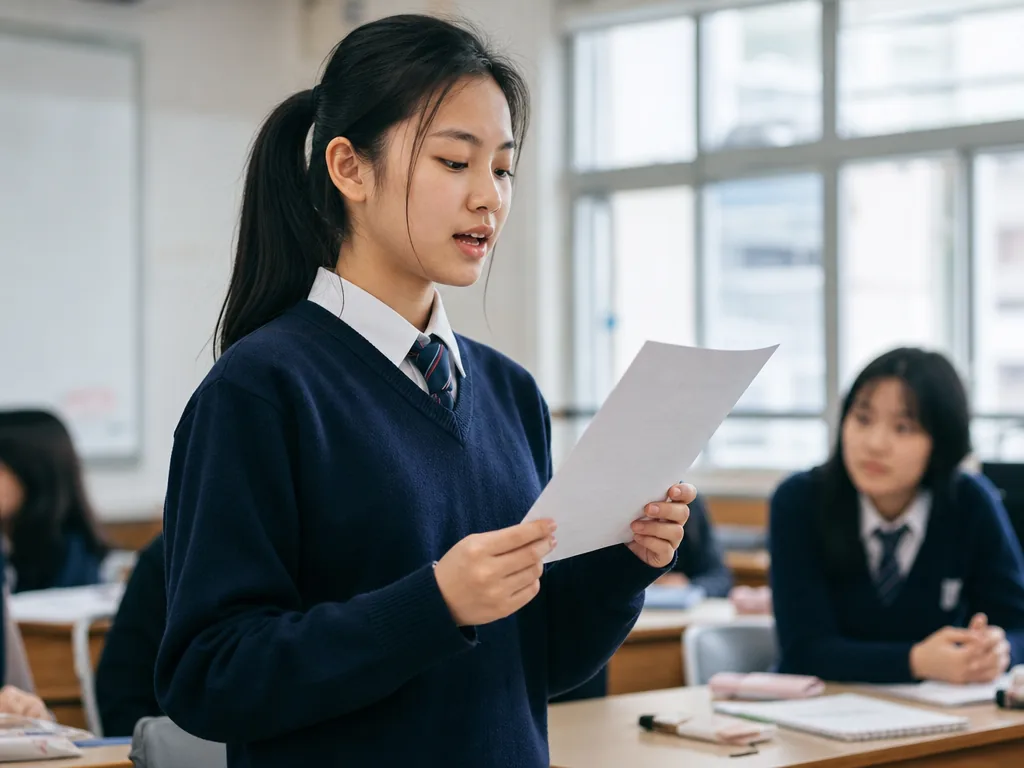
- Daily listening practice — listen to Putonghua news and podcasts.
- Speaking partner — converse with native speakers or use a language-exchange app.
- Reading material — read more simplified-Chinese articles.
- Writing templates — memorise practical-writing formats.
Differences from Other Language Subjects
- vs DSE Chinese Language — the Putonghua subject focuses on “language skills” rather than literary analysis.
- vs IB Putonghua — the DSE places more emphasis on standardised assessment, while IB includes a cultural-comparison component.
This subject suits students planning to develop in Mainland China, Taiwan or international Chinese-speaking environments, and it strengthens competitiveness under the “biliterate and trilingual” policy.
Frequently Asked Questions (FAQ)
Q: Is Putonghua a compulsory subject in the HKDSE?
No — it is an elective language subject, chosen alongside the four core subjects. Students opt in when they want to build Putonghua communication skills.
Q: What does the speaking paper actually test?
Three tasks: reading aloud (pronunciation, intonation and fluency), a situational dialogue with the examiner, and a 1–2 minute short speech on a given topic. Marks focus on pronunciation accuracy, word choice and naturalness.
Q: What level counts as “attained”?
Level 3 or above is generally regarded as “attained” and meets the language requirement of some tertiary institutions.
Q: How is it different from the DSE Chinese Language subject?
The Putonghua subject concentrates on practical language skills — listening, speaking, reading and writing — rather than literary analysis.
Further Resources & Next Steps
- Official Resources——Hong Kong Education Bureau (www.edb.gov.hk) — curriculum and assessment guides for HKDSE Putonghua.
- Further Reading——Hong Kong Examinations and Assessment Authority (HKEAA) — past papers, marking schemes and level descriptors.
- Parent Tips——encourage daily exposure to Putonghua news, podcasts and simplified-Chinese reading, plus a regular speaking partner.
Note: The information above is for reference only. Please consult professional education institutions for details.
This article was initially drafted and organised with AI. Editor / Professor Chan Kwok-wai; Managing Editor / Kong Yee-leung
Act Now: Find a Tutor / Register as a Tutor
For parents & students: looking for a home or online tutor for this subject? Click the button below to post a free tuition case (subject, level and preferred time) — TutorZone will match you with suitable tutors:
For tutors: do you teach this subject? Click the button below to register for free and receive more suitable cases — you pay only when a match is made: