 中文(繁體)
 中文(簡體)
 English



DSE Urdu: Complete Course Guide
TUTORZONE SUBJECT GUIDE · DSE
DSE Urdu is a niche but practical “Other Language” elective that lets candidates earn recognised grades while building real command of Pakistan’s national language. This guide breaks down the exam structure, course content, entry requirements and study paths — from the 38-letter Perso-Arabic script to university admission.
Direct Answer:What is DSE Urdu?
DSE Urdu is a niche ‘Other Language’ elective that awards recognised grades while building practical command of Pakistan’s national language.
Background of Urdu
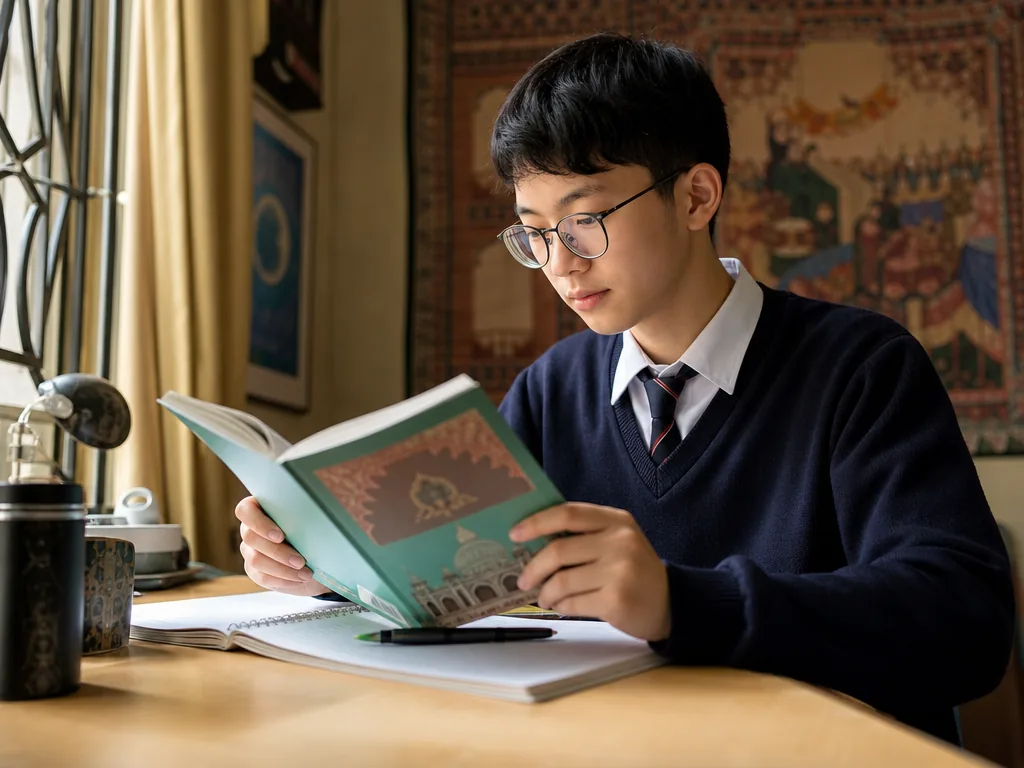
Urdu (اردو) is the national language of Pakistan and one of the official languages in parts of India. It belongs to the Indo-European language family and is highly similar to Hindi — mutually intelligible in spoken form, but written with a different script.
In Hong Kong, Urdu primarily provides learning and examination opportunities for South Asian students, particularly those of Pakistani heritage.
For South Asian students in Hong Kong, Urdu is more than an exam — it is a bridge to heritage, higher education and international opportunity.
DSE Urdu Examination Structure
The Hong Kong Examinations and Assessment Authority (HKEAA) lists Urdu as an “Other Language” elective under the DSE. The examination is divided into the following papers:
| Paper | Content | Duration | Weighting |
|---|---|---|---|
| Reading | Understanding passages (news, stories, etc.); answering multiple-choice and short questions | 1.5 hours | 30% |
| Writing | Letters and short essays (e.g. describing events); practical writing (e.g. application letters) | 1.5 hours | 30% |
| Listening | Answering questions based on recordings (dialogues, announcements, etc.) | 45 minutes | 20% |
| Speaking | Reading a short passage aloud; situational conversation (e.g. everyday topics) | 15 minutes | 20% |
Grading scale: A (highest) to D (pass). Grades are converted into DSE points — A = 5, B = 5, C = 5, D = 4.
Course Content and Language Requirements
Writing System
Urdu uses the Perso-Arabic script, written from right to left. Mastery requires learning the basic letters (38 in total) and the rules for joining letters.
Key Grammar Points
Verb Conjugation
Tense, gender and honorifics all shape how verbs are formed.
Noun Gender & Number
Nouns are marked masculine or feminine, and singular or plural.
Persian & Arabic Loanwords
Borrowings make up around 70% of Urdu vocabulary.
Ability Benchmark
The DSE examination corresponds roughly to CEFR A2–B1 level (elementary to intermediate).
Example Questions
- Reading — interpret a short passage about a festival (such as Eid) and answer related questions.
- Writing — write a letter to a friend describing your weekend plans.
Schools Offering the Subject and Learning Resources
Schools Offering the Subject
Urdu classes are mainly concentrated in districts with larger South Asian student populations, such as Yuen Long and Tuen Mun. Examples include Islamic Kasim Tuet Memorial College and Po Leung Kuk Ngan Po Ling College.
Learning Resources
- Curriculum Guide — the Education Bureau’s Urdu Curriculum Guide.
- Consulate Materials — teaching materials provided by the Pakistan Consulate, such as Urdu for Beginners.
- Online Tools — UrduPod101, a language-learning platform.

Entry Requirements and Further-Study Uses
Entry Requirements
- Typical Candidates — usually South Asian students, or those taking the subject through their school’s elective programme.
- Private Candidates — must provide evidence of language ability, such as school transcripts.
Further-Study Advantages
- University Consideration — may earn bonus consideration for linguistics, translation or international studies programmes at local universities.
- Test Exemption — may be exempt from language tests when applying to universities in Pakistan or India.
Study Tips and Conclusion
DSE Urdu is a niche but practical language elective, particularly suited to South Asian students or anyone with an interest in South Asian culture. When studying, note the following:
- Writing system: prioritise learning to read and write the Arabic script.
- Everyday application: engage with Urdu media, such as PTV News and Bollywood films.
- Further-study planning: if your goal is overseas study, combine Urdu with results in other languages, such as English.
For further assistance, contact the Hong Kong Pakistan Association or the Education Bureau’s Multicultural Education team.
Frequently Asked Questions (FAQ)
Q: Can non-South Asian students take the subject?
Yes, but you should confirm whether your school offers the course, and you will need to start from the basics — the script system is very different from Chinese and English.
Q: How difficult is the examination?
It is relatively easy for native Urdu speakers, but non-native learners must focus on mastering the script and grammar.
Q: Is the qualification internationally recognised?
It is recognised in Pakistan, India and some Commonwealth countries, but universities in Europe and North America usually require an additional language test, such as IELTS.
Q: Can private candidates sit the DSE Urdu examination?
Yes — private candidates may register, but they must provide evidence of their language ability (such as school transcripts), so prepare these documents early.
Further Resources & Next Steps
- Official Resources — the Hong Kong Education Bureau (www.edb.gov.hk) and the Hong Kong Examinations and Assessment Authority (HKEAA).
- Further Reading — the Education Bureau’s Urdu Curriculum Guide and Urdu for Beginners from the Pakistan Consulate.
- Parent Tips — encourage daily contact with Urdu media (news and films) so the language stays active beyond the classroom.
Note: The information above is for reference only. Please consult professional education institutions for details.
This article was initially drafted and organised with AI. Editor / Professor Chan Kwok-wai; Managing Editor / Kong Yee-leung
Act Now: Find a Tutor / Register as a Tutor
For parents & students: looking for a home or online tutor for this subject? Click the button below to post a free tuition case (subject, level and preferred time) — TutorZone will match you with suitable tutors:
For tutors: do you teach this subject? Click the button below to register for free and receive more suitable cases — you pay only when a match is made: