
 中文(繁體)
 中文(簡體)
 English



Electric Guitar: A Complete Guide to Its Origins, History and Greatest Players
TUTORZONE SUBJECT GUIDE · STRING INSTRUMENTS
From its 1930s acoustic origins to the golden age of the solid-body, the electric guitar became the defining instrument of rock, blues and metal. This guide traces its history, profiles its greatest players, and recommends the classic works every learner should hear.
Direct Answer:What is the electric guitar?
The electric guitar evolved from 1930s acoustic origins to the solid-body era, becoming the defining instrument of rock, blues and metal.

The Origins and Development of the Electric Guitar
The Birth of the Electric Guitar: From Acoustic to Electric
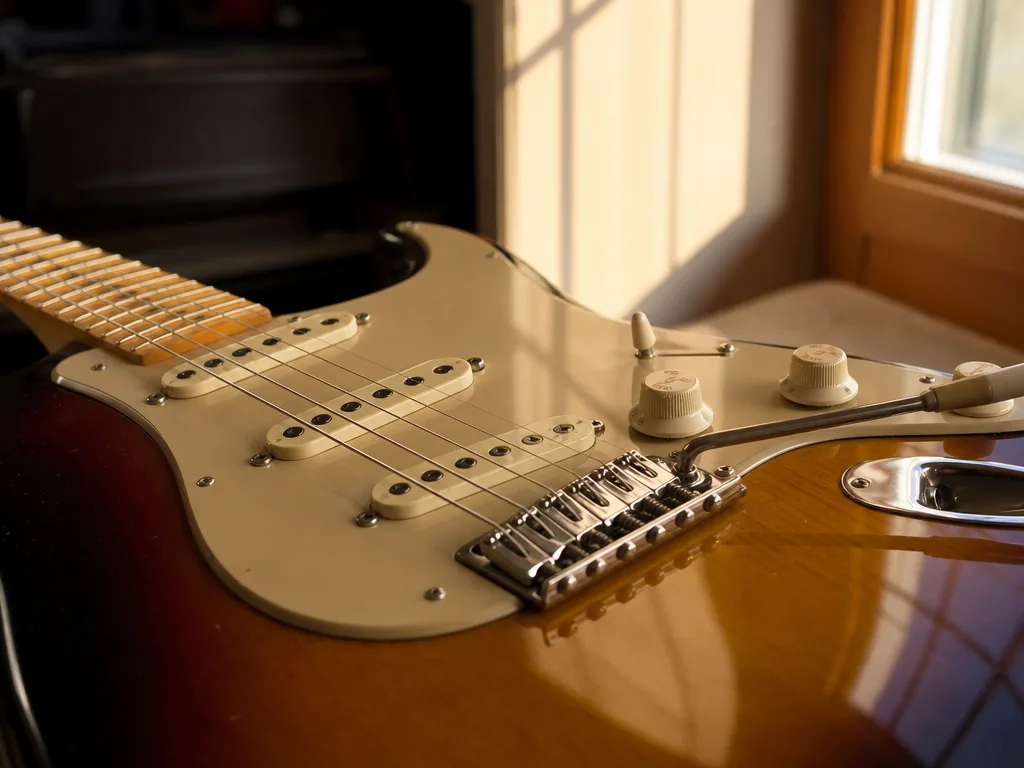
The electric guitar is a guitar that converts string vibrations into an electrical signal through a pickup. This invention gave the guitar unlimited possibilities in volume and tone, and made it the core instrument of modern music, particularly rock, blues and metal.
The Early Development (1930s)
- Early 1930s: Early guitars were still acoustic guitars whose volume depended on the soundbox. With the development of electric amplification technology, musicians began seeking ways to boost the guitar’s volume.
- 1931: Les Paul (later a famous guitarist) began experimenting with pickups and electric devices to amplify the guitar, though the technology was still imperfect at the time.
1940s: The Birth of the Electric Guitar
- 1941: George Beauchamp and Adolph Rickenbacker invented the first commercially produced all-metal guitar, called the “Electric Spanish Guitar”. This instrument is considered one of the prototypes of the electric guitar, and it was released in 1942.
- 1946: Fender (founded by Leo Fender) introduced the Fender Esquire, one of the earliest solid-body electric guitars, successfully establishing the electric guitar’s place in music.
1950s: The Golden Age of the Electric Guitar
- 1950s: Les Paul collaborated with Gibson to introduce the Les Paul model electric guitar, hailed as one of the most influential designs in electric guitar history. During this period many musicians began using the electric guitar, laying the foundations of modern music.
1960s–1970s: Diversification of Electric Guitar Styles
- With the rise of rock and blues, the electric guitar became synonymous with these styles. Musicians began creating more diverse tones and innovating in performance, using more effects pedals and techniques.
Outstanding Electric Guitar Masters and Their Representative Works
The electric guitar is not merely an instrument; it is the soul of music, playing a key role especially in rock, blues and metal. Here are several of the most influential electric guitar masters and their representative works:
1. Jimi Hendrix (1942–1970)
- Nationality: American
- Contributions:
- Known as the “God of the Electric Guitar”, Hendrix was one of the greatest guitarists of the 20th century and drove the innovation of electric guitar music. His style combined improvisation with experimental music, pioneering a host of sound-effect techniques.
- Representative works:
- Purple Haze — considered one of his signature works, showcasing his unique improvisation and stunning guitar effects.
- Voodoo Child (Slight Return) — demonstrates his powerful improvisational ability and distinctive guitar technique.
2. Eric Clapton (b. 1945)
- Nationality: British
- Contributions:
- Clapton is a guitar legend of blues and rock, with a unique technique and emotional expression. His guitar skill is unmatched, and his musical style is far-reaching.
- Representative works:
- Layla — showcases Clapton’s powerful guitar ability and emotional expression, becoming one of his most representative rock songs.
- Tears in Heaven — expresses Clapton’s grief at losing his son, with deeply emotional guitar playing.
3. Jimmy Page (b. 1944)
- Nationality: British
- Contributions:
- As the guitarist of Led Zeppelin, Jimmy Page’s innovation and technique are considered classics in rock history. He incorporated techniques such as slide playing into electric guitar, pushing tone to its limits.
- Representative works:
- Stairway to Heaven — its guitar solo is one of the most iconic in guitar history, with Page’s technique and musical innovation drawing wide admiration.
- Whole Lotta Love — showcases Page’s powerful technique and tonal diversity, and is a classic of rock music.
4. Eddie Van Halen (1955–2020)
- Nationality: American
- Contributions:
- Known as a “revolutionary of the modern rock guitar”, Van Halen redefined electric guitar playing with his groundbreaking technique, particularly two-handed tapping on the fingerboard.
- Representative works:
- Eruption — showcases Van Halen’s signature tapping technique and is one of the most influential solos in guitar history.
- Jump — fuses synthesiser and electric guitar tones, a Van Halen classic.
5. B.B. King (1925–2015)
- Nationality: American
- Contributions:
- B.B. King was one of the leading figures of blues music, with a simple yet deeply emotional guitar style that influenced later guitarists profoundly. He created and performed with his guitar named “Lucille”, which became an iconic part of blues guitar.
- Representative works:
- The Thrill Is Gone — a blues classic showcasing B.B. King’s smooth tone and emotional expression.
- Every Day I Have the Blues — demonstrates King’s distinctive blues style and emotional expression.
Classic Electric Guitar Works Recommended
| Composer/Musician | Work | Style | Characteristics |
|---|---|---|---|
| Jimi Hendrix | Purple Haze | Rock | Hendrix’s improvisation and sound-effect innovation |
| Eric Clapton | Layla | Rock | Clapton’s intense emotional expression |
| Jimmy Page | Stairway to Heaven | Rock | Page’s classic guitar solo |
| Eddie Van Halen | Eruption | Rock | A technical revolution in modern rock guitar |
| B.B. King | The Thrill Is Gone | Blues | Deeply emotional blues guitar playing |
Frequently Asked Questions (FAQ)
Q: What is the difference between an acoustic guitar and an electric guitar?
An electric guitar converts string vibrations into an electrical signal through a pickup, which is then amplified, while an acoustic guitar relies on its soundbox for volume. This is what gives the electric guitar its wide range of volume and tone.
Q: Who invented the electric guitar?
The first commercially produced all-metal guitar, the “Electric Spanish Guitar”, was invented by George Beauchamp and Adolph Rickenbacker in 1941. Solid-body electric guitars soon followed, with Fender’s Esquire in 1946 and the Les Paul model in the 1950s.
Q: Which electric guitar works should beginners start with?
Beginners can start by listening to iconic pieces such as Jimi Hendrix’s Purple Haze or Eric Clapton’s Layla to build a sense of tone and feel, then move on to simple riffs before tackling advanced solos like Eruption.
Q: What techniques define modern electric guitar playing?
Two-handed tapping (popularised by Eddie Van Halen), slide playing (used by Jimmy Page), and improvisation with sound-effect experimentation are among the techniques that define modern electric guitar playing.
Further Resources & Next Steps
- Official Resources — For reliable history and technique guidance, consult established music-education bodies such as the Berklee College of Music or the Rock & Roll Hall of Fame’s educational materials.
- Further Reading — Build your ear by listening through the classic works in this guide, from Purple Haze to Stairway to Heaven, before attempting them yourself.
- Parent Tips — For young learners, choose a lightweight, smaller-body electric guitar and keep practice sessions short and fun; pair regular listening with hands-on play to sustain motivation.
Note: The information above is for reference only. Please consult professional education institutions for details.
This article was initially drafted and organised with AI. Editor / Professor Chan Kwok-wai; Managing Editor / Kong Yee-leung
Act Now: Find a Tutor / Register as a Tutor
For parents & students: looking for a home or online tutor for this subject? Click the button below to post a free tuition case (subject, level and preferred time) — TutorZone will match you with suitable tutors:
For tutors: do you teach this subject? Click the button below to register for free and receive more suitable cases — you pay only when a match is made: