
 Chinese (Traditional)
 Chinese (Simplified)
 English



DSE World History Course Complete Guide
TUTORZONE SUBJECT GUIDE · DSE
World History is a humanities elective that traces the development of human civilisation from multiple perspectives — spanning East and West — and builds the source-analysis and essay skills that the DSE rewards. Here is a complete guide to the syllabus, assessment mode, study strategies and university pathways for the subject.
Direct Answer:What is DSE World History?
DSE World History is a humanities elective tracing human civilisation from East and West perspectives, developing source-analysis and essay skills 。
Subject Positioning and Features
World History DSE is an elective subject that explores the development of global history from multiple perspectives. It emphasises cross-cultural comparison and encourages students to understand the evolution of human civilisation from diverse viewpoints, developing the ability to understand the past in order to predict the future and applying critical thinking when analysing historical sources.
Humanities Subject
Alongside Chinese History, it focuses on both Eastern and Western historical developments.
Global Perspective
Covers the development of both Eastern and Western civilisations.
Skill-Oriented
Analysing historical sources and critical thinking account for 45% of the exam.
International Recognition
UCAS (UK) recognises this subject as equivalent to an A-Level A grade.
Course Structure — Four Main Themes
The World History course is divided into four main themes, each with its own core content and in-depth research direction.
The ability to understand the past is what equips students to predict the future.
Theme 1: 20th Century World Development40%
Core Units:
- 1914–1918: World War I
- 1919–1939: Interwar International Relations
- 1939–1945: World War II
- 1945–1991: Cold War Era
In-depth Research:
- Analysis of the flaws in the Versailles Treaty
- The impact of nuclear weapons on international relations
Theme 2: Modernisation and Transformation30%
Industrial Revolution:
- British Case: Factory system and social change
- Comparative Study: Meiji Restoration of Japan vs. China’s Self-Strengthening Movement
Colonialism:
- African Partition (Berlin Conference 1884)
- Indian Independence Movement (Gandhi’s Nonviolent Resistance)
Theme 3: Conflict and Cooperation20%
International Organisations:
- League of Nations: Failure in handling the Ethiopian Crisis
- United Nations: Analysis of the Security Council’s power structure
Regional Conflicts:
- Middle East Issues (Origins of the Israeli-Palestinian Conflict)
- Balkan Wars (Role of Nationalism)
Theme 4: Culture and Ideas10%
Enlightenment Movement:
- Comparison of Voltaire and Rousseau’s ideas
- Influence of Enlightenment thought on the American Declaration of Independence
Globalisation:
- Discussion of the McDonaldization phenomenon
- Case studies of anti-globalisation movements
Assessment Mode
The assessment combines two written papers with a school-based assessment (SBA).
Paper 1: Data Analysis2 hrs 15 min · 50%
Question Type: Provides text, images, or statistical data and requires comparison, verification and evaluation of historical sources.
Key to High Scores: Be specific in citing data (e.g., “According to the curve in Data A…”) and present a balanced historical viewpoint (avoid absolute conclusions).
Paper 2: Essay1 hr 30 min · 30%
Sample Question: “Nationalism in 20th-century Europe did more harm than good.” To what extent do you agree with this statement?
Essay Framework:
- Define key terms (e.g., nationalism)
- Present arguments for (e.g., contributing to the unification of Germany)
- Present counter-arguments (e.g., causing the Balkan conflict)
- Provide a conclusion (contextualise with time and place)
School-based Assessment (SBA)20%
Research Report: Example — “Comparing the Rise of Hitler and Mussolini”, requiring the use of primary sources and academic references.
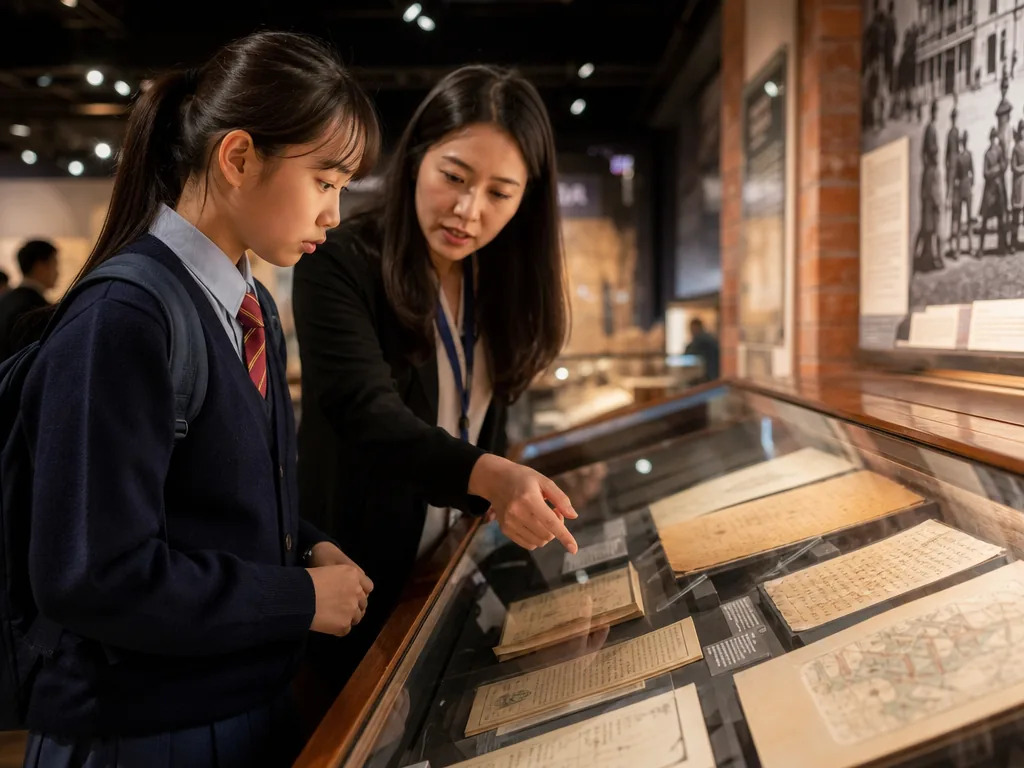
Field Study: e.g., a special study at the Hong Kong History Museum or a survey of WWII sites (such as the Stanley Military Cemetery).
Learning Difficulties and Breakthrough Strategies
Mastering Chronology
Create a dual-axis timeline to compare events in Eastern and Western history side by side.
Mnemonics
Use memorable phrases to fix key dates in memory, such as: “1492, Columbus sailed west to discover the New World.”
Concept Differentiation
Distinguish between commonly confused concepts, such as Capitalism vs. Imperialism, and Fascism vs. Nazism.
Recommended Study Resources
- Examination Bureau — “Sample Questions and Feedback” and the “World History Curriculum and Assessment Guide”.
- Further Reading — Guns, Germs, and Steel by Jared Diamond and The Origins of Totalitarianism by Hannah Arendt.
- Interactive Map — “The Map as History”.
- Historical Source Database — “Internet Modern History Sourcebook”.

Past Performance Analysis
2023 Exam Results: Grade 5 or above was achieved by 2.1% of students.
Popular Topics:
- “Cold War”: 35%
- “Industrial Revolution”: 25%
- “Colonialism”: 20%
Innovative Teaching Methods
Simulated Situations
Role-playing the Paris Peace Conference (negotiating between different countries) or Cold War crisis decision-making games (the Cuban Missile Crisis).
Interdisciplinary Connections
- Economics: The Great Depression and Keynesianism
- Geography: Resource conflicts and war relations
University Pathways and Career Prospects
Local University Admissions
- The University of Hong Kong (HKU): Specialisation in World History Studies
- Chinese University of Hong Kong (CUHK): Global Studies (requires DSE World History at grade 4 or above)
Overseas Pathways
- UK: Some universities offer direct admission to second-year History programmes.
- Australia: The subject is included in ATAR scoring, with humanities subjects receiving additional weight.
Key Exam Tips
Data Analysis Three-Step Method
- Description: Objectively state the contents of the data.
- Interpretation: Analyse the author’s position or the limitations of the historical source.
- Application: Answer the core question of the topic, demonstrating comprehensive analysis.
Essay Golden Structure
- Introduction (Define terms + stance)
- Argument 1 (Facts + scholarly viewpoints)
- Argument 2 (Counter-argument + rebuttal)
- Conclusion (Comprehensive evaluation + historical insights)
DSE World History is a subject that challenges students to think critically about global history while developing skills in analysing historical sources and constructing well-argued essays. It offers students the tools to understand the connections between past events and contemporary issues. If you need further help with exam techniques, study schedules, or topic explanations, feel free to reach out.
Frequently Asked Questions (FAQ)
Q: Is World History only for students who want to study history at university?
No. The source-analysis and essay skills transfer well to law, journalism, global studies and many other humanities and social-science programmes, and UCAS (UK) recognises the subject as equivalent to an A-Level A grade.
Q: How much of the exam depends on memorising dates?
Less than many students expect. Source analysis and critical thinking make up 45% of the exam, so understanding causes, consequences and perspectives matters more than rote memorisation — although a firm grasp of chronology is still essential for essays.
Q: What makes a strong Paper 1 (data-based) answer?
Cite the source specifically (e.g., “According to the curve in Data A…”), evaluate its limitations and the author’s position, and avoid absolute conclusions — present a balanced historical viewpoint.
Q: Can I use World History for overseas university applications?
Yes. In the UK, UCAS treats it as equivalent to an A-Level A grade and some universities offer direct entry to second-year History programmes; in Australia it counts toward ATAR scoring with humanities weighting.
Further Resources & Next Steps
- Official Resources — The Hong Kong Education Bureau’s “Sample Questions and Feedback” and the “World History Curriculum and Assessment Guide”.
- Further Reading — Guns, Germs, and Steel by Jared Diamond and The Origins of Totalitarianism by Hannah Arendt.
- Parent Tips — Encourage your child to keep a dual-axis timeline and to visit local history sites such as the Hong Kong History Museum or the Stanley Military Cemetery to bring the syllabus to life.
Note: The information above is for reference only. Please consult professional education institutions for details.
This article was initially drafted and organised with AI. Editor / Professor Chan Kwok-wai; Managing Editor / Kong Yee-leung
Act Now: Find a Tutor / Register as a Tutor
For parents & students: looking for a home or online tutor for this subject? Click the button below to post a free tuition case (subject, level and preferred time) — TutorZone will match you with suitable tutors:
For tutors: do you teach this subject? Click the button below to register for free and receive more suitable cases — you pay only when a match is made: