
 Chinese (Traditional)
 Chinese (Simplified)
 English



Erhu Grading Guide: A Complete Evaluation from Wood to Tone Quality
TUTORZONE SUBJECT GUIDE · STRING INSTRUMENTS
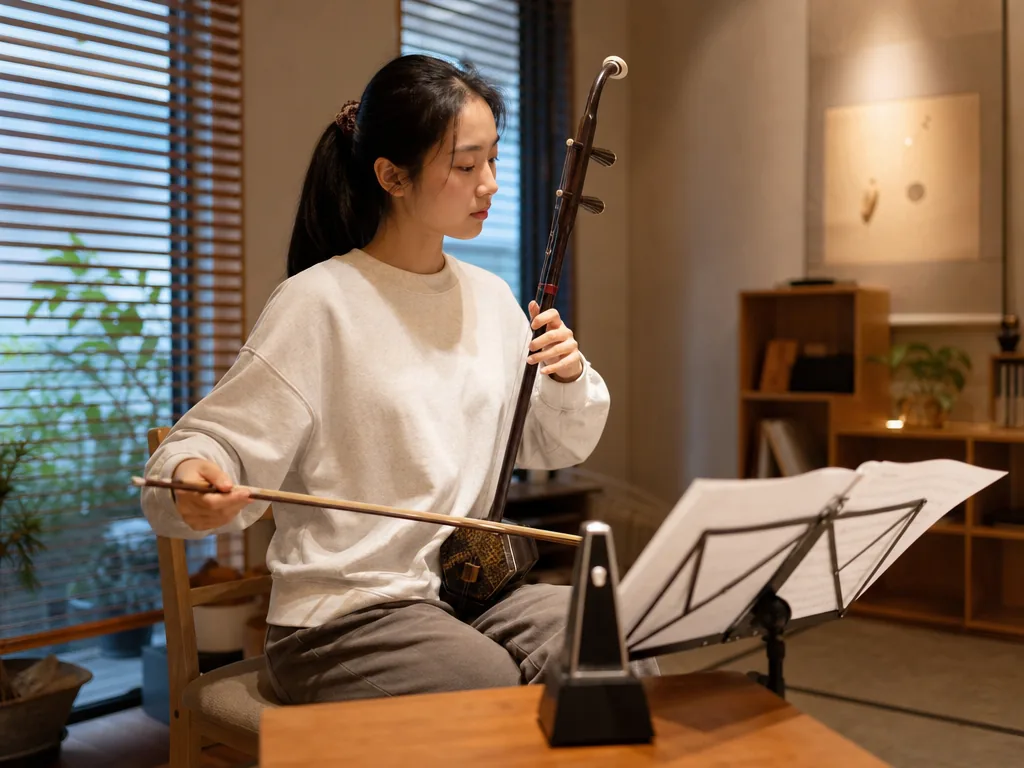
The Erhu is a traditional Chinese bowed string instrument beloved for its expressive tone and deep cultural heritage. This guide walks you through the key criteria for grading an Erhu — materials, craftsmanship, tonal performance, pricing tiers, and reputable brands — so you can choose the right instrument with confidence.
Direct Answer:What are the key criteria for grading an Erhu?
Erhu grading criteria include materials, craftsmanship, tonal performance, pricing tiers, and reputable brands.

Materials Define the Tone Foundation
The tone of an Erhu is largely determined by the wood of the body, the python skin resonator, and the bow material.
Wood Type (Erhu Body)
- Rosewood (Old Red Sandalwood, Small-Leaf Red Sandalwood): Common in mid to high-end Erhus. Offers warm, full-bodied sound with excellent sustain.
- Zitan (Purple Sandalwood): A premium wood, very dense and resonant. Produces rich, penetrating tone. Suitable for professionals.
- Ebony: Dense, focused sound with bright overtones. Found in professional-grade instruments.
- Maple or Pearwood: Typically used in beginner Erhus. Affordable, but the tone is less complex.
Python Skin (Soundboard)
- Traditional Erhus use authentic Burmese python skin, valued for its elasticity and natural texture.
- High-quality skin should have even scales and medium thickness for balanced vibration.
- Cheap instruments may use synthetic skin, which lacks natural resonance.
Erhu Bow
- Professional Erhus feature bows made from horsehair, offering smooth tension and fine tonal control.
- Entry-level bows might use synthetic hair, which is less responsive and produces a harsher tone.
Craftsmanship Affects Playability
- Soundbox carving: Should be smooth and finely detailed, with a well-finished interior to enhance resonance.
- Tuning pegs: High-quality Erhus have pegs that turn smoothly and hold tuning well.
- Fingerboard: Must be flat and even to ensure pitch accuracy.
- Soundhole design: Different soundholes affect the direction and projection of sound.
Sound Quality & Performance
An excellent Erhu will exhibit:
- Balanced tone across all registers — clear high notes, warm mids, and deep lows.
- No buzzing or distortion; clean transitions between notes.
- Responsive bowing, smooth playability, and stable tuning.
- Expressiveness suitable for dynamic styles like folk, classical, and contemporary Chinese music.
An Erhu’s true grade is heard first in its tone — then confirmed by its wood, skin, and craftsmanship.
Grading Tiers & Price Guide
| Grade | Price Range (TWD) | Ideal For | Features / Brands |
|---|---|---|---|
| Beginner | 3,000 – 8,000 | Students / hobbyists | Synthetic or pearwood body, basic setup |
| Intermediate | 8,000 – 25,000 | Enthusiasts | Real python skin, rosewood, better tone response |
| Professional | 25,000 – 60,000 | Performers / soloists | Ebony or Zitan, handcrafted, refined tuning |
| Collector | 60,000+ | Collectors / artists | Master luthier builds, antique wood, rare skins |
Buying Advice & Evaluation Tips
- Try before you buy: The same wood and skin may still sound different due to natural variation.
- Check craftsmanship: Look for neat joints, stable neck alignment, and symmetrical python skin.
- Test tone stability: Sustain, bowing responsiveness, and note clarity are key.
- Reputable brands/luthiers: Consider instruments by famous makers like Wang Guotong or Liu Changfu.
- After-sales service: Trusted stores offer tuning, maintenance, and upgrade support.
Erhu Maintenance Essentials
- Clean the skin and bow regularly to prevent dirt buildup.
- Loosen bow tension after each session to prevent warping.
- Store in a cool, dry area (recommended humidity: 45–60%).
- Change strings and rosin periodically to maintain tone.
- Inspect and adjust bridge and tuning pegs when needed.
Frequently Asked Questions (FAQ)
Q: What is the most important factor in grading an Erhu?
Tone quality matters most, and it is driven primarily by the wood of the body and the quality of the python skin resonator. Materials and craftsmanship together determine whether an instrument sounds warm, balanced, and responsive.
Q: Is a more expensive Erhu always better?
Not necessarily. Higher grades use denser woods such as Zitan or Ebony and handcrafted parts that refine the tone, but a well-maintained mid-range instrument can serve an enthusiast very well. Always play before you buy.
Q: Do I need real python skin, or is synthetic skin acceptable?
Real Burmese python skin is valued for its elasticity and natural resonance, but it is restricted or discouraged in some regions. Synthetic skin is more affordable and lower-maintenance, though it generally lacks the same tonal depth.
Q: How should I store my Erhu to protect it?
Keep it in a cool, dry place with humidity around 45–60%, loosen the bow after each session, and clean the skin and bow regularly to prevent warping and dirt buildup.
Further Resources & Next Steps
- Official Resources — Consult regional Chinese-music associations and reputable instrument retailers for grading standards, certification, and after-sales support.
- Further Reading — Listen to and study the works of master performers such as Liu Tianhua to build your tonal reference before you buy.
- Parent Tips — Visit a trusted store together, compare two or three Erhus in the same price band, and ask about tuning and maintenance support before committing.
Note: The information above is for reference only. Please consult professional education institutions for details.
This article was initially drafted and organised with AI. Editor / Professor Chan Kwok-wai; Managing Editor / Kong Yee-leung
Act Now: Find a Tutor / Register as a Tutor
For parents & students: looking for a home or online tutor for this subject? Click the button below to post a free tuition case (subject, level and preferred time) — TutorZone will match you with suitable tutors:
For tutors: do you teach this subject? Click the button below to register for free and receive more suitable cases — you pay only when a match is made: