
 Chinese (Traditional)
 Chinese (Simplified)
 English



The Origin of Gomoku
TUTORZONE SUBJECT GUIDE · HOBBIES
Gomoku — also known as “Renju” or “Gomoku-bibe” — is a board game with simple rules but profound strategies, widely popular in East Asia, especially in China, Japan, and South Korea. This guide traces its ancient Chinese origins, its spread across the region, and the evolution of the rules that turned a folk pastime into an international competitive game.
Direct Answer:What is the origin of Gomoku?
Gomoku is a board game with simple rules and profound strategies, originating in ancient China and spreading across East Asia.
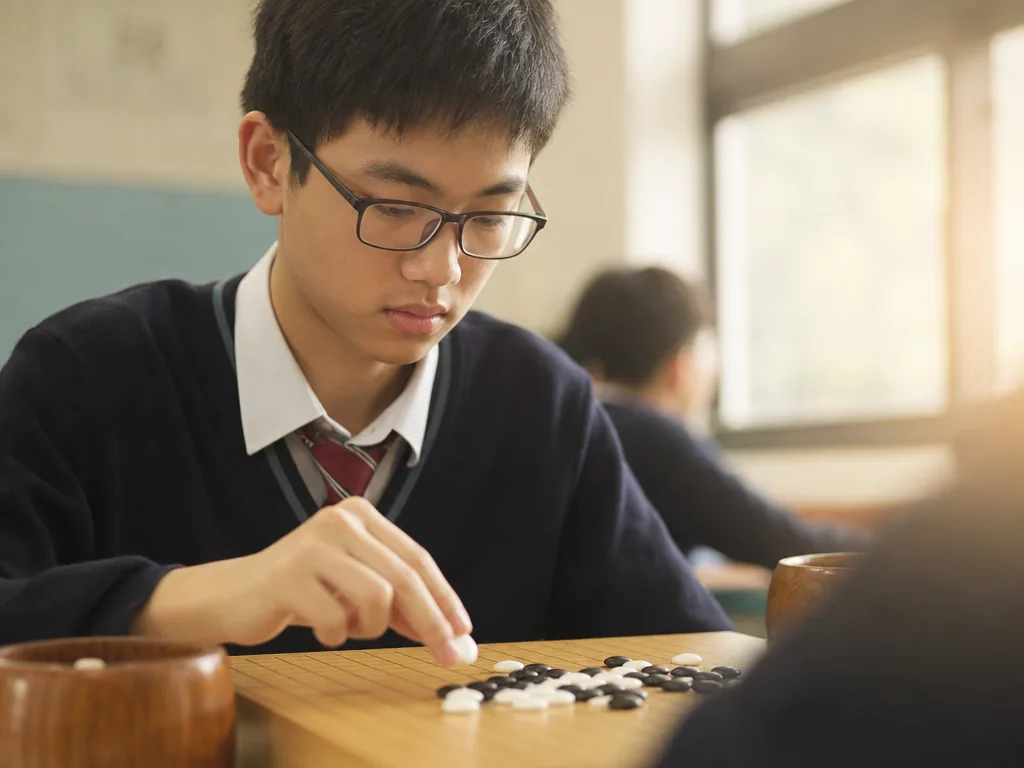
The Ancient Origins of Gomoku
The Beginnings in Ancient China
Gomoku originated in China. According to historical records, as early as the Spring and Autumn and Warring States periods (around the 5th century BC), China already had a prototype game similar to Gomoku.
People at the time used a simple board and black-and-white stones to play, and the winner was whoever formed a line first. This primitive form is considered the earliest version of Gomoku.
The Evolution of the Name
In ancient Chinese books, Gomoku was once called “Wudao” or “Wumuqi”.
“Gomoku” means five pieces connected in a line — whether straight, horizontal, or diagonal, connecting five wins the game. This simple, clear rule has been used to this day.
The Spread of Gomoku Across East Asia
Introduced to Japan
Through cultural exchange between the Tang dynasty and Japan, Gomoku was introduced to Japan between the 7th and 8th centuries.
In Japan, the game is called “Gomunai”.
Japan later developed more formal competition rules based on Gomoku, such as the “Renju rules”, which emphasise fairness and strategy, and even established a dedicated Renju Association.
Popularity in South Korea
In South Korea, Gomoku is also popular and is known as “Omok”.
South Korea has developed its own competition system and technical school, making Gomoku one of the most popular intellectual competitive games in the country.
The Evolution and Standardisation of the Rules
The Original Rules
The rules of traditional Gomoku are very simple: both players take turns placing pieces on the board, and the first player to connect five pieces in a straight, horizontal, or diagonal line wins.
The board is usually a 19×19 grid, though other sizes such as a 15×15 grid are also used.
The Birth of the Renju Rules
To prevent the first player from gaining too great an advantage, Japan established the “Renju” rules in the early 20th century.
Under Renju rules, the black player (who moves first) faces extra restrictions — such as the forbidden “three-three”, “four-four”, and “overline” moves (forming more than five connected pieces is a foul) — in order to balance the two players’ chances of winning.
Modern Development and Internationalisation
The Founding of the Renju International Federation (RIF)
In 1988, the Renju International Federation (RIF) was established with the aim of promoting Renju and Gomoku and standardising international competition rules.
The RIF regularly hosts the World Renju Championship and youth championships.
Gomoku and Video Games
With the development of technology, Gomoku quickly entered computer and mobile platforms, and various online Gomoku games and AI game programs have become popular around the world.
Platforms such as Yahoo Games, the KGS Renju Server, and Gomoku apps allow players around the world to play and connect at any time.
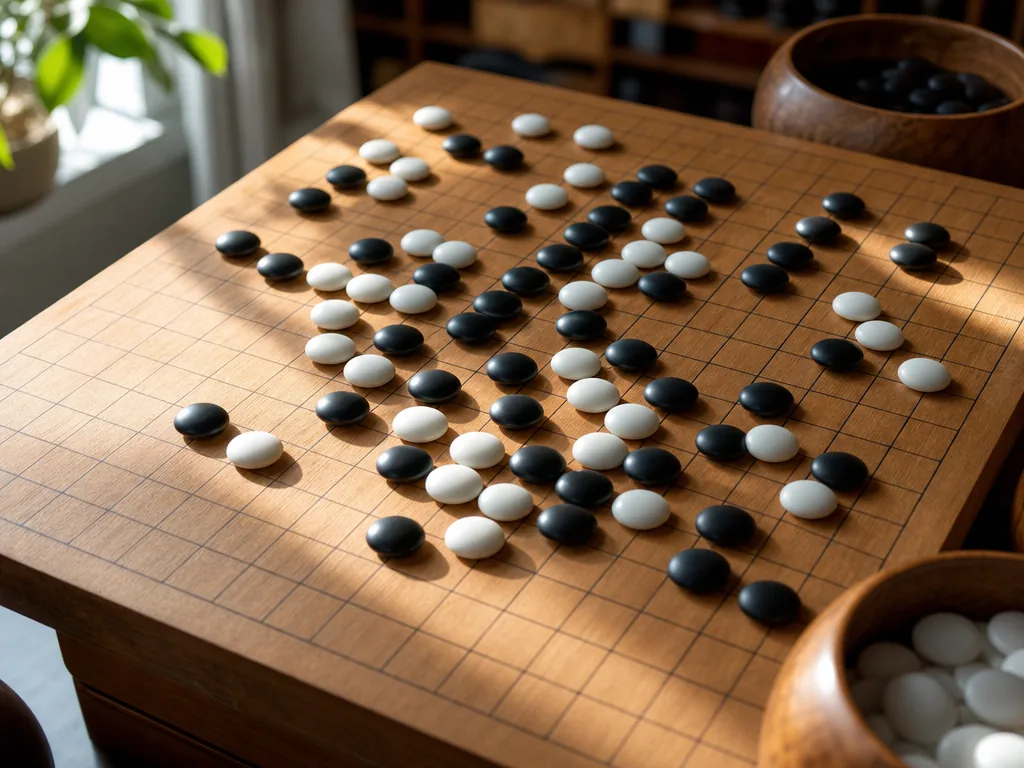
Gomoku at a Glance
| Project | Content |
|---|---|
| Place of origin | China |
| Origin period | Spring and Autumn and Warring States periods (approximately 5th century BC) |
| Main distribution areas | China, Japan, South Korea |
| Rule evolution | Original rules → Japanese Renju rules (forbidden-move system) |
| Modern development | International competitions, electronic games |
Gomoku, a traditional Chinese board game, has undergone millennia of evolution and cultural exchange, gaining widespread popularity and development not only in East Asia but across the globe. With its ease of learning, rich strategic possibilities, and endless variety, Gomoku has become a classic board game that blends wisdom, artistry, and competitive spirit.
Frequently Asked Questions (FAQ)
Q: What does “Gomoku” mean?
“Gomoku” means five pieces connected in a line — a straight, horizontal, or diagonal line all count as a win. This simple, clear rule has been used since ancient times.
Q: Where did Gomoku originate?
Gomoku originated in China, where a prototype game appeared as early as the Spring and Autumn and Warring States periods, around the 5th century BC.
Q: What is the difference between Gomoku and Renju?
Gomoku uses the simple “five in a row” rule, while Renju adds restrictions on the black (first) player — such as forbidding three-three, four-four, and overline moves — to balance the two sides.
Q: Is Gomoku played competitively?
Yes. The Renju International Federation (RIF), founded in 1988, hosts the World Renju Championship and youth championships, and online platforms allow players worldwide to compete at any time.
Further Resources & Next Steps
- Official Resources——The Renju International Federation (RIF) publishes the official competition rules, tournament calendars, and introductory guides for new players.
- Further Reading——Books on board-game history and strategy, plus online platforms such as Yahoo Games and the KGS Renju Server, offer ways to learn the rules and practise against players worldwide.
- Parent Tips——Start by teaching the simple “five in a row” rule on a small board, then introduce Renju’s forbidden moves once your child understands basic tactics.
Note: The information above is for reference only. Please consult professional education institutions for details.
This article was initially drafted and organised with AI. Editor / Professor Chan Kwok-wai; Managing Editor / Kong Yee-leung
Act Now: Find a Tutor / Register as a Tutor
For parents & students: looking for a home or online tutor for this subject? Click the button below to post a free tuition case (subject, level and preferred time) — TutorZone will match you with suitable tutors:
For tutors: do you teach this subject? Click the button below to register for free and receive more suitable cases — you pay only when a match is made: