
 Chinese (Traditional)
 Chinese (Simplified)
 English



What is AP Psychology? | Course Overview, Topics & Exam Guide
TUTORZONE SUBJECT GUIDE · AP
AP Psychology brings college-level psychology to high school students, covering everything from brain function and learning to personality, psychological disorders, and treatment. This guide breaks down the course content, exam format, and the real benefits of taking it.
Direct Answer:What is AP Psychology?
AP Psychology brings college-level psychology to high school students, covering brain function, learning, personality, psychological disorders, and。
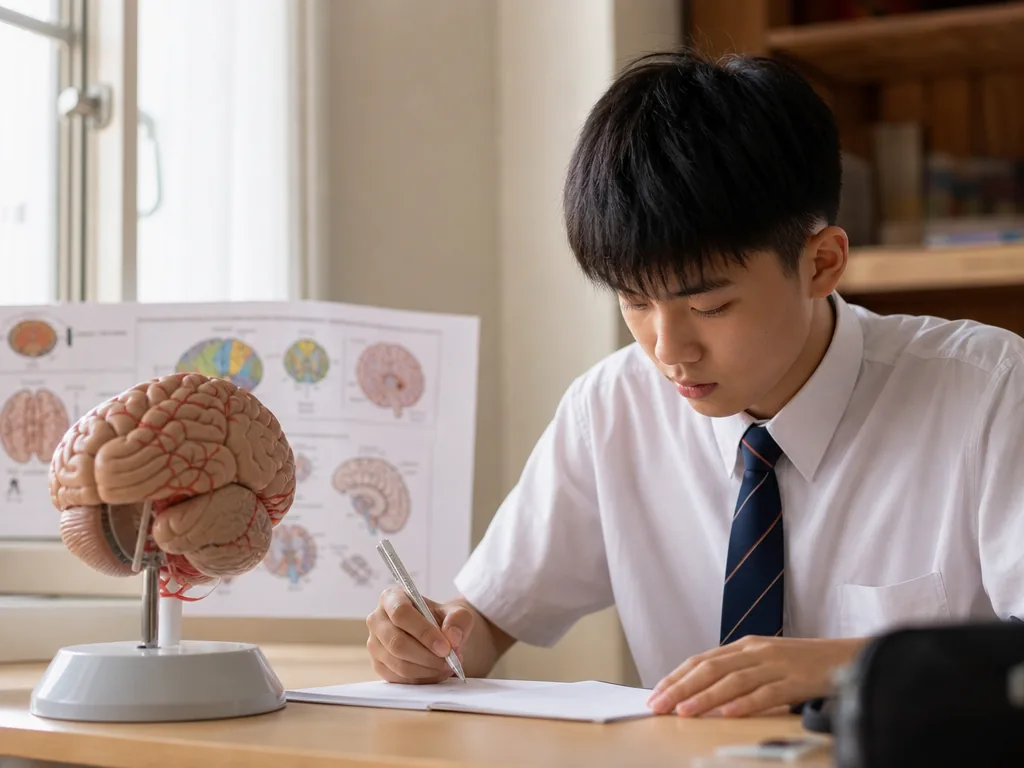
What Is AP Psychology?
AP Psychology is a course offered under the Advanced Placement (AP) program in the United States, designed to introduce high school students to the foundational concepts, theories, and applications of psychology. This college-level course explores a wide range of psychological topics, such as human behavior, brain function, learning, memory, development, personality, psychological disorders, and treatment methods.
The AP Psychology course encourages students to develop critical thinking and analytical skills, fostering a deeper interest in psychology and laying the groundwork for further studies in psychology, medicine, education, and related fields.
Why Study AP Psychology?
Understand Human Behavior
Learn the science behind everyday thoughts, emotions, and actions.
Develop Research and Analysis Skills
Apply psychological research methods to real-life scenarios.
Prepare for College Majors
Gain a solid foundation for degrees in psychology, neuroscience, sociology, and more.
Boost Career Readiness
Knowledge of psychology is valuable in fields such as healthcare, human resources, counseling, and education.
AP Psychology Course Topics
AP Psychology covers the major domains and theories of psychology. Students will explore how psychological principles apply to individuals and society. Below are the core units:
1. History and Approaches in Psychology
- Explore the origins and evolution of psychology from ancient philosophy to modern science.
- Understand major schools of thought: structuralism, functionalism, behaviorism, cognitive psychology, etc.
- Learn research methods such as experiments, observations, and surveys.
2. Biological Bases of Behavior
- Study the brain’s structure and functions, neurotransmitters, and hormones.
- Understand how the nervous system affects behavior, emotion, and cognition.
3. Sensation and Perception
- Examine how we receive sensory information (sight, sound, taste, touch, smell).
- Learn how the brain interprets these signals to create perception.
4. Learning
- Learn classical conditioning (Pavlov), operant conditioning (Skinner), and observational learning (Bandura).
- Understand how behavior is acquired and modified.
5. Memory
- Explore how information is encoded, stored, and retrieved.
- Understand memory systems (sensory, short-term, long-term) and phenomena like forgetting and false memories.
6. Thinking and Language
- Study problem-solving, decision-making, and cognitive biases.
- Explore how language develops and influences thought.
7. Motivation and Emotion
- Analyze theories of emotion (James-Lange, Cannon-Bard, Two-Factor) and motivation (drive reduction, Maslow’s hierarchy).
- Understand what drives human behavior.
8. Developmental Psychology
- Study human development from infancy to old age.
- Learn about cognitive and social development theories (Piaget, Erikson).
9. Personality
- Compare personality theories, including Freud’s psychoanalysis and the Big Five personality traits.
- Learn how personality is assessed through various psychological tools.
10. Psychological Disorders and Treatment
- Understand different types of mental disorders (anxiety, depression, schizophrenia, etc.).
- Learn treatment methods such as cognitive-behavioral therapy (CBT), psychoanalysis, and humanistic therapy.

AP Psychology Exam Format
The AP Psychology exam assesses a student’s grasp of psychological theories and their ability to apply them. The exam includes:
1. Multiple-Choice Section
- Approximately 100 questions.
- Covers all key concepts across the 10 units.
- Tests knowledge and comprehension.
2. Free-Response Section
- 2 written questions.
- Requires analysis of given scenarios using psychological concepts and theories.
- Assesses application, reasoning, and critical thinking.
3. Scoring
- The final score ranges from 1 to 5.
- A score of 5 indicates college-level mastery of psychology.
Benefits of Taking AP Psychology
- Gain Insight Into Human Behavior: Understand what drives people’s actions and emotions.
- Strengthen Critical Thinking: Analyze complex psychological ideas and apply the scientific method.
- Academic Foundation: Excellent preparation for college majors in psychology, medicine, sociology, and more.
- Career Advantage: Valuable for professions in mental health, education, HR, marketing, and healthcare.
Final Thoughts
AP Psychology is an engaging and rewarding course that not only prepares students for future studies but also equips them with a better understanding of themselves and others. Whether you’re planning a career in psychology or just curious about the mind, this course offers valuable knowledge and transferable skills.
Frequently Asked Questions (FAQ)
Q: Is AP Psychology hard?
AP Psychology is considered one of the more accessible AP courses. However, it covers a wide range of topics and requires good memorization and analytical skills.
Q: Are there prerequisites for AP Psychology?
No prerequisites are required. A background in science or social studies can be helpful but is not mandatory.
Q: How is AP Psychology different from other AP courses?
Unlike math or science-based AP subjects, AP Psychology focuses on human behavior, cognition, and emotion — making it unique and appealing to students interested in understanding people.
Q: How can I prepare for the AP Psychology exam?
Start by mastering the key terms and theorists in each unit, then practise applying concepts to scenarios using past free-response questions and full-length practice tests.
Further Resources & Next Steps
- Official Resources — The College Board’s official AP Psychology course page, for the latest Course and Exam Description (CED), sample questions, and scoring guidelines.
- Further Reading — Myers’ Psychology for the AP Course, a widely used textbook companion to the syllabus.
- Parent Tips — Encourage your child to link each unit to real-life examples, such as news stories, films, and everyday behaviour, which makes abstract theories easier to remember and apply.
Note: The information above is for reference only. Please consult professional education institutions for details.
This article was initially drafted and organised with AI. Editor / Professor Chan Kwok-wai; Managing Editor / Kong Yee-leung
Act Now: Find a Tutor / Register as a Tutor
For parents & students: looking for a home or online tutor for this subject? Click the button below to post a free tuition case (subject, level and preferred time) — TutorZone will match you with suitable tutors:
For tutors: do you teach this subject? Click the button below to register for free and receive more suitable cases — you pay only when a match is made: