 Chinese (Traditional)
 Chinese (Simplified)
 English



What Is MYP Physics? A Complete Guide to IB Middle Years Programme Physics for Secondary Students
TUTORZONE SUBJECT GUIDE · INTERNATIONAL JUNIOR HIGH SCHOOL
MYP Physics, part of the International Baccalaureate Middle Years Programme (IB MYP), is a foundational science course for students aged 11 to 16. It builds scientific inquiry and real-world problem-solving skills, giving students a strong base for the IB Diploma Programme (DP) and future study in science and engineering.
Direct Answer:What is MYP Physics?
MYP Physics is a foundational IB MYP science course for ages 11-16, building scientific inquiry and real-world problem-solving skills.
Goals and Key Concepts of MYP Physics
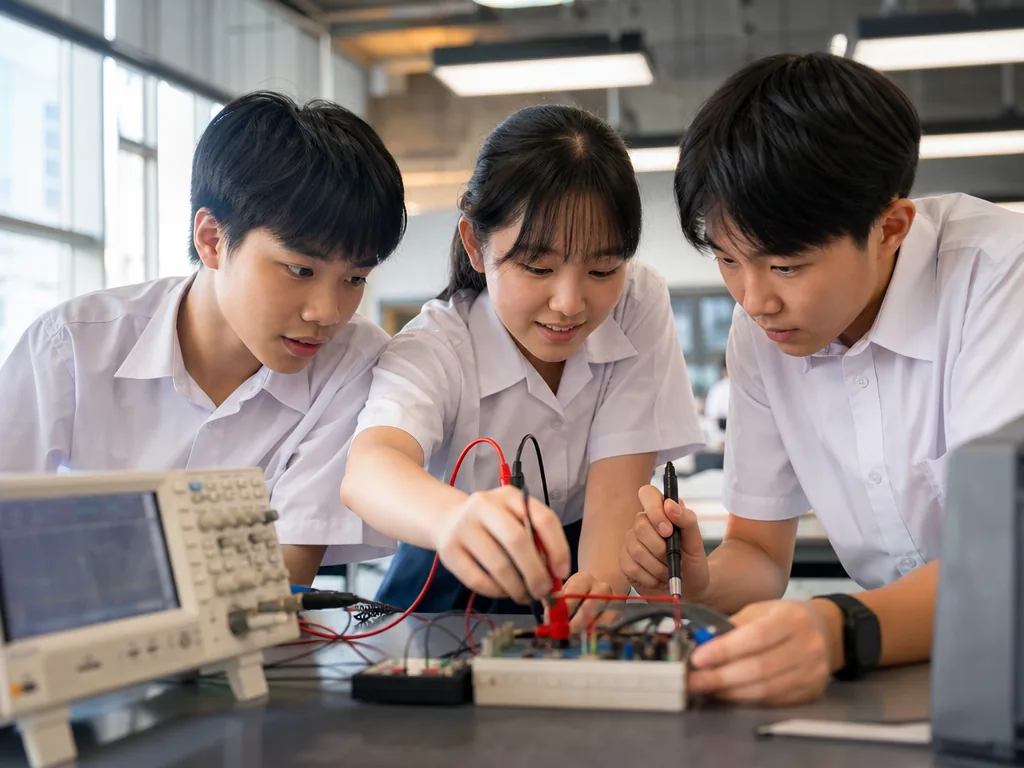
The main objective of MYP Physics is to develop a deep understanding of fundamental physical concepts and nurture critical thinking and problem-solving abilities. The course focuses on both theoretical understanding and practical application through experimentation and interdisciplinary learning.
Core Topics Covered in MYP Physics
- Forces and Motion — Students explore Newton’s laws of motion, velocity, acceleration, and how forces affect objects. Real-world examples include car crashes, sports mechanics, and falling objects.
- Energy and Work — This topic covers various forms of energy (kinetic, potential, thermal), energy transformations, and the law of conservation of energy.
- Waves and Sound — Students learn about wave behavior (frequency, amplitude, wavelength), sound propagation, and phenomena such as interference and diffraction.
- Electricity and Magnetism — Key concepts include electric current, voltage, resistance, and Ohm’s law. Students also study magnetic fields, electromagnetism, and the use of electromagnetic waves in modern technology.
- Modern Physics (Introductory Concepts) — Students are introduced to basic ideas in relativity and quantum theory, helping them grasp how physics has evolved and its impact on modern scientific thought.
How Students Learn in MYP Physics
Unlike traditional lecture-heavy approaches, IB MYP Physics emphasizes hands-on learning, inquiry, and collaboration. The curriculum encourages students to connect scientific theory with practical experience.
MYP Physics Learning Methods
- Scientific Inquiry & Experimentation — Students conduct experiments to test hypotheses, collect data, and draw evidence-based conclusions. They learn to use lab equipment, record measurements accurately, and analyze results.
- Problem Solving — Students apply formulas and models to solve physics problems, such as calculating energy efficiency or predicting motion trajectories.
- Interdisciplinary Projects — MYP Physics often integrates mathematics, chemistry, and design technology, encouraging students to solve complex, real-world problems from multiple angles.
- Collaborative Learning — Group experiments and discussions help students refine communication skills and learn from diverse perspectives.
Assessment in MYP Physics
MYP Physics assessments are comprehensive and aligned with IB criteria. They evaluate students’ knowledge, investigative skills, analytical thinking, and communication abilities.
Types of Assessment
- Formative Assessment — Ongoing evaluations through quizzes, lab reports, class discussions, and research tasks. These help track learning progress and guide improvements.
- Summative Assessment — Larger tasks such as unit tests, design investigations, and science fair projects. These evaluate how well students apply their knowledge to complete challenges or solve problems.
Criteria-Based Grading — MYP Physics uses a scale from 1 to 7, with assessment based on IB’s four criteria:
- Knowing and understanding
- Inquiring and designing
- Processing and evaluating
- Reflecting on the impacts of science
Interdisciplinary and Real-World Applications
MYP Physics supports interdisciplinary learning, where students apply physics knowledge to solve complex problems involving math, environmental science, design, and global issues.
Examples of Real-World Applications
- Using physics principles to design sustainable energy solutions
- Analyzing the physics behind climate change and renewable technologies
- Applying forces and motion to understand transportation safety
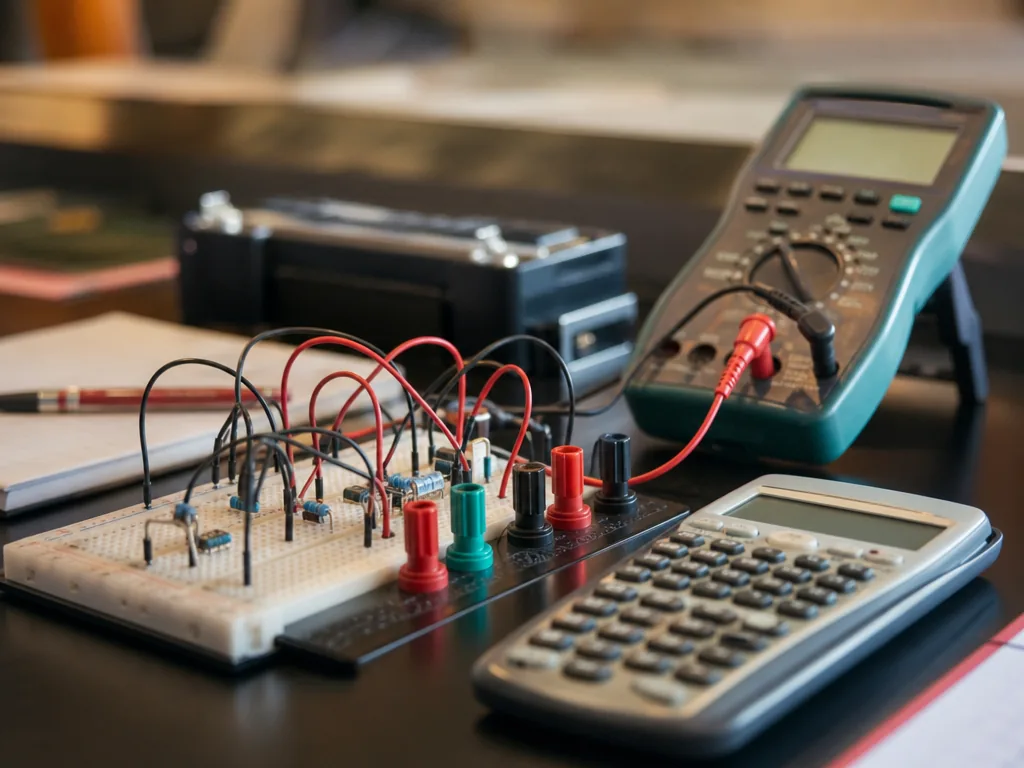
- Designing circuits or sensors for smart home systems
Physics and Global Contexts in the IB MYP
The IB programme promotes international-mindedness, and MYP Physics is no exception. Students explore how physics affects people across cultures, societies, and ecosystems.
Key Global Themes
- Sustainability — Understanding energy efficiency, solar power, and eco-friendly technologies
- Health and Medicine — Applying physics to medical imaging, diagnostics, and prosthetics
- Space and Technology — Learning about satellite systems, gravity, and space exploration
Through these lenses, students recognize the power of physics to address global challenges and improve quality of life.
Why MYP Physics Matters for Students
Benefits of Studying MYP Physics
Scientific Literacy
Builds strong scientific literacy and readiness for advanced courses like IB DP Physics.
21st-Century Skills
Develops 21st-century skills such as critical thinking, data analysis, and innovation.
Lifelong Curiosity
Encourages lifelong curiosity about the physical world.
STEM Careers
Prepares students for careers in STEM, engineering, health sciences, environmental studies, and more.
Conclusion: Building a Strong Science Foundation through MYP Physics
MYP Physics offers more than just theory — it’s a dynamic, hands-on course that prepares students to explore, question, and apply scientific ideas to everyday life and global issues. Through rigorous content, inquiry-based learning, and real-world applications, this course nurtures the skills students need to succeed in higher education and beyond.
MYP Physics is a dynamic, hands-on course that prepares students to explore, question, and apply scientific ideas to everyday life and global issues.
Whether your child is studying in Hong Kong, Singapore, or anywhere following the IB curriculum, MYP Physics is a critical step in developing a strong STEM foundation.
Frequently Asked Questions (FAQ)
Q: What age group is MYP Physics designed for?
MYP Physics is designed for students aged 11 to 16 as part of the International Baccalaureate Middle Years Programme (IB MYP).
Q: What are the core topics covered in MYP Physics?
Core topics include forces and motion, energy and work, waves and sound, electricity and magnetism, and introductory modern physics concepts such as relativity and quantum theory.
Q: How is MYP Physics assessed?
Assessment is based on IB’s four criteria — knowing and understanding, inquiring and designing, processing and evaluating, and reflecting on the impacts of science — graded on a 1 to 7 scale through a mix of formative and summative tasks.
Q: How does MYP Physics prepare students for the IB Diploma Programme (DP)?
It builds scientific literacy, inquiry, and problem-solving skills, giving students a strong foundation for IB DP Physics and other advanced science and engineering courses.
Further Resources & Next Steps
- Official Resources — The International Baccalaureate (IB) official website and its MYP Sciences subject guide (ibo.org).
- Further Reading — The IB MYP Sciences framework documents and IB-approved physics textbooks for the Middle Years Programme.
- Parent Tips — Encourage hands-on exploration at home through simple experiments and everyday conversations about physics to reinforce classroom learning.
Note: The information above is for reference only. Please consult professional education institutions for details.
This article was initially drafted and organised with AI. Editor / Professor Chan Kwok-wai; Managing Editor / Kong Yee-leung
Act Now: Find a Tutor / Register as a Tutor
For parents & students: looking for a home or online tutor for this subject? Click the button below to post a free tuition case (subject, level and preferred time) — TutorZone will match you with suitable tutors:
For tutors: do you teach this subject? Click the button below to register for free and receive more suitable cases — you pay only when a match is made: