
 Chinese (Traditional)
 Chinese (Simplified)
 English



What Is IB MYP Geography? A Complete Guide for Parents and Students
TUTORZONE SUBJECT GUIDE · INTERNATIONAL JUNIOR HIGH SCHOOL
IB MYP Geography sits within the Individuals and Societies group of the IB Middle Years Programme, helping students aged 11 to 16 connect the Earth’s natural systems, human activity, and global challenges. Here is what it covers, why it matters, and how it is taught and assessed.
Direct Answer:What is IB MYP Geography?
IB MYP Geography, in the Individuals and Societies group, helps students aged 11-16 connect natural systems, human activity, and global challenges.
What Does MYP Geography Cover?
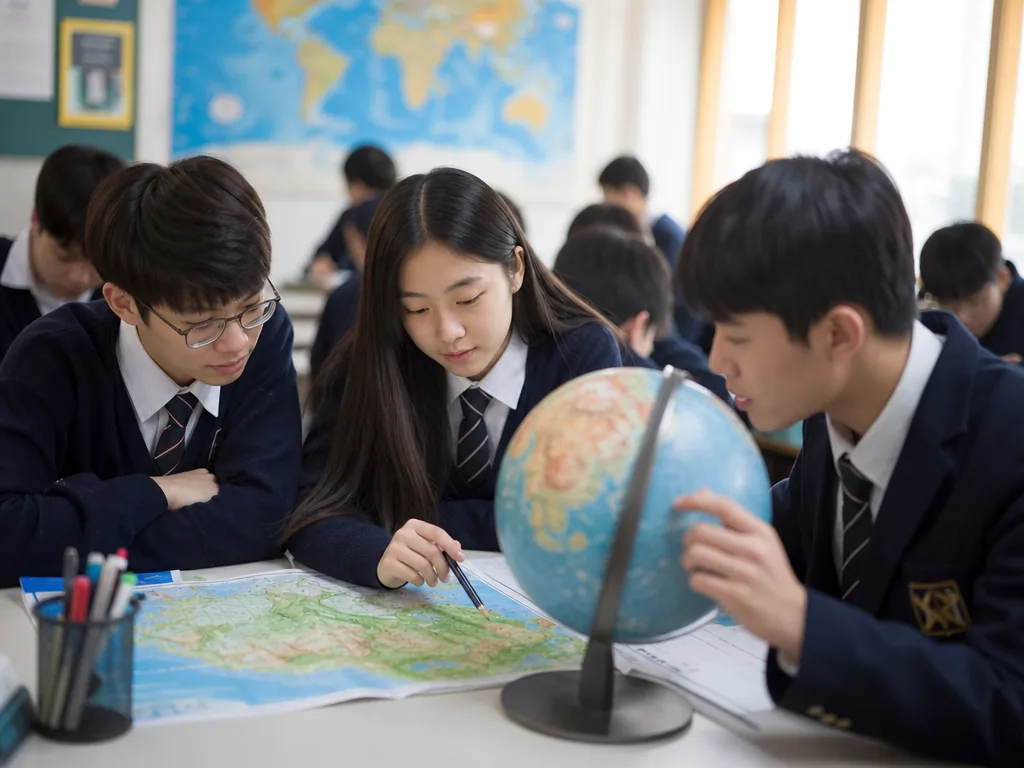
MYP Geography is divided into physical, human, and environmental geography components, supported by practical skills like map reading, data interpretation, and fieldwork.
Physical Geography
- Study natural processes like plate tectonics, climate systems, water cycles, and natural disasters (e.g., earthquakes, volcanoes, floods).
- Understand how natural environments shape and are shaped by human life.
Human Geography
- Explore issues like population growth, urbanization, industrial development, agriculture, trade, and globalization.
- Analyze cultural diversity, economic inequality, and the uneven distribution of resources.
Geographical Skills
- Learn to interpret maps, graphs, charts, and use Geographic Information Systems (GIS).
- Develop spatial thinking, data analysis, and graphical literacy.
Sustainability and Environmental Issues
- Investigate urgent global problems such as climate change, deforestation, biodiversity loss, and energy/resource management.
- Discuss the role of individuals, governments, and global organizations in addressing environmental challenges.
Fieldwork and Geographic Inquiry
- Conduct field investigations such as river studies or urban planning research.
- Build skills in scientific research, data collection, and report writing.
Why Is MYP Geography Important?
Builds Global Awareness
Students gain insight into the interconnectedness of global regions, systems, and environmental challenges.
Develops Critical and Systemic Thinking
Learners evaluate complex causes and consequences behind geographic phenomena and global issues.
Enhances Technological and Analytical Skills
Through GIS tools, statistical data, and mapping techniques, students improve their ability to analyze and communicate spatial data.
Strengthens Interdisciplinary Knowledge
Geography connects with science, economics, politics, sociology, and environmental studies, giving students a holistic view of the world.
Prepares for Future Studies and Careers
MYP Geography lays a solid foundation for IBDP Geography (SL/HL), Environmental Systems and Societies (ESS), and future careers in urban planning, climate science, international development, public policy, and more.
Sample Topics in MYP Geography
| Unit Topic | Description |
|---|---|
| Natural Disasters | Study the causes and impacts of earthquakes, volcanoes, tsunamis, and hurricanes. |
| Urbanization | Explore city growth, urban challenges, and sustainable urban development. |
| Resources and Energy | Investigate the use and conflict over oil, gas, water, and renewable energy. |
| Globalization | Understand trade, multinational corporations, and cultural globalization trends. |
| Climate Change | Examine the causes, impacts, and solutions to global warming and rising emissions. |
How Is MYP Geography Taught and Assessed?
MYP Geography uses conceptual inquiry, encouraging students to explore “big ideas” through case studies and real-world issues. Learning often includes interactive projects, fieldwork, and cross-disciplinary integration with science and social studies.
Assessment Criteria (IB 1–7 Scale)
- Knowing and Understanding——Geographical knowledge and comprehension.
- Investigating——Framing questions, conducting research, gathering data.
- Communicating——Using maps, charts, and reports to share findings.
- Thinking Critically——Analyzing data, drawing conclusions, evaluating sources.
Final Thoughts: Geography for a Changing World
IB MYP Geography equips students with essential skills to navigate and address the world’s most pressing environmental and social challenges. It nurtures informed, responsible global citizens ready to take action in a rapidly changing world.
Whether your child is preparing for the IB Diploma Programme or seeking to understand real-world issues more deeply, Geography in the MYP is a powerful, future-oriented subject that supports both academic success and global responsibility.
Frequently Asked Questions (FAQ)
Q: Is MYP Geography a standalone subject?
MYP Geography is taught within the Individuals and Societies group of the IB Middle Years Programme, sharing its conceptual, inquiry-based approach rather than operating as a fully separate course.
Q: What age group does MYP Geography target?
The Middle Years Programme is designed for students aged 11 to 16, spanning MYP Years 1 to 5.
Q: How is MYP Geography assessed?
Students are assessed on the IB 1–7 scale against four criteria: Knowing and Understanding, Investigating, Communicating, and Thinking Critically.
Q: Does MYP Geography prepare students for the IB Diploma Programme?
Yes. It builds a strong foundation for IBDP Geography (SL/HL) and Environmental Systems and Societies (ESS), and for careers in urban planning, climate science, international development, and public policy.
Further Resources & Next Steps
- Official Resources——International Baccalaureate Organization (ibo.org) Individuals and Societies subject guide.
- Further Reading——IBDP Geography (SL/HL) and Environmental Systems and Societies (ESS) subject briefs.
- Parent Tips——Discuss maps, news about cities and climate, and local environmental issues at home to strengthen spatial thinking and global awareness.
Note: The information above is for reference only. Please consult professional education institutions for details.
This article was initially drafted and organised with AI. Editor / Professor Chan Kwok-wai; Managing Editor / Kong Yee-leung
Act Now: Find a Tutor / Register as a Tutor
For parents & students: looking for a home or online tutor for this subject? Click the button below to post a free tuition case (subject, level and preferred time) — TutorZone will match you with suitable tutors:
For tutors: do you teach this subject? Click the button below to register for free and receive more suitable cases — you pay only when a match is made: