
 Chinese (Traditional)
 Chinese (Simplified)
 English



Chord progression
TUTORZONE SUBJECT GUIDE · MUSIC THEORY
A chord progression is a series of chords played in a specific order — it provides harmonic support for the melody while shaping a piece’s structure, mood, and emotional flow. From classical to pop, jazz, and contemporary music, it is one of the most fundamental tools in composition and performance.
Direct Answer:What is a chord progression?
A chord progression is a series of chords played in a specific order that provides harmonic support for the melody and shapes structure, mood, and 。

What Is a Chord Progression?
A chord progression is a series of chords in music that play in a specific order, providing harmonic support for the melody and determining the structure, emotional atmosphere, and flow of the music. Chord progressions are a core element of many musical styles, playing a crucial role in both composition and performance, from classical music to pop, jazz, and contemporary music.
More formally, a chord progression is the process of alternating chords in music. It describes the arrangement of a group of chords and their relationship to one another. Chord progressions support melodic development and build musical atmosphere, helping to create tension, release, and emotional intensity. The choice of chord progression directly impacts the style and emotional expression of a piece.
Why Chord Progressions Matter
Chord progressions have many functions, the main ones being:
- Supporting the melody——A chord progression is the basis of the melody. It provides a harmonic background for the melody, making it richer and more layered.
- Creating the structure of the music——Chord progressions provide the framework for a piece’s structure. They divide the music into different sections or parts and help it transition from one stage to another.
- Expressing emotions——Different chord progressions can create different emotional atmospheres. A major-key progression often brings a happy, cheerful feeling, while a minor-key progression may express melancholy or sadness.
- Creating tension and release——Changes in chord progressions help create a sense of tension and resolution in the music. This push-and-pull makes the music more dynamic.
The Building Blocks: Chord Functions
Chord progressions are usually built on the function of chords, which can be divided into three main categories:
Tonic (I)
The “home” or “foundation” chord of the music — usually the first chord in the key. It gives a sense of stability and completion and serves as the final point of a progression. In C major, the C major triad (C) is the tonic chord.
Dominant (V)
Usually the fifth chord in a key, creating strong tension that demands a resolution back to the tonic. Often built as a seventh chord; its purpose is to lead the music home. In C major, the G dominant seventh (G7) is the dominant chord.
Subdominant (IV)
The fourth chord in a key. It guides the progression toward the dominant or tonic. Weaker than the dominant, yet it still carries a certain tension. In C major, the F major triad (F) is the subdominant chord.
Common Chord Progression Patterns
A chord progression is a series of chords arranged in a specific order. The most basic and common patterns include:
I–IV–V–I
The most common chord progression, widely used in pop music, blues, rock and roll, and more:
- I (tonic) → IV (subdominant) → V (dominant) → I (tonic).
- In C major: C → F → G → C.
This progression shows the stability and smooth structure of the music and can create a sense of completion; it is often used at the end of a song.
ii–V–I
The most representative chord progression in jazz, though common in other genres too. It is often used to create a sense of flow between chords:
- ii (minor second chord) → V (dominant) → I (tonic).
- In C major: Dm7 → G7 → Cmaj7.
This progression creates a strong sense of tension between the chords, which is then released onto the tonic — giving the music a sense of resolution.
vi–IV–I–V
A progression commonly found in popular music, especially modern pop songs:
- vi (minor sixth chord) → IV (subdominant) → I (tonic) → V (dominant).
- In C major: Am → F → C → G.
This progression creates emotional ups and downs and feels modern and lighthearted.
I–V–vi–IV
The basis of many classic pop songs, including some of the most popular love songs:
- I (tonic) → V (dominant) → vi (minor sixth) → IV (subdominant).
- In C major: C → G → Am → F.
This progression is very melodic and creates an infectious emotion.
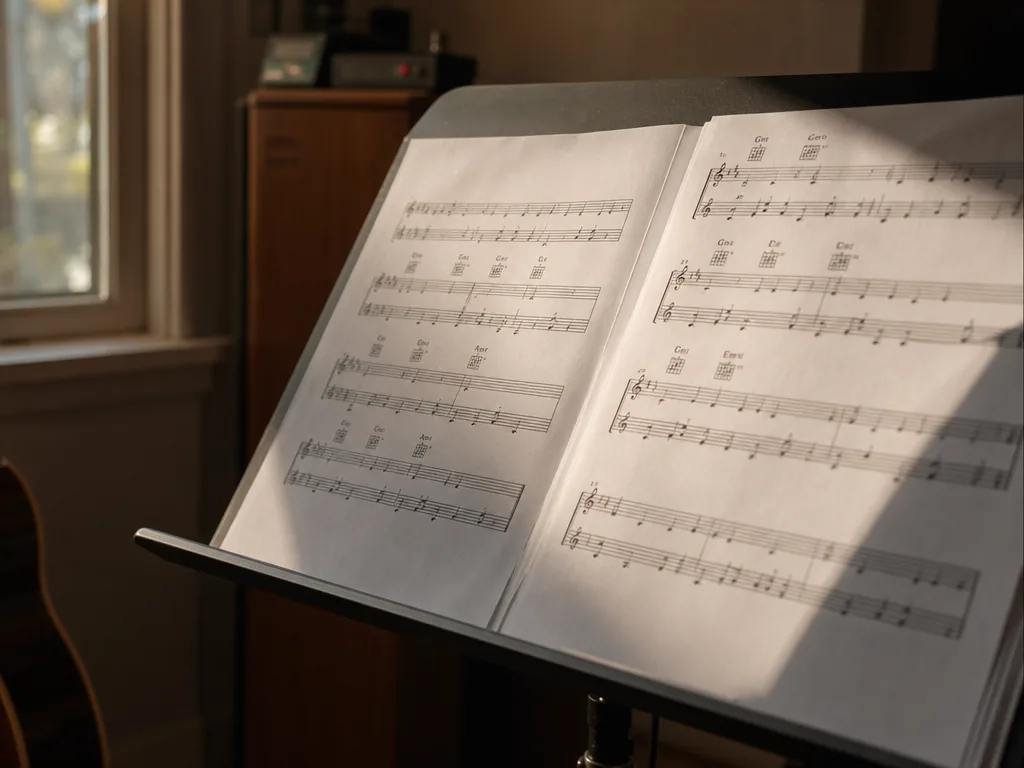
Different chord progressions can create varying atmospheres and tensions, adding depth and dynamics to the music.
Variations and Development
Chord progressions are not fixed — they can vary with the style and tempo of the music, as well as with the composer’s creativity. Composers and arrangers often adjust chord progressions through techniques such as:
- Chord inversion — the notes of a chord can be inverted (rearranged so that some notes are raised or lowered), changing the chord’s timbre and harmonic effect.
- Extended chords — extra notes are sometimes added, such as seventh, ninth, and eleventh chords, creating a richer harmonic effect.
- Modulation — the progression can ascend or descend, forming changes that bring different musical colors and emotional fluctuations.
Chord Progressions Across Musical Styles
Chord progressions are used in different ways in different musical styles:
- Classical music — chord progressions often follow strict harmonic rules, focusing on balance and stability between chords.
- Jazz — chord progressions are more improvisational, often using complex chords such as seventh and ninth chords, with relatively free changes.
- Pop music — progressions are relatively simple, with I–IV–V being the most common, focusing on the combination of melody and chords.
- Blues — progressions usually follow a 12-bar blues pattern, emphasizing the V–IV–I progression.
Conclusion
Chord progressions are crucial elements in music composition. They not only underpin the melody but also influence the music’s emotional expression, structural variations, and stylistic characteristics. Different chord progressions can create varying atmospheres and tensions, adding depth and dynamics to the music. Understanding and mastering the fundamental principles and patterns of chord progressions can help composers, arrangers, and performers create more compelling and profound music.
Frequently Asked Questions (FAQ)
Q: What is the most common chord progression in pop music?
The I–IV–V–I progression (for example, C → F → G → C in C major) is the most common and most widely used, appearing across pop, blues, and rock and roll.
Q: Why does the dominant (V) chord sound like it needs to resolve?
The dominant chord — usually built as a seventh chord, such as G7 in C major — creates strong tension that naturally pulls the ear back to the tonic (I), which is why it is used to lead the music home.
Q: What is the difference between a major and a minor chord progression?
A major-key progression tends to sound happy and cheerful, while a minor-key progression often expresses melancholy or sadness. The choice of mode directly shapes the emotional atmosphere of a piece.
Q: Can chord progressions be changed or developed?
Yes. Composers and arrangers routinely adjust progressions through chord inversion, extended chords (sevenths, ninths, elevenths), and modulation to change timbre, harmonic color, and emotional flow.
Further Resources & Next Steps
- Official Resources——The Associated Board of the Royal Schools of Music (ABRSM) publishes graded theory syllabi and past papers that cover chord functions and harmonic progressions.
- Further Reading——A standard harmony textbook, such as Walter Piston’s Harmony, offers worked examples of tonic, dominant, and subdominant functions alongside common progression patterns.
- Parent Tips——Encourage learners to spot familiar progressions in the songs they already know — listening for the I–IV–V “feel” turns abstract theory into everyday musical instinct.
Note: The information above is for reference only. Please consult professional education institutions for details.
This article was initially drafted and organised with AI. Editor / Professor Chan Kwok-wai; Managing Editor / Kong Yee-leung
Act Now: Find a Tutor / Register as a Tutor
For parents & students: looking for a home or online tutor for this subject? Click the button below to post a free tuition case (subject, level and preferred time) — TutorZone will match you with suitable tutors:
For tutors: do you teach this subject? Click the button below to register for free and receive more suitable cases — you pay only when a match is made: