 Chinese (Traditional)
 Chinese (Simplified)
 English


Hong Kong International Schools Middle School General Science Curriculum Overview
TUTORZONE SUBJECT GUIDE · INTERNATIONAL JUNIOR HIGH SCHOOL
A practical guide to the Middle School General Science course in Hong Kong international schools — what students aged 11 to 14 learn, how they are assessed, and how to build the inquiry skills that lead into IB MYP, IGCSE, and AP sciences.
Direct Answer:What is Middle School General Science in Hong Kong international schools?
A practical course for ages 11–14 covering inquiry skills that lead into IB MYP, IGCSE, and AP sciences.
What is General Science? Course Positioning and Features
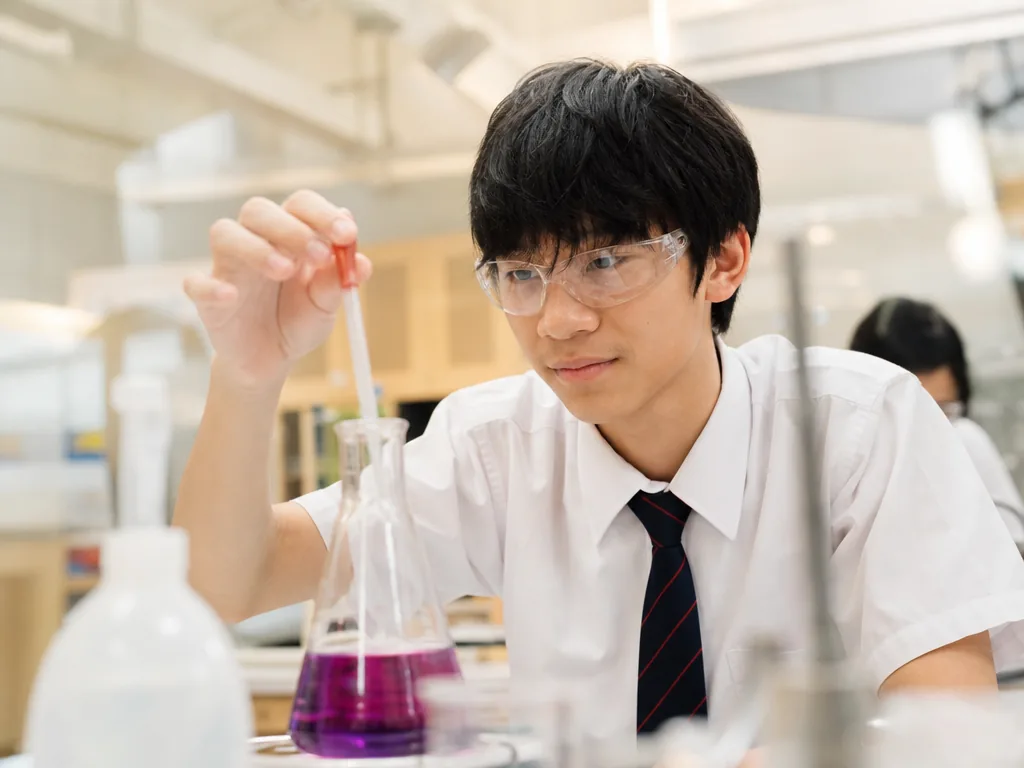
The Middle School General Science course is a core subject in Hong Kong international schools, designed for students typically aged 11 to 14. It emphasizes observation, inquiry, experimentation, and critical thinking skills, providing a solid foundation for students who will later pursue specialized subjects such as Biology, Chemistry, and Physics in the IB MYP or IGCSE programs.
Key Features
- Interdisciplinary Foundation — Integrates knowledge across biology, chemistry, physics, earth, and environmental sciences.
- Experiment-Based Learning — Focuses on the complete scientific process — observation, hypothesis, testing, and analysis.
- Real-World Connections — Addresses global scientific issues such as climate change, health, and energy sustainability.
- STEAM Integration — Combines science with technology, engineering, arts, and mathematics to foster creativity and innovation.
Curriculum Structure: Sample Units for Years 7–9
| Grade | Unit Theme | Scientific Concepts | Key Learning Activities |
|---|---|---|---|
| Y7 | Cells and Life | Cell structure, growth, classification | Microscope observation of plant and animal cells; build cell models |
| Y7 | States of Matter and Changes | Solid, liquid, gas states; particle model | Heating ice and recording temperature changes curve |
| Y8 | Forces and Motion | Newton’s laws, friction, gravity | Construct simple pulley systems and measure forces |
| Y8 | Acids, Bases and Reactions | pH scale, neutralization, indicators | Use red cabbage indicator to test household substances |
| Y9 | Ecosystems and Energy Flow | Food chains, energy transfer, carbon cycle | Analyze energy pyramids and simulate human impact on ecosystems |
| Y9 | Electricity and Circuits | Electric current, voltage, series and parallel circuits | Design energy-saving lighting and test circuits with multimeters |
Assessment Methods
| Assessment Type | Weight | Focus Areas |
|---|---|---|
| Inquiry Reports & Lab Tasks | 40% | Experimental design, observation, data analysis, conclusions |
| Concept Tests | 30% | Understanding and application of concepts, models, and laws |
| Class Participation | 15% | Group collaboration, questioning, active learning |
| Unit Projects | 15% | Research reports, model presentations, interdisciplinary themes like eco-technology design |
Effective Learning Strategies
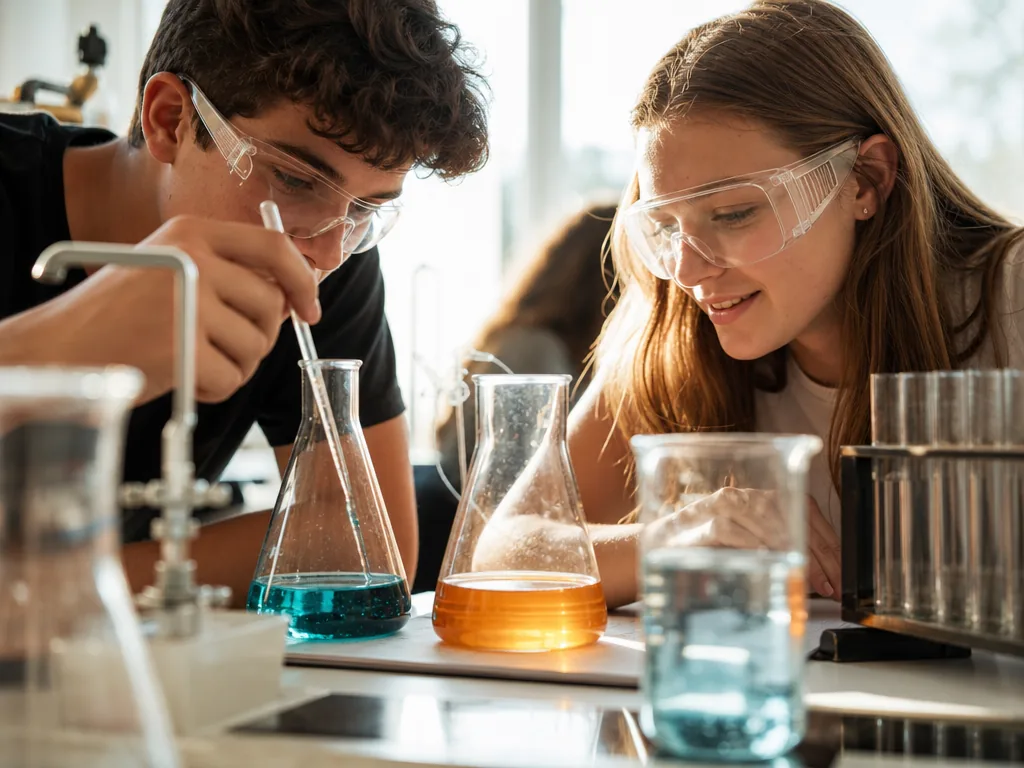
Inquiry-Based Learning: The I-E-A-R Model
- Initiate — Formulate questions and hypotheses
- Experiment — Design and conduct experiments
- Analyse — Interpret data and graphs
- Reflect — Draw conclusions and consider applications
Scientific Language and Graph Skills
| Skill Type | Recommended Practice |
|---|---|
| Lab Report Writing | Use a clear “Method → Results → Discussion → Conclusion” structure |
| Scientific Vocabulary | Create a “Concept Vocabulary Wall” with terms like condensation, ecosystem, voltage |
| Graph Analysis | Practice interpreting bar graphs, line graphs, scatter plots to explain trends and anomalies |
Common Challenges and Solutions
| Challenge | Suggested Solutions |
|---|---|
| Abstract Concepts Difficult to Visualize | Use physical models, math visuals, and animations |
| Unfamiliar with Experimental Procedures | Practice standard steps early; create “Science Experiment Flowcharts” |
| Overwhelmed by Too Much Memorization | Use mind maps to connect and organize concepts |
Academic Progression and Extracurricular Extension
Progression Pathways
- IGCSE Biology / Chemistry / Physics
- IB MYP Integrated Sciences → IB Diploma Programme Sciences
- AP Science courses (Biology, Chemistry, Physics)
Recommended Activities
- Participate in International Science Day / STEM Fairs to showcase projects
- Conduct mini research projects on “Home Environment” topics such as water quality or temperature changes
- Subscribe to science media like BBC Science Focus or National Geographic Kids for extended learning
Recommended Learning Resources & Monthly Challenges
| Resource Type | Platforms/Tools | Purpose |
|---|---|---|
| Simulation Labs | PhET, ExploreLearning, Tinkercad Circuits | Online simulations for circuits and chemical reactions |
| Concept Learning | Khan Academy, BBC Bitesize | Short videos, quizzes, and useful graphic organizers |
| Scientific Thinking | Mystery Science, Generation Genius | Inquiry tasks with interactive student activities |
Frequently Asked Questions (FAQ)
Q: What age group is Middle School General Science designed for?
It is designed for students typically aged 11 to 14, spanning Years 7 to 9 in Hong Kong international schools.
Q: How does General Science prepare students for later programs?
It builds observation, inquiry, experimentation, and critical thinking skills that provide a solid foundation for specialized subjects such as Biology, Chemistry, and Physics in the IB MYP, IGCSE, and AP programs.
Q: How are students assessed in this course?
Assessment combines Inquiry Reports & Lab Tasks (40%), Concept Tests (30%), Class Participation (15%), and Unit Projects (15%).
Q: Which resources support learning at home?
Simulation labs such as PhET, ExploreLearning, and Tinkercad Circuits; concept platforms like Khan Academy and BBC Bitesize; and inquiry tools like Mystery Science and Generation Genius.
Further Resources & Next Steps
- Official Resources — International Baccalaureate Organization website; PhET, BBC Bitesize, and Khan Academy for concepts and simulations.
- Further Reading — BBC Science Focus and National Geographic Kids for extended science learning.
- Parent Tips — Support mini research projects at home, build a concept vocabulary wall, and use mind maps to connect ideas.
Note: The information above is for reference only. Please consult professional education institutions for details.
This article was initially drafted and organised with AI. Editor / Professor Chan Kwok-wai; Managing Editor / Kong Yee-leung
Act Now: Find a Tutor / Register as a Tutor
For parents & students: looking for a home or online tutor for this subject? Click the button below to post a free tuition case (subject, level and preferred time) — TutorZone will match you with suitable tutors:
For tutors: do you teach this subject? Click the button below to register for free and receive more suitable cases — you pay only when a match is made: