 Chinese (Traditional)
 Chinese (Simplified)
 English



Hong Kong International Schools: Junior Secondary English Language & Literature Curriculum Overview
TUTORZONE SUBJECT GUIDE · INTERNATIONAL JUNIOR HIGH SCHOOL
A practical guide to the Junior Secondary English Language & Literature curriculum in Hong Kong’s international schools — how it blends language proficiency with literary appreciation across Years 7–9, how students are assessed, and the strategies that carry them toward IGCSE and IB English.
Direct Answer:What is the Junior Secondary English curriculum in Hong Kong international schools?
Blends language proficiency with literary appreciation across Years 7–9, with assessment strategies for progression.
Curriculum Focus and Key Features
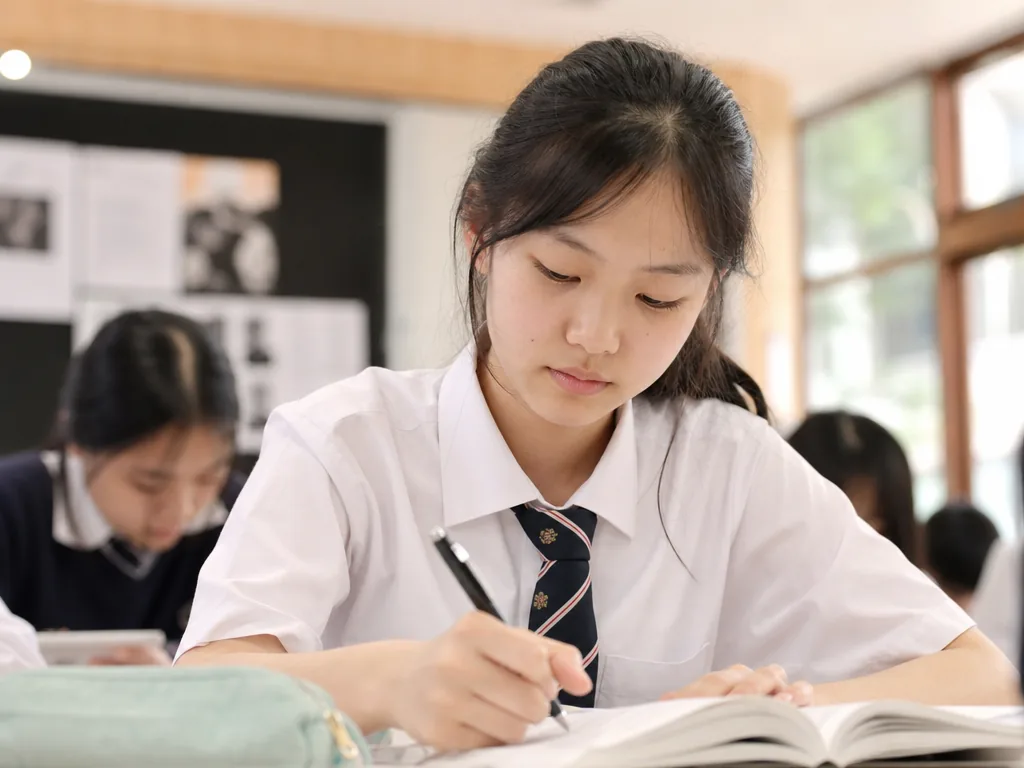
The Junior Secondary English Language and Literature curriculum in Hong Kong’s international schools combines language proficiency with literary appreciation. It prepares students for advanced programmes such as IGCSE English and the IB English A or B courses, emphasizing critical reading, effective writing, and independent thinking.
Dual Focus on Language and Literature
Covers grammar, writing, and the study of both classic and contemporary literary texts.
Cross-Cultural Literary Exposure
Texts selected from English-speaking cultures across the UK, the US, Asia, and Africa.
Critical Thinking and Creativity
Develops students’ ability to form independent perspectives and express themselves through language.
Inquiry-Based and Thematic Learning
Units are structured around central themes, combining reading, writing, and speaking activities.
Curriculum Structure (Years 7–9)
Across the three junior secondary years, the curriculum moves from narrative and description toward argument and analysis:
| Year | Unit Focus | Learning Highlights |
|---|---|---|
| Y7 | Narrative and Descriptive Texts | Novel reading, character analysis, descriptive settings, creative story writing |
| Y8 | Poetry and Drama | Language rhythm in poetry, figurative language, intro to Shakespeare (e.g., A Midsummer Night’s Dream) |
| Y9 | Argumentative & Non-fiction Texts | Editorial analysis, persuasive writing, speech techniques, tone and viewpoint comparison |
Sample Core Texts
- Classic Novels — Of Mice and Men, Animal Farm, The Giver
- Modern Poetry — Maya Angelou, Carol Ann Duffy
- Drama — William Shakespeare, Susan Hill
- Non-fiction — Speeches (e.g., Malala Yousafzai), News Articles, TED Talk excerpts
Assessment Components
Assessment balances reading, writing, speaking, and independent inquiry:
| Assessment Type | Weight | Description |
|---|---|---|
| Reading Comprehension & Literary Analysis | 30% | Analysis of character, theme, tone, and literary techniques (e.g., metaphor, symbolism) |
| Writing Tasks (Narrative & Argumentative) | 30% | Includes personal narratives, commentaries, persuasive articles, or creative responses |
| Speaking & Listening Assessments | 20% | Presentations, role play, group discussions, and spontaneous response practice |
| Inquiry Projects & Participation | 20% | Group research reports, debates, literature magazines, character interviews |
Effective Learning Strategies
Reading Analysis Techniques
The PEEL paragraph strategy gives every analytical paragraph a clear, exam-ready structure:
- Point — State a clear idea or interpretation
- Evidence — Provide a quote or textual support
- Explain — Analyze the effect of the language or technique used
- Link — Connect back to the theme or expand the insight
Writing Skills Development
- Narrative Writing — Focus on plot tension, character motives, and vivid setting descriptions
- Argumentative Writing — Clear thesis, supported by examples, consistent tone, and handling counterarguments
- Creative Writing — Mimic authorial styles and include rhetorical devices like metaphor, irony, or foreshadowing
Speaking and Listening Enhancement
- Three-Minute Speech Challenge — Develop concise, impactful viewpoints with rebuttals
- Active Listening Drills — Use podcasts or TED Talks to practice listening for tone, purpose, and structure
Common Challenges and Solutions
| Challenge | Suggested Strategy |
|---|---|
| Shallow Literary Analysis | Create a “Literary Techniques Notebook” to track devices and example phrases |
| Weak Persuasive Writing | Practice the Three-Point Persuasion Method: Claim + Evidence + Rebuttal |
| Repetitive or Basic Vocabulary | Expand vocabulary weekly with 5 powerful verbs/adjectives and organize by theme |
Academic Progression and Enrichment Opportunities
Progression Pathways
- IGCSE First Language English or IGCSE Literature in English
- IB English A: Language & Literature (HL/SL)
- IB English B (for ESL learners)
Recommended Activities
- Join the English Debate Team or participate in Model United Nations (MUN)
- Submit work to online platforms like Write the World for peer feedback
- Act in school English drama productions or poetry recitals
Recommended Resources and Monthly Learning Goals
Monthly English Learning Plan
- Read 1 novel — Track characters, themes, and language highlights
- Write 1 narrative + 1 argumentative text — (~500 words each)
- Listen to 1 TED Talk — Summarize key ideas and analyze the speaker’s tone
Useful Tools and Platforms
| Resource Type | Tool/Platform | Purpose |
|---|---|---|
| Vocabulary Building | Quizlet, Magoosh | Thematic word banks and sentence practice |
| Reading Extension | CommonLit, Newsela | Leveled texts with comprehension and critical thinking questions |
| Writing Practice | Write the World, Storybird | Creative writing community and inspiration tools |
| Speaking & Listening | BBC Learning English, TED | Improve pronunciation, listening comprehension, and presentation skills |
Frequently Asked Questions (FAQ)
Q: Is Junior Secondary English the same as ESL support?
No. While international schools provide additional language support where needed, the Junior Secondary English Language and Literature course is a mainstream, literature-rich programme that combines language study with close analysis of texts, preparing students for IGCSE and IB English.
Q: How is Junior Secondary English assessed?
Most schools balance reading comprehension and literary analysis (30%), writing tasks (30%), speaking and listening (20%), and inquiry projects and participation (20%), although exact weightings vary from school to school.
Q: How can I help my child improve their literary analysis?
Encourage them to keep a “Literary Techniques Notebook” and to write PEEL paragraphs (Point, Evidence, Explain, Link) when discussing texts. Regular reading of novels, poetry, and non-fiction also builds the vocabulary and confidence that analysis requires.
Q: Which courses does Junior Secondary English lead to?
Students typically progress to IGCSE First Language English or IGCSE Literature in English, then to IB English A: Language and Literature (HL/SL), or IB English B for learners who benefit from extra language support.
Further Resources & Next Steps
- Official Resources — The International Baccalaureate® (ibo.org) publishes the official guidelines and subject guides for IB English A and B.
- Further Reading — The core texts featured in the curriculum — Of Mice and Men, Animal Farm, The Giver — plus CommonLit and Newsela for levelled reading practice.
- Parent Tips — Build a short daily reading habit at home: even 20 minutes of independent reading a day meaningfully strengthens vocabulary, comprehension, and writing across the junior secondary years.
Note: The information above is for reference only. Please consult professional education institutions for details.
This article was initially drafted and organised with AI. Editor / Professor Chan Kwok-wai; Managing Editor / Kong Yee-leung
Act Now: Find a Tutor / Register as a Tutor
For parents & students: looking for a home or online tutor for this subject? Click the button below to post a free tuition case (subject, level and preferred time) — TutorZone will match you with suitable tutors:
For tutors: do you teach this subject? Click the button below to register for free and receive more suitable cases — you pay only when a match is made: