
 Chinese (Traditional)
 Chinese (Simplified)
 English



The origins of chess
TUTORZONE SUBJECT GUIDE · HOBBIES
Chess is a board game steeped in strategy and history, and is considered one of the world’s most popular table games. Its challenging rules have attracted millions of players.
Direct Answer:What is the origin of chess?
Chess is a strategy board game that grew from an ancient war-simulation into one of the world’s most popular table games.
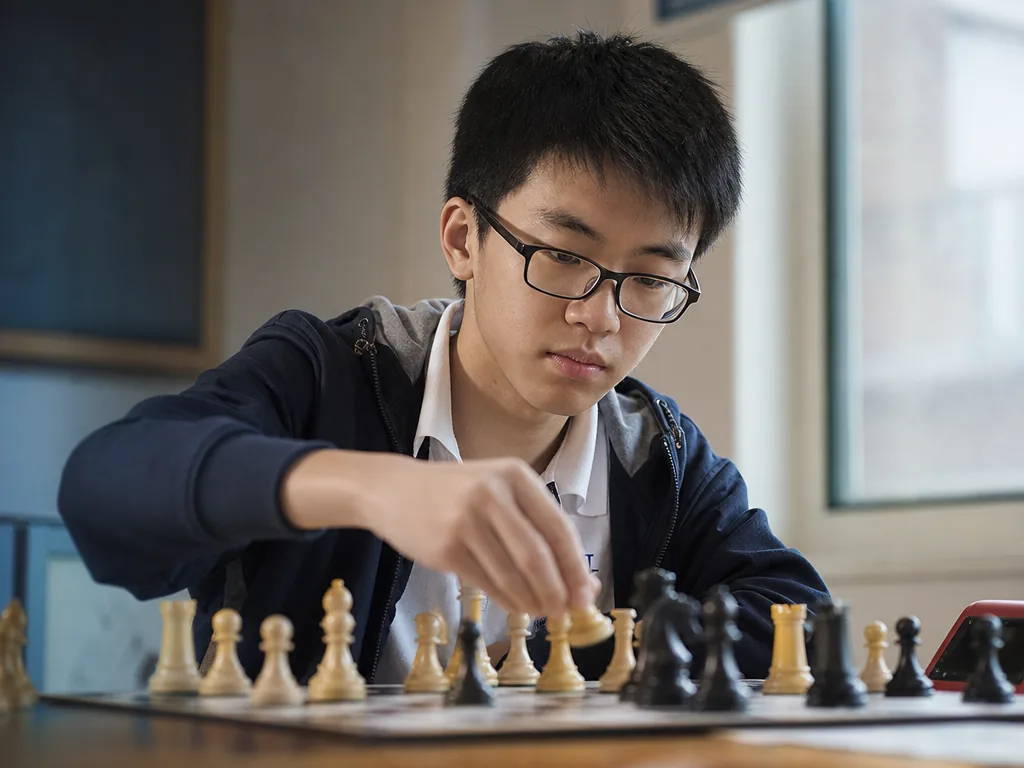
The Origins of Chess
The Origin of India — Chaturanga
- The origins of chess can be traced back to 6th-century India, when Indians invented a game called Chaturanga.
- Chaturanga is a simulated war game in which players place pieces representing different military units on a board and use different strategies to play against each other. These pieces include bishops (representing war elephants), rooks (representing chariots), cavalry (representing cavalry), and infantry (representing infantry), and they bear many similarities to the pieces used in modern chess.
The Development of Persia — Shah
- Around the 7th century AD, Chaturanga entered Persia and was modified to form the game called “Shah”. The Persians called it “Shahmat”, which means “the king is trapped” or “the king has no way out”, and this is the origin of the “check” in chess.
- In Persia, this game gradually became the main form of court entertainment, and the layout of the chessboard and chess pieces was further standardized, gradually developing into the prototype of modern chess.
The Spread and Development of Chess
Spread in the Arab World
- The expansion of the Islamic Empire in the 7th century brought the Shah’s Game to the Arab world. Arab scholars improved the game and made it an intellectual entertainment activity for scholars and nobles.
- In the Arab region, chess was further developed and its rules gradually became fixed. For example, the game developed the “Queen” piece, whose moves were much more powerful than the “Woman” piece of the Persian period.
The Evolution of Europe — Modernization of Chess
- With the Crusades (11th century) and trade, chess entered Europe and quickly became popular in Spain, Italy, France, and other places.
- In Europe, the rules of chess underwent significant changes. From the 13th to the 15th century, the European chess board and pieces gradually became similar to today’s international chess, and the powerful functions of pieces such as the Queen and Rook, which we are familiar with today, were introduced.
The Evolution of Chess Rules
The Evolution of Chessboards and Pieces
- The original chess board and pieces were based on Indian and Persian designs, but as the rules evolved, the size of the board (8×8 grids) and the number and function of the pieces gradually became fixed.
- The Queen and Bishop are the most important pieces to evolve. For example, in the Persian period, the “woman” and “bishop” in Shah chess were relatively weak. In Europe, these pieces were given more powerful movement capabilities, further changing the strategy of the game.
Modernization of the Rules of the Game
- The rules of chess were formalized in Spain and Italy in the 15th century, when the rules of piece movement — particularly the powerful role of the queen — and the determination of the end of the game (such as “check” and “checkmate”) were gradually established.
- With the rise of modern chess competitions in the 19th century, unified rules began to be adopted internationally. These rules promoted the internationalization of chess, and as competitions increased, chess gradually evolved into the competitive game we know today.
The Development and Competitiveness of Modern Chess
The Competitiveness of Chess
- In 1851, the first chess tournament was held in London, England, which is considered the starting point of modern chess competition. Subsequently, chess gradually developed into a large-scale international competitive sport.
- Over time, chess competitions became more standardized, and specialized chess organizations emerged, such as the International Chess Federation (FIDE), which was responsible for standardizing the rules of the game around the world.
Artificial Intelligence and Modern Challenges
- In recent years, with the development of artificial intelligence (AI), chess has faced new challenges. In 1997, IBM’s computer “Deep Blue” defeated the world chess champion Garry Kasparov. This historic event marked a breakthrough in the field of artificial intelligence in chess.
- In addition, many online platforms (such as Chess.com) provide convenient ways to play chess, allowing players around the world to participate in high-level chess competitions at any time.
Chess at a Glance
| Aspect | Detail |
|---|---|
| Place of origin | India |
| Origin period | 6th century AD |
| Main evolution areas | Persia, Arabia, Europe |
| Competitive process | 19th century chess competitions and the founding of FIDE |
| Modern Development | AI challenge, online game platform |
Summary: The Enduring Appeal of Chess
Chess is a game of wisdom with a rich history. From the days of Chaturanga in India to the Shahs of Persia, and finally to modern times in Europe, it has evolved over millennia to become one of the world’s most popular games. Despite the advancement of competitive play and the challenges of artificial intelligence, chess retains its strong appeal and continues to grow globally.
If you are interested in further information about the history, strategy, or rules of chess, or would like to learn how to optimize chess-related content for SEO, please contact me. I will provide you with detailed advice and strategies to help you improve your website’s search engine rankings!
Frequently Asked Questions (FAQ)
Q: Where did chess originate?
Chess originated in India around the 6th century AD, where it was first played as a war-simulation game called Chaturanga.
Q: Why is the warning in chess called “check”?
The term comes from the Persian word “Shahmat”, meaning “the king is trapped” or “the king has no way out”, and it is the origin of today’s “check” in chess.
Q: When did chess become a modern competitive sport?
The first chess tournament was held in London in 1851, which is considered the starting point of modern chess competition. The International Chess Federation (FIDE) was later founded to standardize the rules worldwide.
Q: How has artificial intelligence changed chess?
In 1997, IBM’s “Deep Blue” defeated world champion Garry Kasparov, marking a breakthrough for AI in chess. Today, online platforms such as Chess.com let players around the world play high-level games at any time.
Further Resources & Next Steps
- Official Resources — the International Chess Federation (FIDE) governs the official rules, ratings, and world championships of chess.
- Further Reading — histories and manuals on the origins, strategy, and modern play of chess are widely available through libraries and platforms such as Chess.com.
- Parent Tips — introduce children to the basic moves and opening principles with a physical chess set, then let them practise on online platforms to build confidence.
Note: The information above is for reference only. Please consult professional education institutions for details.
This article was initially drafted and organised with AI. Editor / Professor Chan Kwok-wai; Managing Editor / Kong Yee-leung
Act Now: Find a Tutor / Register as a Tutor
For parents & students: looking for a home or online tutor for this subject? Click the button below to post a free tuition case (subject, level and preferred time) — TutorZone will match you with suitable tutors:
For tutors: do you teach this subject? Click the button below to register for free and receive more suitable cases — you pay only when a match is made: