
 Chinese (Traditional)
 Chinese (Simplified)
 English



What is Basic Sheet Music? A Complete Beginner’s Guide to Understanding Musical Notation
TUTORZONE SUBJECT GUIDE · MUSIC THEORY
Sheet music is the written language of music — a system of symbols that tells you what to play, when to play it, and how to play it. This guide walks through every core element of basic notation, from the staff and clefs to notes, rhythm, dynamics, and expression, so even complete beginners can start reading music with confidence.
Direct Answer:What is basic sheet music?
Basic sheet music is a symbol system telling you what to play, when, and how, including staff, clefs, notes, rhythm, dynamics, and expression.
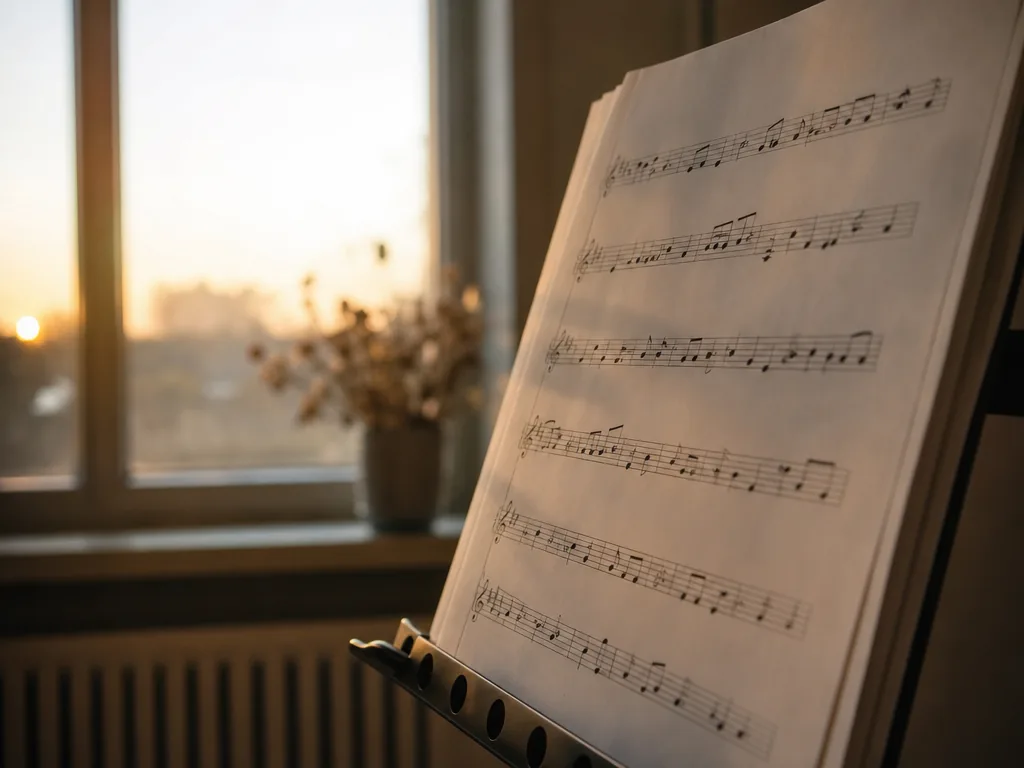
What Is Sheet Music?
Sheet music is a system of symbols that represent musical sounds, such as notes, rhythms, dynamics, and expressions. It tells a musician exactly what to play, when to play it, and how to play it. Just as we use letters and punctuation in written language, musicians use notes, rests, clefs, and time signatures in sheet music.
What to play
Notes and their position on the staff identify the exact pitch of each sound.
When to play it
Rhythm, time signatures, and rests tell you the timing and duration of every note.
How to play it
Dynamics and articulation marks shape loudness, attack, and expression.
Basic sheet music usually refers to simple music notation suitable for beginners — straightforward rhythms, common key signatures, and basic dynamic markings that keep reading manageable while you build your skills.
The Staff and the Clefs
Sheet music is written on a set of five horizontal lines called the staff. The staff provides the framework for placing musical notes, and each line and space on the staff corresponds to a different pitch.
Treble Clef (G Clef)
Used for higher-pitched instruments such as the piano (right hand), violin, flute, and higher voices (soprano and alto).
Bass Clef (F Clef)
Used for lower-pitched instruments such as the piano (left hand), cello, bassoon, and bass voice.
These are the two main clefs you will encounter in basic sheet music.
Musical Notes: Pitch and Duration
A note in sheet music tells you two things: which pitch to play and how long to play it. Common note types include:
| Note | Symbol | Duration |
|---|---|---|
| Whole note | 𝅝 | 4 beats |
| Half note | 𝅗𝅥 | 2 beats |
| Quarter note | 𝅘𝅥 | 1 beat |
| Eighth note | 𝅘𝅥𝅮 | ½ beat |
| Sixteenth note | 𝅘𝅥𝅯 | ¼ beat |
The position of the note on the staff indicates its pitch (for example, C, D, E, F, G, A, B). Notes placed higher on the staff are higher in pitch.
Rhythm: Time Signatures, Measures and Bar Lines
The time signature is found at the beginning of a piece and looks like a fraction. It tells you how many beats are in each measure and what kind of note counts as one beat. For example:
- 4/4 time——Four beats per measure, with a quarter note receiving one beat; the most common time signature in Western music.
- 3/4 time——Three beats per measure, common in waltzes.
- 2/4 time——A march-like rhythm, often used in quick, upbeat pieces.
Music is divided into measures (or bars) to organise rhythm, and vertical lines called bar lines separate each measure. A double bar line indicates the end of a section, while a final bar line indicates the end of the piece.
Key Signature: Finding the Tonal Center
A key signature is a set of sharps (#) or flats (♭) placed right after the clef. It tells you which notes are consistently sharpened or flattened throughout the piece. For example:
- No sharps or flats——Key of C major or A minor.
- One sharp (F#)——Key of G major or E minor.
- One flat (Bb)——Key of F major or D minor.
Knowing the key signature helps you understand the tonality of the music and which notes to expect.
Rests: The Sound of Silence
Rests indicate when not to play. Each rest corresponds to a note value:
- Whole rest——Silence for 4 beats.
- Half rest——Silence for 2 beats.
- Quarter rest——Silence for 1 beat.
- Eighth and sixteenth rests——Silence for ½ or ¼ beat, respectively.
Rests are crucial for rhythm and expression, helping to create phrasing and contrast.
Dynamics: Playing with Emotion
Dynamics tell you how loud or soft to play, and they add emotional expression to music. Common dynamics include:
- p (piano)——soft.
- f (forte)——loud.
- mf (mezzo-forte)——moderately loud.
- pp (pianissimo)——very soft.
- crescendo (<)——gradually get louder.
- decrescendo (>)——gradually get softer.
Articulation and Expression Marks
These symbols tell you how to play individual notes or phrases:
- Staccato (·)——short and detached.
- Legato (slur line)——smooth and connected.
- Accent (>)——emphasize the note.
- Fermata (𝄐)——hold the note longer than written.
Expression marks such as “ritardando” (slow down) or “allegro” (fast) further guide the mood and tempo.
Basic Tips for Reading Sheet Music
For beginners, reading sheet music may seem daunting — but with practice, it becomes second nature. Here are some tips:
- Learn the lines and spaces——In treble clef, the lines are E-G-B-D-F (Every Good Boy Deserves Fudge), and the spaces are F-A-C-E.
- Practice slowly——Start with one hand or one part at a time.
- Use flashcards or apps——to recognise notes and rhythms quickly.
- Listen to recordings——of the piece you are learning, to reinforce how the notation translates into sound.
Reading music is like learning a new language — with patient practice, the symbols become second nature.

Why Learning Basic Sheet Music Matters
Basic sheet music provides the foundation for all types of musical learning and performance. It teaches you how to decode written music, develop your rhythmic accuracy, and build strong sight-reading skills.
Whether you are learning classical, pop, jazz, or film music, understanding basic sheet music empowers you to play with more confidence, collaborate with other musicians, and deepen your connection with music itself.
Frequently Asked Questions (FAQ)
Q: What is the difference between the treble clef and the bass clef?
The treble clef (G clef) is used for higher-pitched parts — the piano’s right hand, violin, flute, and higher voices — while the bass clef (F clef) is used for lower-pitched parts such as the piano’s left hand, cello, bassoon, and bass voice.
Q: How do I remember the lines and spaces of the treble clef?
The lines, from bottom to top, are E-G-B-D-F — remembered with the phrase “Every Good Boy Deserves Fudge” — and the spaces spell F-A-C-E.
Q: Do I need to read sheet music if I play by ear?
Not strictly — many musicians play by ear — but reading notation helps you learn pieces accurately, communicate with other musicians, and develop stronger sight-reading and rhythmic skills.
Q: What is the best way for a complete beginner to start?
Start slowly with one hand or one part at a time, learn the lines and spaces first, use flashcards or note-recognition apps, and listen to recordings of the pieces you are learning to connect the notation with the sound.
Further Resources & Next Steps
- Official Resources——ABRSM (Associated Board of the Royal Schools of Music) offers graded music theory and sight-reading materials.
- Further Reading——“The AB Guide to Music Theory” by Eric Taylor is a clear, widely used introduction for beginners.
- Parent Tips——Encourage a few minutes of note recognition every day with flashcards, and favour short, consistent practice sessions over long, tiring ones.
Note: The information above is for reference only. Please consult professional education institutions for details.
This article was initially drafted and organised with AI. Editor / Professor Chan Kwok-wai; Managing Editor / Kong Yee-leung
Act Now: Find a Tutor / Register as a Tutor
For parents & students: looking for a home or online tutor for this subject? Click the button below to post a free tuition case (subject, level and preferred time) — TutorZone will match you with suitable tutors:
For tutors: do you teach this subject? Click the button below to register for free and receive more suitable cases — you pay only when a match is made: