
 Chinese (Traditional)
 Chinese (Simplified)
 English



Cello Grading Guide: Professional Evaluation Standards from Materials to Tone
TUTORZONE SUBJECT GUIDE · STRING INSTRUMENTS
A cello’s grade is written in its materials, its craftsmanship, and the voice those two produce. This guide walks through the professional evaluation standards — from wood selection to tone, pricing, and upkeep — so you can choose with confidence.
Direct Answer:How is a cello graded?
A cello’s grade is determined by its materials, craftsmanship, and the voice they produce, with professional evaluation standards covering wood sel。
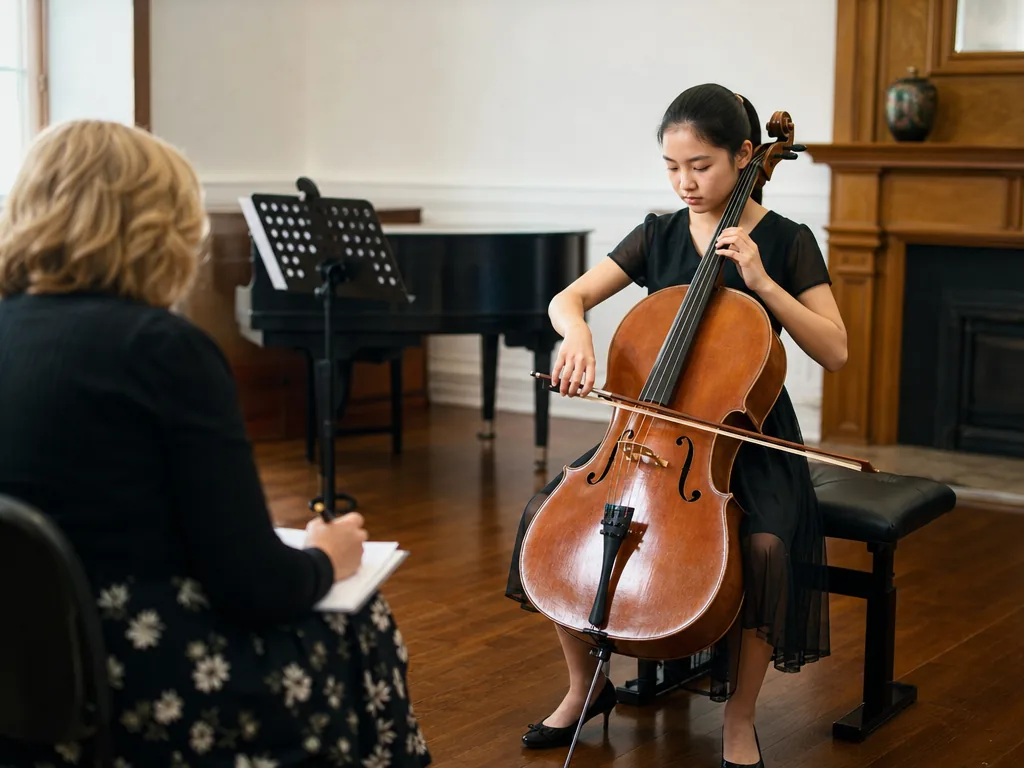
Material Selection: The Tonal Foundation
Before a single note is played, a cello’s potential is shaped by the wood and fittings it is built from. Judging these materials carefully is the first step in any professional evaluation.
Top Wood
- European Spruce — Optimal resonance, preferred by professional orchestras
- North American Spruce — Brighter tone, ideal for solo performances
- Aged Wood (100+ years) — Premium configuration with warm, deep tones
Back and Side Wood
- Maple — Standard configuration with balanced tone
- Flamed Maple — Enhances low-frequency resonance
- Bosnian Maple — Collector-grade sound quality
Fittings Material
- Ebony Fingerboard — Standard, highly durable
- Boxwood Pegs — High-end option for precise tuning
- Ivory Bridge — Used in top-tier performance cellos
Craftsmanship: How Construction Shapes Performance
- Handcrafted Construction — Essential for premium cellos
- Varnish Technique — Oil varnish produces warmer, richer tones
- Neck Curve — Affects comfort in higher positions
- F-Hole Cutting — Determines instrument’s tonal character
Tone Evaluation Standards
When you finally lift the bow, listen across every string and for how they connect as a whole.
- C String — Deep and powerful with full vibration
- G String — Warm and lyrical with singing quality
- D String — Round and transparent
- A String — Bright but not piercing
- Overall Balance — Natural transition between strings
Cello Grade Comparison Table
| Grade | Price Range | Target Users | Representative Brands |
|---|---|---|---|
| Beginner | $1,500-4,500 | Students | Stentor, Cremona |
| Intermediate | $4,500-12,000 | Music Students | Eastman, Jay Haide |
| Professional | $12,000-38,000 | Performing Artists | Italian Master Luthiers |
| Collector | $38,000+ | Collectors | Stradivarius Instruments |
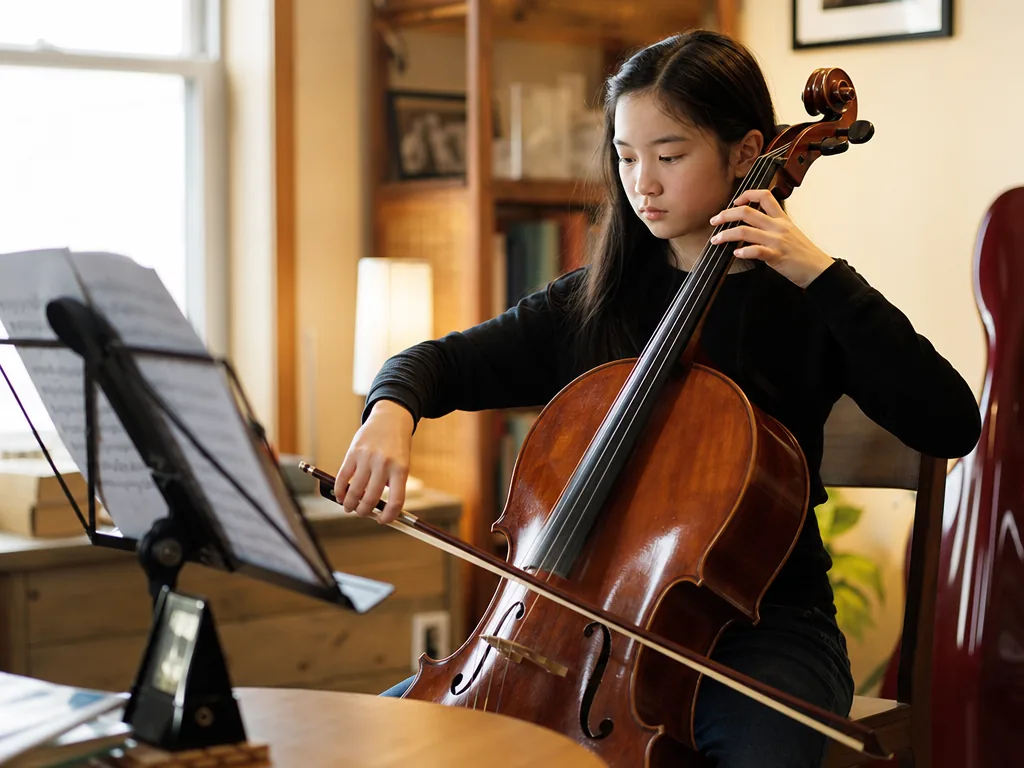
Purchasing Recommendations
- Size — Select size according to height (1/8-4/4 common sizes)
- Soloists — Should prioritize distinctive tone
- Orchestra players — Need instruments with good blending capability
- Comparison — Always test-play multiple brands
- Bow — Consider bow pairing effects
Maintenance Essentials
- Maintain 45-55% humidity environment
- Wipe off rosin after each use
- Change strings every 3-6 months
- Avoid direct sunlight and extreme temperatures
- Annual professional setup recommended
- Loosen strings for long-term storage
Frequently Asked Questions (FAQ)
Q: Which top wood gives the best tone?
European spruce offers optimal resonance and is preferred by professional orchestras, while aged wood of 100+ years is the premium configuration for warm, deep tones.
Q: How do I choose the right cello size?
Select size according to height — common sizes run from 1/8 to 4/4 — and always test-play several brands before deciding.
Q: How often should strings be replaced?
Change strings every 3-6 months, and wipe rosin off the instrument after each use to protect the finish.
Q: What grade suits an advancing music student?
Intermediate cellos (around $4,500-12,000) from brands such as Eastman and Jay Haide are the standard step up for music students.
Further Resources & Next Steps
- Official Resources — Consult TutorZone’s String Instruments subject guides and your local music school’s grading standards for current grade and price benchmarks.
- Further Reading — Standard cello method books (such as Suzuki and Feuillard) plus luthier reference guides on spruce, maple, and varnish selection.
- Parent Tips — For younger learners, size the cello to the child’s height (1/8-4/4) and schedule an annual professional setup to keep the instrument safe and easy to play.
Note: The information above is for reference only. Please consult professional education institutions for details.
This article was initially drafted and organised with AI. Editor / Professor Chan Kwok-wai; Managing Editor / Kong Yee-leung
Act Now: Find a Tutor / Register as a Tutor
For parents & students: looking for a home or online tutor for this subject? Click the button below to post a free tuition case (subject, level and preferred time) — TutorZone will match you with suitable tutors:
For tutors: do you teach this subject? Click the button below to register for free and receive more suitable cases — you pay only when a match is made: