
 Chinese (Traditional)
 Chinese (Simplified)
 English



How to Grade Synthesizer Learners: A Comprehensive Guide
TUTORZONE SUBJECT GUIDE · KEYBOARD INSTRUMENTS
Grading a synthesizer learner is about much more than playing the right notes. This comprehensive guide walks teachers and parents through a six-pillar framework — technical skill, musicality, theory, creativity and composition, live performance, and progress — so every student can be assessed fairly and encouraged to keep growing.
Direct Answer:How to grade synthesizer learners?
Synthesizer learners are graded on six pillars: technical skill, musicality, theory, creativity, live performance, and progress.
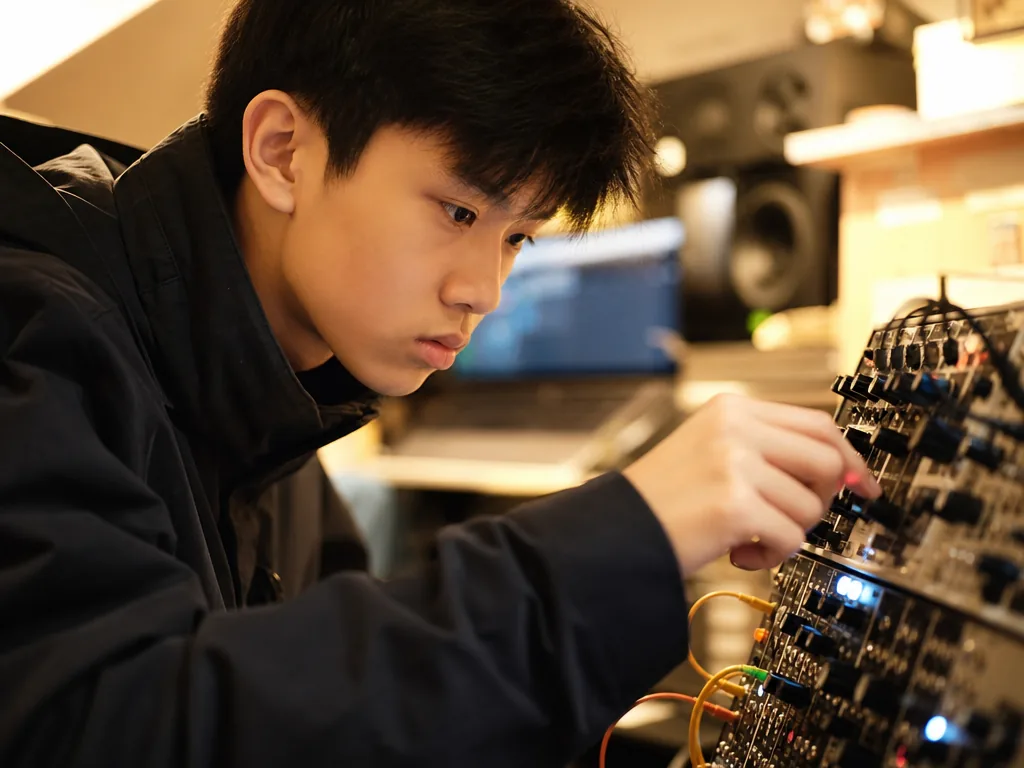
Technical Skill Development
Keyboard Technique
- Finger Dexterity & Hand Position: Proper finger movement, hand posture, and overall agility on the keyboard are essential. A student should demonstrate fluid motion between keys and maintain correct hand position.
- Chord Progressions: The ability to play basic to advanced chord structures correctly is a significant indicator of technical skill. This includes triads, seventh chords, and more complex extended chords.
- Arpeggios & Scales: Competency in scales (major, minor, pentatonic, etc.) and arpeggios is vital. A student should be able to play scales cleanly and at various tempos, demonstrating both accuracy and speed.
Sound Design Skills
- Synthesizer Programming: Ability to manipulate and design sounds using the synthesizer’s various parameters such as oscillators, filters, modulation, and effects. Students should be graded on their understanding of sound synthesis concepts like subtractive, FM, wavetable, and granular synthesis.
- Patch Creation: Students should demonstrate creativity and a technical understanding of creating patches from scratch, adjusting filters, modulation, and effects to achieve desired sonic outcomes.
Digital Audio Workstation (DAW) Integration
- Use of DAWs: Many synthesizer learners will be expected to use software like Ableton Live, Logic Pro, or FL Studio. Proficiency in integrating the synthesizer with a DAW, both for recording and live performance, is essential.
- MIDI Programming: The ability to use MIDI effectively with the synthesizer, including programming MIDI tracks, layering sounds, and automating parameters, is also a key skill.
Musicality and Expression
Performance
- Rhythm and Timing: Accurate rhythm, proper use of time signatures, and ability to stay in time with a metronome or other musicians. This can be evaluated through sight-reading, improvisation, or prepared pieces.
- Phrasing and Dynamics: Musical expression is often determined by a student’s ability to shape phrases, control dynamics, and create an emotive performance. Evaluation of how the learner uses crescendos, decrescendos, articulation, and tempo variations is crucial.
- Interpretation of Music: For learners who are working with written music, their ability to interpret the score in terms of dynamics, articulation, and emotional expression can be an indicator of musical maturity.
Improvisation
- Spontaneity & Creativity: The ability to improvise using the synthesizer, either over a chord progression or in response to other musicians, is an important measure of creativity. Students should be graded on their originality, use of scales and modes, and overall coherence of the improvisation.
Theory Knowledge
Music Theory
- Understanding of Intervals, Chords, and Scales: Synthesizer learners must demonstrate a solid understanding of music theory to effectively apply this knowledge in their playing. This includes recognizing intervals, constructing scales, and building chords.
- Application of Theory in Performance and Composition: Grading should consider how well learners integrate their theoretical knowledge into real-world scenarios—whether in performance, improvisation, or composition.
Ear Training
- Interval Recognition: A student’s ability to recognize intervals by ear, whether for melody or harmony, is a significant aspect of their overall musicianship.
- Chord Recognition: Identifying chord qualities (major, minor, diminished, augmented, etc.) by ear and transcribing melodies or harmonies accurately is another critical ear-training skill.
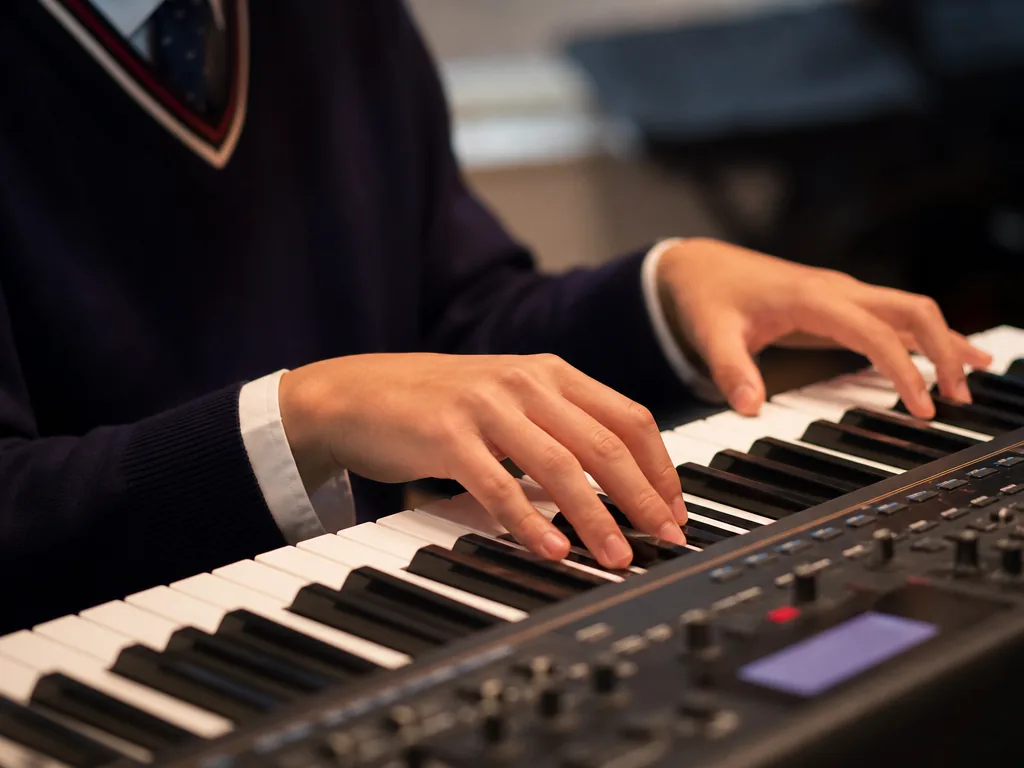
Creativity and Composition
Original Compositions
- Use of Synthesizer in Composition: Creativity in composing music that utilizes the full range of the synthesizer’s capabilities is vital. This includes the integration of different sounds, textures, and complex arrangements.
- Composition Structure: The ability to write music with a clear beginning, middle, and end, adhering to musical form (such as verse-chorus structure) is important.
- Innovative Sound Design: Students should also be encouraged to push boundaries in sound design, creating new textures and effects that are unique and expressive.
Arrangement Skills
- Layering and Orchestration: This involves creating multi-layered compositions, using various synth sounds in harmony, and making creative decisions about arrangement. Students should demonstrate an understanding of how to combine sounds to build a rich, full soundscape.
Live Performance Skills
Stage Presence
- Confidence and Engagement with Audience: This evaluates how the learner presents themselves during a performance. A confident student who engages with the audience can demonstrate a higher level of stage presence.
- Handling Live Situations: How well the learner deals with live performance situations, including dealing with mistakes, interacting with other musicians, and maintaining composure, is a critical aspect of grading.
Use of Effects and Processing
- Live Sound Manipulation: The ability to effectively manipulate sounds live, using synthesizer effects, MIDI controllers, or other performance tools, is a key skill for live performance.
- Timing and Coordination with Other Musicians: For group performances, the learner’s ability to synchronize with other musicians, maintaining the overall timing and rhythm, is vital.
Progress and Dedication
Consistency and Improvement
- Weekly Practice: Students should be graded based on their consistency in practice and the level of improvement over a given period. The student’s commitment to learning and self-improvement can be as important as technical skill.
- Goal-Oriented Learning: Whether the student is working towards mastering a particular technique or achieving a specific performance level, tracking their progress against clearly defined goals is key.
Grading a synthesizer learner should be holistic — combining technical ability with creativity, musical expression, and theoretical knowledge.
A Holistic Approach
Grading synthesizer learners should involve a holistic approach, combining technical ability with creativity, musical expression, and theoretical knowledge. By assessing performance, sound design, musicality, and live performance skills, teachers can provide an accurate and comprehensive evaluation of a student’s progress. The grading system should be flexible, allowing room for creativity, innovation, and individual expression.
Frequently Asked Questions (FAQ)
Q: How should I grade a synthesizer student who is still a beginner?
Focus on fundamentals first — finger dexterity, clean scales, basic chord progressions and simple patch creation — and weigh consistency of practice alongside technical progress. Early-stage learners should be rewarded for effort and improvement, not penalised for what they have not yet learned.
Q: Should sound design and creativity be graded alongside technique?
Yes. A holistic rubric balances keyboard technique, sound design, musicality and theory, so creative and expressive learners are not judged on technique alone. Originality in patch creation, improvisation and composition should carry real weight in the final mark.
Q: How can parents support a child who is learning the synthesizer?
Encourage regular weekly practice, listen to their pieces with interest, and help them set clear short-term goals rather than focusing only on exam results. A consistent routine and steady encouragement often matter more than raw talent.
Q: What tools help build ear training and theory between lessons?
Interval and chord recognition apps, regular metronome practice, and transcribing simple melodies by ear are all effective ways to strengthen musicianship outside of class. Even a few minutes of daily ear training makes a visible difference over a term.
Further Resources & Next Steps
- Official Resources——The Associated Board of the Royal Schools of Music (ABRSM) and Rockschool syllabuses provide graded benchmarks for keyboard technique and music theory.
- Further Reading——“Refining Sound: A Practical Guide to Synthesis and Synthesizers” by Brian K. Shepard is an accessible introduction to sound design and synthesis concepts.
- Parent Tips——Set aside a consistent daily practice routine and listen together, celebrating small improvements as well as big milestones.
Note: The information above is for reference only. Please consult professional education institutions for details.
This article was initially drafted and organised with AI. Editor / Professor Chan Kwok-wai; Managing Editor / Kong Yee-leung
Act Now: Find a Tutor / Register as a Tutor
For parents & students: looking for a home or online tutor for this subject? Click the button below to post a free tuition case (subject, level and preferred time) — TutorZone will match you with suitable tutors:
For tutors: do you teach this subject? Click the button below to register for free and receive more suitable cases — you pay only when a match is made: