
 Chinese (Traditional)
 Chinese (Simplified)
 English



How to Grade an Acoustic Guitar: A Complete Expert Guide
@keyframes tzPulseO { 0%,100% { box-shadow: 0 0 0 0 rgba(255,140,0,.55); transform: scale(1); } 50% { box-shadow: 0 0 0 14px rgba(255,140,0,0); transform: scale(1.04); } }
@keyframes tzPulseN { 0%,100% { box-shadow: 0 0 0 0 rgba(2,30,64,.5); transform: scale(1); } 50% { box-shadow: 0 0 0 12px rgba(2,30,64,0); transform: scale(1.04); } }
.tz-blink-o { animation: tzPulseO 1.6s ease-in-out infinite; }
.tz-blink-n { animation: tzPulseN 1.6s ease-in-out infinite .35s; }
TUTORZONE SUBJECT GUIDE · How to Grade an Acoustic Guitar
Planning to buy, sell, or evaluate an acoustic guitar? This step-by-step guide walks you through grading the instrument across five key dimensions — structural integrity, sound quality, cosmetic condition, brand value, and playability — so you can judge its true condition and market worth with confidence.
Direct Answer:How to grade an acoustic guitar?
Grading an acoustic guitar involves five key dimensions: structural integrity, sound quality, cosmetic condition, brand value, and playability, as 。

How to Grade an Acoustic Guitar: Check the Structural Integrity
The first step in grading any acoustic guitar is checking if the body and neck are structurally sound.
- Neck alignment — Look down the neck from the headstock to ensure it is straight. A warped or twisted neck can affect intonation and playability.
- Neck joint — Ensure the neck is securely attached to the body. Loose joints may cause buzzing or instability.
- Cracks and splits — Inspect the body (top, sides, back) and neck for cracks or signs of repair. Even small cracks can worsen with humidity changes.
- Bridge and saddle — The bridge should be securely glued with no lifting, and the saddle should sit correctly for proper string action.
- Frets — Look for fret wear, sharp fret ends, or uneven frets that can lead to buzzing.
Tip: Any major structural issues usually place a guitar in the “Poor” or “Fair” category unless professionally repaired.
Evaluate the Sound Quality
An acoustic guitar’s soul lies in its tone and resonance. Use these checkpoints:
- Volume and projection — Strum and fingerpick to see how loud and resonant the guitar is. Well-made guitars produce rich and balanced tones.
- Tone balance — Listen for clarity across all strings. The low, mid, and high frequencies should blend harmoniously.
- Sustain — Pluck a single note and observe how long it rings. Good sustain indicates a solid build and quality tonewoods.
- Buzzing or dead notes — Play every fret on each string to ensure consistent sound and check for fret buzz.
Pro tip: Sound quality can be subjective, but significant tonal imbalance or poor sustain usually signals a lower-grade guitar.
Assess Cosmetic Condition
A guitar’s appearance also affects its market value, especially for collectors and resellers.
- Finish wear — Check for scratches, dents, or worn-out lacquer. Light surface marks are common in “Good” condition guitars.
- Binding and inlays — Make sure decorative bindings are intact and not separating from the body.
- Hardware — Inspect tuners, strap buttons, and pickguards. Rusty or broken hardware can decrease value.
Note: Cosmetic wear alone doesn’t always affect playability but impacts the overall grade.
Identify Brand and Model Value
Some guitars inherently hold more value due to their brand reputation and model history.
- High-end brands — Martin, Taylor, Gibson, Yamaha (L series), and Takamine often retain or increase in value.
- Mid-range brands — Fender, Ibanez, Alvarez, and Epiphone are usually quality but not collectible.
- Budget brands — These are good for beginners but rarely hold resale value.
Insight: Even a low-cost brand in mint condition may rank higher than a damaged high-end model.
Consider Playability and Setup
Finally, playability is crucial — especially for working musicians.
- Action height — Measure the string height from the fretboard. Too high or too low affects ease of play.
- Nut and saddle — Ensure proper string spacing and height for smooth playing.
- Tuning stability — The guitar should stay in tune across playing sessions.
- Intonation — Check if the notes are in tune as you move up the fretboard. Poor intonation suggests setup issues.
Remember: A perfectly set-up guitar is easier to play and more desirable.
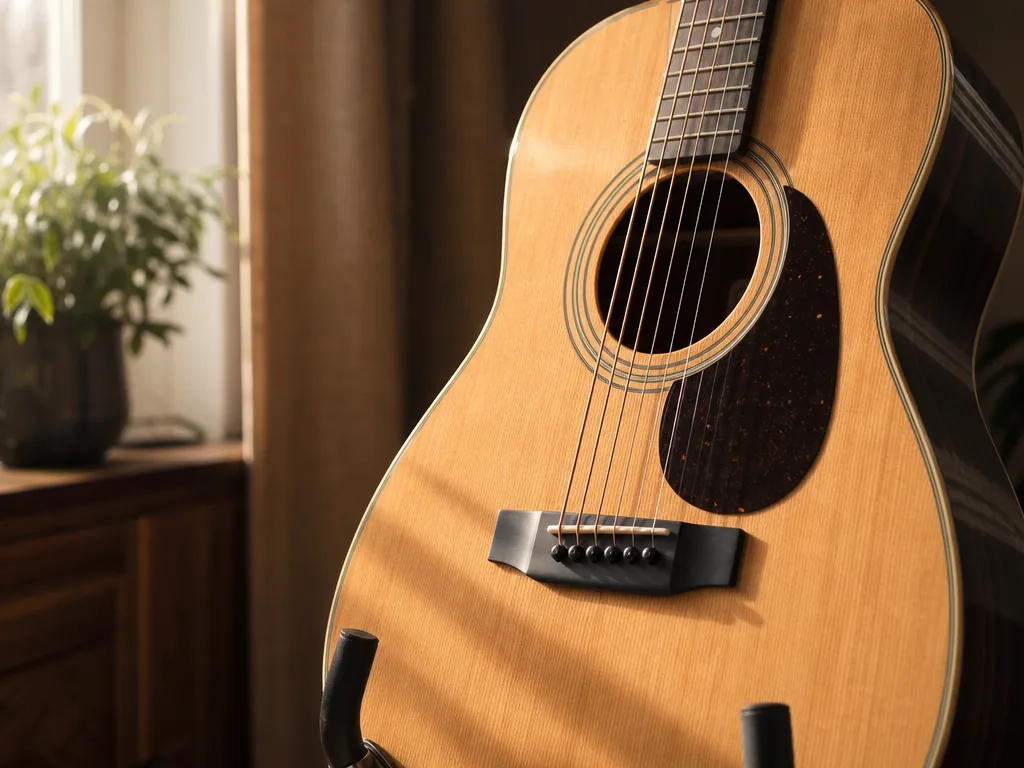
Guitar Grading Scale Overview
Use this scale for final grading:
| Grade | Description |
|---|---|
| Mint (M) | Like new, no wear, perfect condition |
| Excellent (EX) | Minimal signs of use, great condition |
| Very Good (VG) | Light wear, fully functional |
| Good (G) | Visible wear, some minor issues |
| Fair (F) | Noticeable wear, possible repairs needed |
| Poor (P) | Structural damage, unplayable without major repairs |
Frequently Asked Questions (FAQ)
Q: How do I know if a guitar’s neck is warped?
Sight down the neck from the headstock toward the body. If the fretboard looks twisted or bowed instead of straight, the neck is warped — which can throw off intonation and playability.
Q: Does cosmetic wear lower the grade if the guitar still plays well?
Yes. Cosmetic condition is one of the grading dimensions, so scratches, dents and finish wear reduce the grade even when the instrument is fully playable — though light surface marks usually still sit in the “Good” range.
Q: Which brands hold their value best?
High-end names such as Martin, Taylor, Gibson, Yamaha (L series) and Takamine tend to retain or increase in value, while mid-range brands like Fender, Ibanez, Alvarez and Epiphone are quality but rarely collectible.
Q: Can setup issues such as high action be fixed?
Usually, yes. Action height, nut and saddle, and intonation are all adjustable by a luthier or guitar technician, so a well-built guitar with setup problems can often be improved.
Further Resources & Next Steps
- Official Resources — Refer to the manufacturer’s official specifications and grading guidance from brands such as Martin, Taylor and Gibson for model-specific details.
- Further Reading — The Guitar Player Repair Guide by Dan Erlewine is a widely used reference on guitar inspection, setup and repair.
- Parent Tips — If you are buying a guitar for a child’s lessons, choose a well set-up mid-range model (such as Yamaha) with comfortable action rather than the cheapest option; it is easier to play and holds more of its value.
Note: The information above is for reference only. Please consult professional education institutions for details.
This article was initially drafted and organised with AI. Editor / Professor Chan Kwok-wai; Managing Editor / Kong Yee-leung
Act Now: Find a Tutor / Register as a Tutor
For parents & students: looking for a home or online tutor for this subject? Click the button below to post a free tuition case (subject, level and preferred time) — TutorZone will match you with suitable tutors:
For tutors: do you teach this subject? Click the button below to register for free and receive more suitable cases — you pay only when a match is made:
