
 Chinese (Traditional)
 Chinese (Simplified)
 English



How to Grade a Konghou (Chinese Harp)? A Complete Guide to Quality Standards & Buying Tips
@keyframes tzPulseO { 0%,100% { box-shadow: 0 0 0 0 rgba(255,140,0,.55); transform: scale(1); } 50% { box-shadow: 0 0 0 14px rgba(255,140,0,0); transform: scale(1.04); } }
@keyframes tzPulseN { 0%,100% { box-shadow: 0 0 0 0 rgba(2,30,64,.5); transform: scale(1); } 50% { box-shadow: 0 0 0 12px rgba(2,30,64,0); transform: scale(1.04); } }
.tz-blink-o { animation: tzPulseO 1.6s ease-in-out infinite; }
.tz-blink-n { animation: tzPulseN 1.6s ease-in-out infinite .35s; }
TUTORZONE SUBJECT GUIDE · How to Grade a Konghou (Chinese Harp)
How to Grade a Konghou (Chinese Harp): The konghou (Chinese harp), an ancient instrument with a history spanning over 2,000 years, is renowned for its ethereal, celestial tones. As this exquisite instrument gains global popularity, understanding how to evaluate its quality — from materials and craftsmanship to sound and brand reputation — becomes essential for musicians and collectors alike.
Direct Answer:How do you evaluate a konghou?
The konghou is evaluated on materials, craftsmanship, and tone; it is known for ethereal, celestial tones.
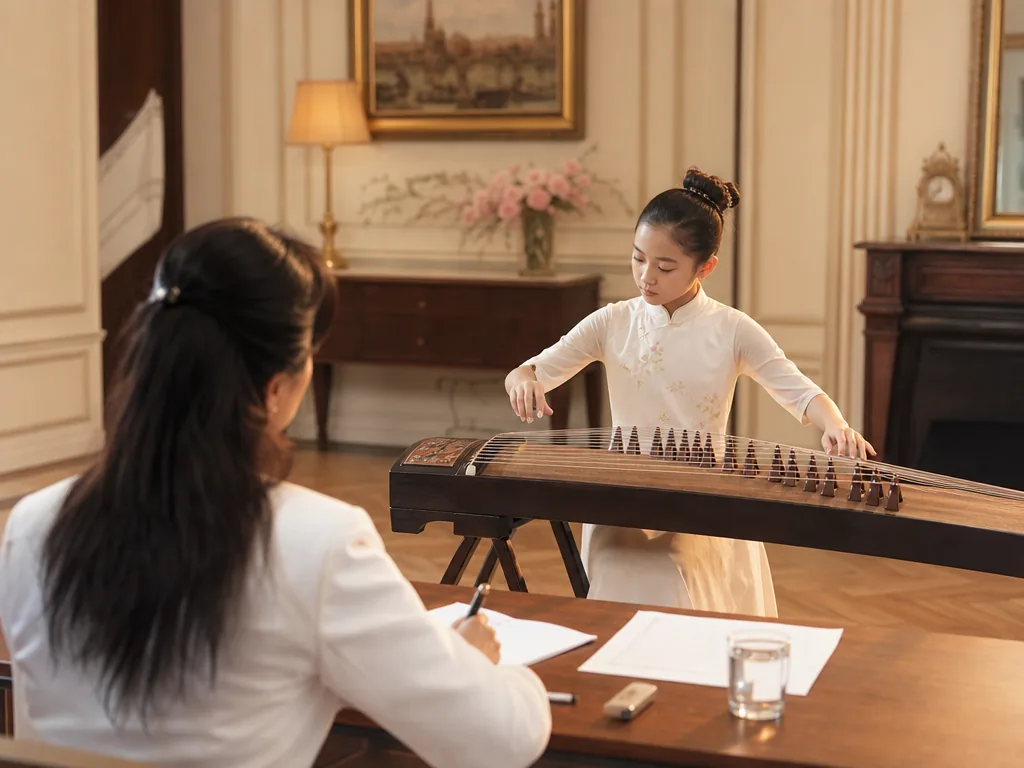
How to Grade a Konghou (Chinese Harp): Core Standards for Grading a Konghou
Materials: The Foundation of Tone Quality
Soundboard (Resonance Box)
- Paulownia Wood: Most common for entry-level models; produces bright, clear tones.
- Aged Rosewood / Red Sandalwood: Used in mid-range instruments; enhances warmth and projection.
- Century-old Nanmu / Zitan: Premium choice for professional models; delivers deep, complex harmonics.
Neck & Tuning Pegs
- Standard: Maple or ordinary rosewood.
- Professional: Ebony or purple sandalwood for stability.
- Premium: Gold-plated brass tuning mechanisms for precise tuning.
Material Grade Comparison:
| Grade | Soundboard | Neck Material | Target Users |
|---|---|---|---|
| Beginner | Paulownia | Maple | Students / hobbyists |
| Intermediate | Aged rosewood | Red sandalwood | Advancing players |
| Professional | Zitan / Nanmu | Ebony | Concert performers |
Craftsmanship: Precision That Impacts Performance
- Resonance Chamber Construction
- Handcrafted chambers offer superior acoustic properties versus machine-made.
- Professional models feature optimized internal bracing for balanced frequencies.
- String System Innovation
- Modern concert konghous use double or cross-string arrangements.
- Gear tuning systems (versus traditional pegs) ensure stable pitch.
- Finish Quality
- Traditional raw lacquer preserves wood resonance.
- Synthetic finishes may dampen high-frequency response.
Sound Quality Evaluation
A high-grade konghou should demonstrate:
- Bass Register——rich, vibrating sustain.
- Midrange——smooth, vocal-like quality.
- Treble——crystal-clear articulation.
- Dynamic Balance——even volume across all registers.
Professional instruments undergo 300+ hours of voicing by master luthiers.
Selecting the Right Konghou Level
Beginner (¥5,000–15,000)
Recommended: the Dunhuang Student Model. Best for basic technique development.
Intermediate (¥15,000–50,000)
Recommended: the Shanghai Folk Instrument Factory Pro Series, with enhanced resonance chambers.
Professional (¥50,000+)
Recommended: master-luthier custom models for concert performance and recording.
Maintenance Essentials
- Humidity Control——maintain 45–55% RH.
- String Care——wipe after playing to prevent oxidation.
- Storage——use a padded case and avoid direct sunlight.
This guide empowers you to make informed decisions when purchasing your next konghou, ensuring you select an instrument worthy of its celestial heritage.
Frequently Asked Questions (FAQ)
Q: What matters most when grading a konghou?
The soundboard material and overall craftsmanship carry the most weight — they shape tone quality, projection and sustain more than any other factor.
Q: Which wood suits a professional konghou?
Century-old Nanmu or Zitan for the soundboard, paired with an ebony neck, delivers the deep, complex harmonics prized by concert performers.
Q: How much should a beginner budget?
Around ¥5,000–15,000 for a solid entry-level model such as the Dunhuang Student Model is a sensible starting point.
Q: How do I keep a konghou in good condition?
Keep humidity at 45–55% RH, wipe the strings after each session and store the instrument in a padded case away from direct sunlight.
Further Resources & Next Steps
- Official Resources——Dunhuang and Shanghai Folk Instrument Factory catalogues and their authorised dealers.
- Further Reading——histories of the konghou and traditional Chinese string-instrument texts.
- Parent Tips——rent a mid-range instrument first, then upgrade once the player’s technique and commitment are established.
Note: The information above is for reference only. Please consult professional education institutions for details.
This article was initially drafted and organised with AI. Editor / Professor Chan Kwok-wai; Managing Editor / Kong Yee-leung
Act Now: Find a Tutor / Register as a Tutor
For parents & students: looking for a home or online tutor for this subject? Click the button below to post a free tuition case (subject, level and preferred time) — TutorZone will match you with suitable tutors:
For tutors: do you teach this subject? Click the button below to register for free and receive more suitable cases — you pay only when a match is made:
