
 Chinese (Traditional)
 Chinese (Simplified)
 English



Violin Grading Guide: Professional Evaluation Standards from Materials to Tone
TUTORZONE SUBJECT GUIDE · STRING INSTRUMENTS
A violin is graded not by its brand alone, but by the materials, craftsmanship, and tonal character it carries. This guide walks parents and students through the professional standards used to assess an instrument — from the wood of the top plate to the warmth of its sound.
Direct Answer:How is a violin graded?
A violin is graded not by brand alone but by its materials, craftsmanship, and tonal character, from top-plate wood to sound warmth.
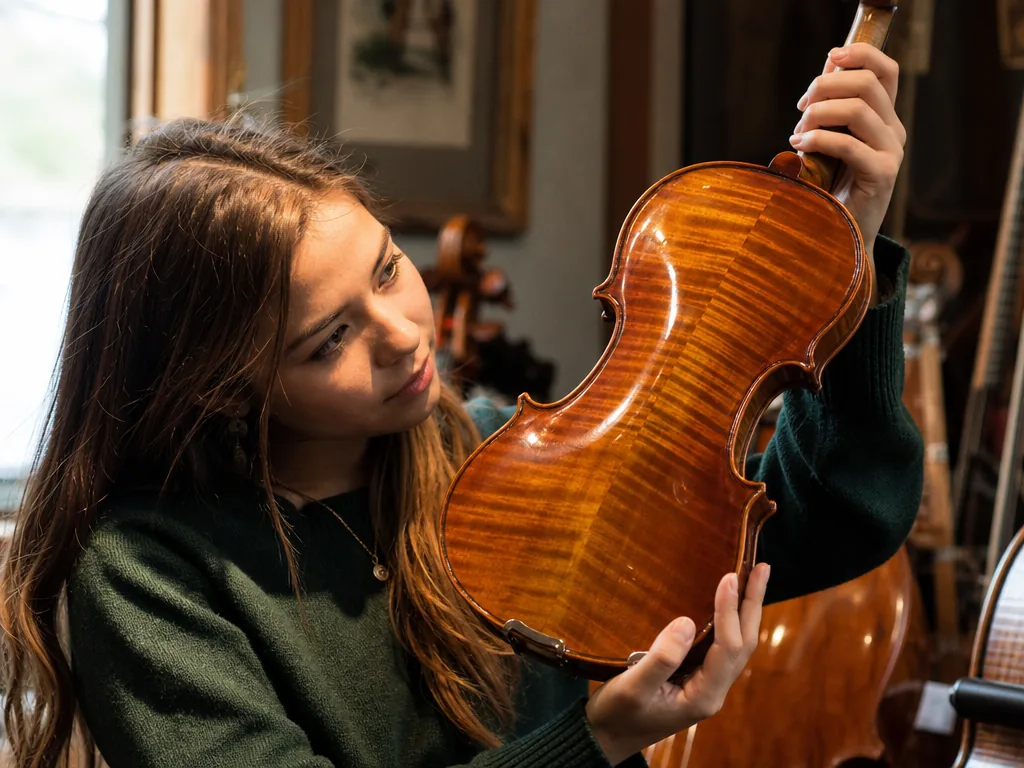
Material Selection Determines Tonal Foundation
The very first thing a luthier or examiner looks at is the wood. Each piece of the instrument contributes a distinct character to the finished sound, and the quality of the material sets the ceiling for everything else.
Top Wood
- Spruce — Most common material, provides clear and bright highs.
- European Spruce — Professional choice with superior resonance.
- Aged Wood (100+ years) — Used in premium performance violins for exceptional clarity.
Back and Side Wood
- Maple — Standard configuration with balanced tone.
- Flamed Maple — Enhances acoustic projection.
- Italian Maple — Collector-grade tonal quality.
Fittings Material
- Ebony Fingerboard — Standard configuration.
- Boxwood Pegs — Premium option.
- Ivory Accents — Found on antique instruments.
Craftsmanship Impacts Performance
Wood sets the foundation, but the hands that shape it decide how much of that potential is realised. Fine craftsmanship is what separates a factory violin from a concert instrument.
- Handcrafted Construction — Top-tier violins are entirely handmade.
- Varnish Technique — Oil varnish produces warmer tone than spirit varnish.
- Neck Angle — Affects playability comfort.
- Soundpost Positioning — Crucial for optimal resonance.
Tone Evaluation Standards
After materials and construction, the instrument is judged by ear. A well-graded violin must perform evenly across every register, not just shine in one spot.
A great violin is never defined by price alone — it is defined by how evenly and honestly it sings.
- High Register — Brilliant yet not piercing.
- Midrange — Rich and full-bodied.
- Bass — Powerful and deep.
- Volume Balance — Even across all registers.
- Projection — Capable of cutting through orchestral texture.
Violin Grade Comparison Table
To make the grading system concrete, here is how the market typically segments violins by grade, price, and intended player.
| Grade | Price Range | Target Users | Representative Brands |
|---|---|---|---|
| Beginner | $400-1,400 | Students | Red Violin, Seiler |
| Intermediate | $1,400-7,000 | Advancing Students | Yamaha, Eastman |
| Professional | $7,000-28,000 | Performing Musicians | Stradivari Copies |
| Collector | $28,000+ | Collectors | Antique Masterpieces |
Purchasing Recommendations
Choosing the right violin depends on who is playing it and why. These guidelines keep the decision aligned with the student’s actual stage of development.
- Beginners — Should consider 1/2 or 3/4 size instruments.
- Exam candidates — Should select intermediate-level handcrafted violins.
- Professional players — Require custom-made instruments.
- Always play-test — Before purchase.
Maintenance Essentials
A good violin will only stay good if it is cared for. Wood is a living material, and a little routine attention preserves both tone and resale value.
- Humidity — Maintain a 40%–50% humidity environment.
- Strings — Loosen strings after each use.
- Replacement — Regular string replacement.
- Sunlight — Avoid direct sunlight exposure.
- Servicing — Annual professional maintenance recommended.
Frequently Asked Questions (FAQ)
Q: How can I tell if a violin is worth its asking price?
Check the material first — solid spruce on the top and maple on the back and sides, with an ebony fingerboard — then play it across all registers. If the high notes are brilliant without being piercing and the bass stays full, the instrument is doing its job.
Q: What size violin should a beginner start with?
Beginners, especially younger children, should generally start on a 1/2 or 3/4 size instrument rather than a full-size 4/4, so that posture and bowing technique develop comfortably before they grow into a full-size violin.
Q: How often should a violin be serviced?
An annual professional maintenance check is recommended, on top of daily habits such as loosening the bow hair, wiping rosin off the strings, and keeping the instrument in a stable 40%–50% humidity environment.
Q: Does a higher grade always mean better tone?
Not automatically. Higher grades bring superior materials and handmade construction, but the best judge is always the player’s own ear — which is why play-testing before purchase is essential.
Further Resources & Next Steps
- Official Resources — Consult recognised music examination boards such as ABRSM or Trinity College London for graded violin syllabuses and repertoire guidance.
- Further Reading — Explore reference books on violin making and tonal evaluation to deepen your understanding of materials, varnish, and craftsmanship.
- Parent Tips — When buying for a child, prioritise correct sizing and play-test comfort over price, and budget for annual servicing to protect the investment.
Note: The information above is for reference only. Please consult professional education institutions for details.
This article was initially drafted and organised with AI. Editor / Professor Chan Kwok-wai; Managing Editor / Kong Yee-leung
Act Now: Find a Tutor / Register as a Tutor
For parents & students: looking for a home or online tutor for this subject? Click the button below to post a free tuition case (subject, level and preferred time) — TutorZone will match you with suitable tutors:
For tutors: do you teach this subject? Click the button below to register for free and receive more suitable cases — you pay only when a match is made: