
 Chinese (Traditional)
 Chinese (Simplified)
 English



Preschool Chinese Language Learning: A Comprehensive System for Children Aged 3-6
@keyframes tzPulseO { 0%,100% { box-shadow: 0 0 0 0 rgba(255,140,0,.55); transform: scale(1); } 50% { box-shadow: 0 0 0 14px rgba(255,140,0,0); transform: scale(1.04); } }
@keyframes tzPulseN { 0%,100% { box-shadow: 0 0 0 0 rgba(2,30,64,.5); transform: scale(1); } 50% { box-shadow: 0 0 0 12px rgba(2,30,64,0); transform: scale(1.04); } }
.tz-blink-o { animation: tzPulseO 1.6s ease-in-out infinite; }
.tz-blink-n { animation: tzPulseN 1.6s ease-in-out infinite .35s; }
TUTORZONE SUBJECT GUIDE · Preschool Chinese Language Learning
Preschool Chinese is a language-learning system designed for children aged 3–6, weaving together early listening, speaking and literacy with cultural awareness and cognitive growth — all through festivals, songs and playful activities.
Direct Answer:What is Preschool Chinese language learning?
Preschool Chinese is a language system for ages 3–6, weaving listening, speaking, literacy, and cultural awareness through playful activities.
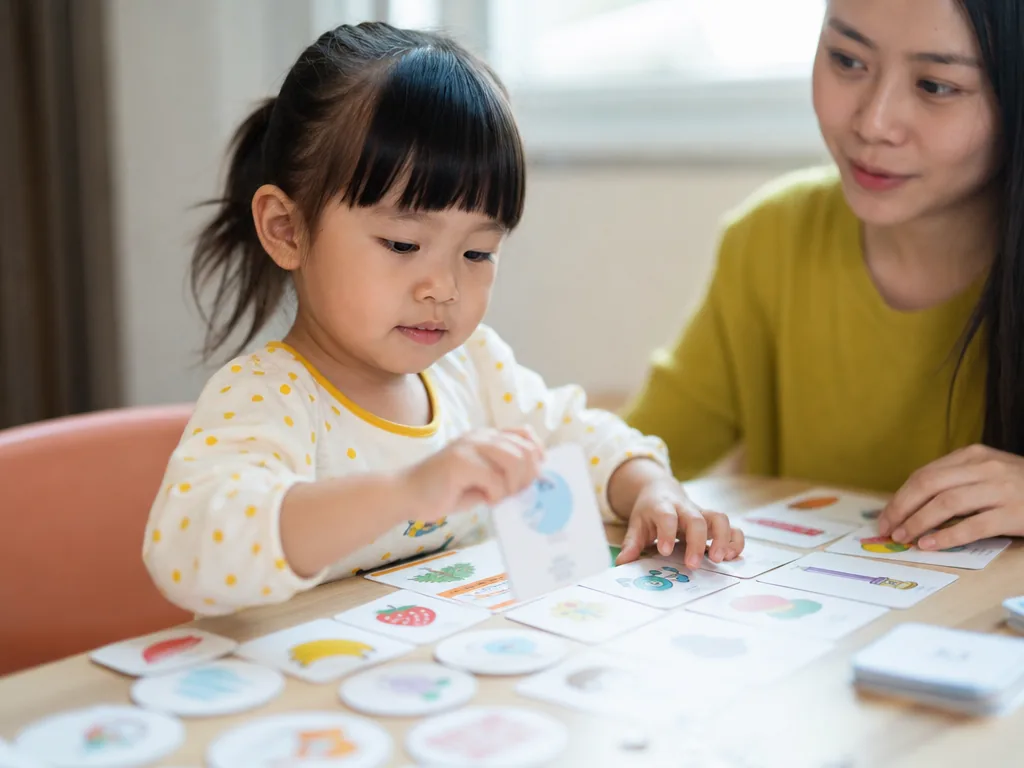
Preschool Chinese Language Learning: What Is Preschool Chinese?
Preschool Chinese refers to a language-learning system designed for children aged 3–6 years old. It covers three essential areas:
Language Development
Focusing on the foundational skills of listening, speaking and early literacy.
Cultural Awareness
Introducing Chinese culture through festivals, children’s songs and traditions.
Cognitive Growth
Promoting critical thinking and social skills through language learning.
Key Features of Preschool Chinese
Language Aspects
- Simple Vocabulary——prioritising words related to everyday life, such as “mom”, “apple” and “run”.
- Short Sentences——emphasising simple subject-predicate structures (e.g. “The dog drinks water”) and avoiding complex expressions.
- High Repetition——reinforcing learning through repetition, like nursery rhymes that repeat phrases for better memory retention.
Teaching Methods
- Gamified Learning——interactive activities such as role-playing and puzzle-based literacy games.
- Multisensory Stimulation——incorporating images (flashcards), sounds (reciting poems) and actions (gestures for Chinese characters).
- Contextualised Teaching——using real-life scenarios (such as supermarket or family settings) to practise conversation.
Cultural Elements
- Traditional Festivals——introducing holidays like Spring Festival and Mid-Autumn Festival.
- Children’s Songs——songs such as “Twinkle Twinkle Little Star” in Chinese, and simple fables like the “Tortoise and Hare” story.
Preschool Chinese Teaching Methods
TPR (Total Physical Response)
Theory: combining language with physical actions — for instance, when the teacher says “jump”, children perform the action.
Application: command-based games (e.g. “Touch your head” or “Clap your hands”) paired with Chinese vocabulary.
Immersive Learning
Creating a Chinese environment — labels around the classroom, daily conversations and instructions all in Chinese.
Image-Aided Literacy
Pictogram Introduction: using visual characters like “sun” and “mountain” to engage children.
Animation and Picture Books: using stories to naturally introduce new words and concepts.
Nursery Rhymes and Rhythms
Catchy and simple songs, such as “Two Tigers”, help with memory retention and language acquisition.
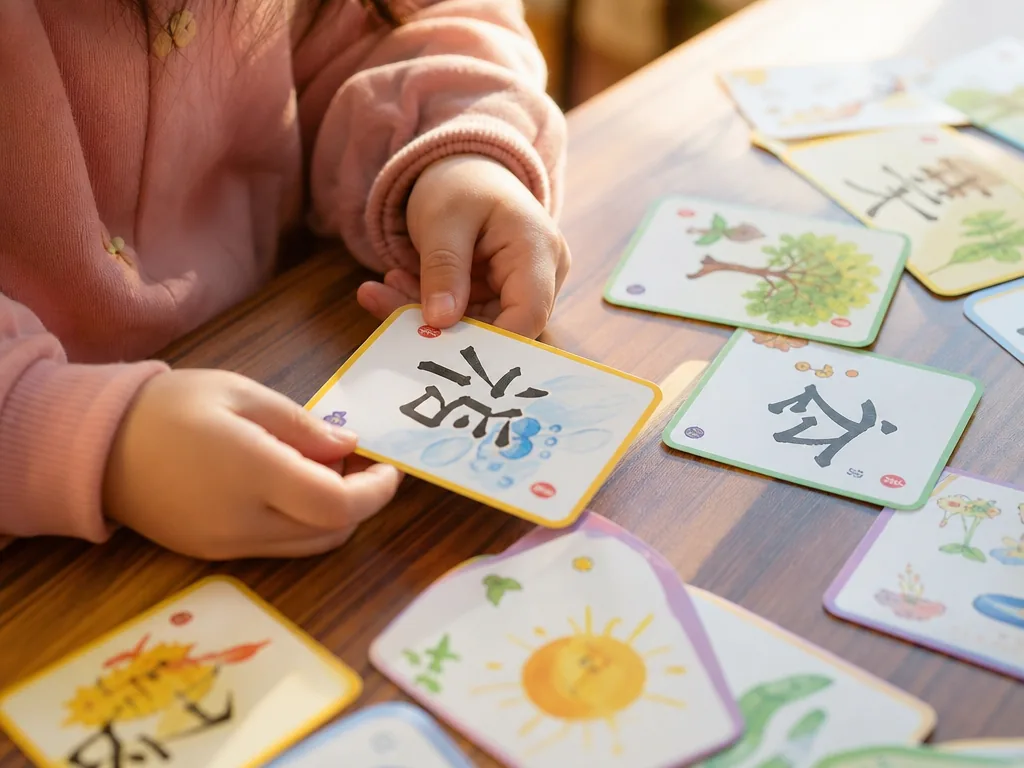
Sample Learning Content for Preschool Chinese
| Category | Specific Content |
|---|---|
| Basic Vocabulary | Colours, numbers (1–10), body parts, common animals, family terms. |
| Daily Phrases | Greetings (e.g. “Hello”, “Thank you”), simple requests (e.g. “Can I…?”), expressing needs (e.g. “I’m hungry”). |
| Cultural Activities | Paper-cutting for Spring Festival, making mooncakes for Mid-Autumn, reading excerpts from “San Zi Jing” (Three-Character Classic). |
The Roles of Parents and Teachers
- Parents——extend learning at home by reading Chinese picture books together and playing Chinese children’s songs.
- Teachers——design step-by-step lessons starting with listening comprehension, progressing to imitation, and ultimately recognising Chinese characters.
Common Challenges and Solutions
Short Attention Span
Keep activities under 15 minutes and alternate between active and quiet segments.
Incorrect Pronunciation
Use rhymes to naturally correct pronunciation, avoiding direct corrections that may undermine confidence.
Difficulty with Chinese Characters
Start with simple characters like “big” and “mouth”, and incorporate fun activities such as sand writing to make learning engaging.
Long-Term Benefits of Preschool Chinese
- Language Sensitivity Period——children exposed to Chinese before the age of six are more likely to develop bilingual skills with ease.
- Cultural Foundations——early Chinese language exposure provides a solid base for future language learning and cross-cultural adaptation.
By integrating language, culture and cognitive development in a playful and immersive way, Preschool Chinese fosters a love for the Chinese language while laying the groundwork for future multilingualism and cultural understanding.
Frequently Asked Questions (FAQ)
Q: At what age should my child start learning Chinese?
The ages of 3–6 are widely regarded as a golden window for language acquisition, when children pick up sounds and rhythms most naturally.
Q: Does my child need to learn to write Chinese characters at this stage?
Not initially. The early focus is on listening and speaking, with character recognition introduced gradually and playfully.
Q: How can I support Chinese learning at home?
Read Chinese picture books together, sing children’s songs, and weave simple daily phrases into conversation.
Q: Will learning Chinese confuse my child who is also learning English?
No — young children are highly adaptable, and early bilingual exposure generally supports, rather than hinders, overall language development.
Further Resources & Next Steps
- Official Resources——the Hong Kong Education Bureau (EDB) Kindergarten Education Curriculum Guide.
- Further Reading——Chinese picture books and the “San Zi Jing” (Three-Character Classic) for cultural exposure.
- Parent Tips——sing Chinese nursery rhymes and read a picture book together every day to keep learning light and consistent.
Note: The information above is for reference only. Please consult professional education institutions for details.
This article was initially drafted and organised with AI. Editor / Professor Chan Kwok-wai; Managing Editor / Kong Yee-leung
Act Now: Find a Tutor / Register as a Tutor
For parents & students: looking for a home or online tutor for this subject? Click the button below to post a free tuition case (subject, level and preferred time) — TutorZone will match you with suitable tutors:
For tutors: do you teach this subject? Click the button below to register for free and receive more suitable cases — you pay only when a match is made: