 Chinese (Traditional)
 Chinese (Simplified)
 English



Understanding Hong Kong Early Childhood Mathematics: A Complete Guide for Parents
@keyframes tzPulseO { 0%,100% { box-shadow: 0 0 0 0 rgba(255,140,0,.55); transform: scale(1); } 50% { box-shadow: 0 0 0 14px rgba(255,140,0,0); transform: scale(1.04); } }
@keyframes tzPulseN { 0%,100% { box-shadow: 0 0 0 0 rgba(2,30,64,.5); transform: scale(1); } 50% { box-shadow: 0 0 0 12px rgba(2,30,64,0); transform: scale(1.04); } }
.tz-blink-o { animation: tzPulseO 1.6s ease-in-out infinite; }
.tz-blink-n { animation: tzPulseN 1.6s ease-in-out infinite .35s; }
TUTORZONE SUBJECT GUIDE · Hong Kong Early Childhood Mathematics
In Hong Kong kindergartens, early mathematics is not about worksheets and tests — it is about nurturing curiosity, logical thinking, and a confident, playful relationship with numbers, shapes, and patterns. Here is what children learn, how it is taught, and how parents can support the journey at home.
Direct Answer:How is early childhood mathematics taught in Hong Kong kindergartens?
Hong Kong kindergartens teach early mathematics through nurturing curiosity, logical thinking, and a playful relationship with numbers, shapes, and。
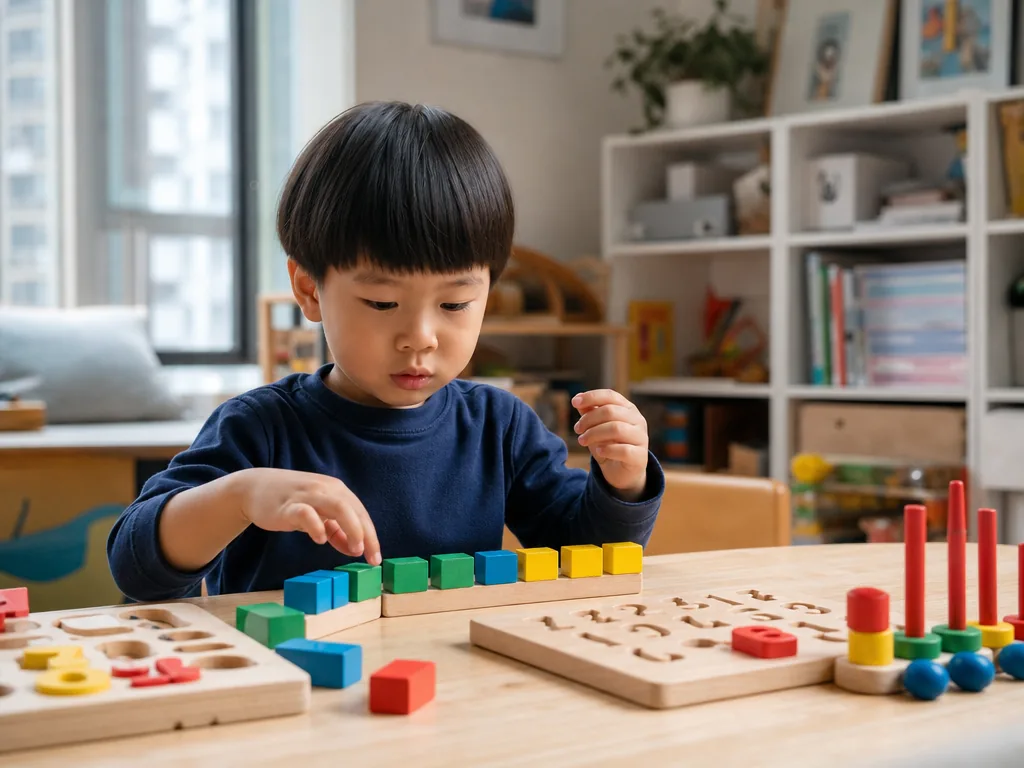
What Is Early Childhood Mathematics in Hong Kong?
Mathematics is often perceived as a subject filled with numbers, calculations, and formulas—but when it comes to early childhood education in Hong Kong, mathematics is something much more foundational, engaging, and fun. It’s not about worksheets and tests. It’s about nurturing children’s curiosity, logical thinking, and understanding of the world through numbers, shapes, patterns, and problem-solving.
So, what exactly is Hong Kong Early Childhood Mathematics? What do children learn, and how is it taught? More importantly, how can parents support their child’s math learning journey at home? This article answers all of these questions and more.
Early childhood mathematics in Hong Kong refers to the mathematical experiences provided to children between the ages of 3 and 6, typically in kindergartens and nursery schools. It is guided by the Kindergarten Education Curriculum Guide developed by the Education Bureau (EDB) of Hong Kong.
The goal is not to teach advanced calculations but to lay a strong foundation for mathematical thinking and reasoning through hands-on experiences, exploration, and meaningful play.
Key Learning Areas in Hong Kong Early Childhood Mathematics
The curriculum focuses on five core areas:
Number Sense
Children learn to recognize numbers, count objects, understand quantity, and compare numbers. This includes:
- Rote counting (e.g. 1 to 10, and later up to 100)
- One-to-one correspondence (matching objects to numbers)
- Comparing more and less
- Simple addition and subtraction through real-life scenarios
Shapes and Space
Children explore basic geometric concepts through activities and physical manipulation:
- Identifying 2D and 3D shapes (circle, square, triangle, cube, etc.)
- Understanding spatial relationships (inside, outside, above, below)
- Building with blocks to develop spatial awareness
Measurement
Basic concepts of size, length, weight, and time are introduced:
- Comparing lengths and heights (taller/shorter)
- Measuring with non-standard units (e.g. using blocks or hands)
- Understanding basic time concepts like “morning”, “afternoon”, “today”, “yesterday”
Patterns and Relationships
Children are encouraged to identify, extend, and create patterns:
- Recognizing repeated color or shape patterns
- Predicting what comes next in a sequence
- Understanding sorting and classification
Problem-Solving and Logical Thinking
Through games and daily experiences, children learn to:
- Make predictions
- Solve puzzles
- Use reasoning to explain their thinking
How Is It Taught in Hong Kong Kindergartens?
Play-Based Learning
Teachers design interactive, fun, and purposeful play activities that incorporate math concepts. Examples include:
- Playing with counting toys and dice
- Cooking role-play to learn about measurements
- Building blocks to explore shapes and balance
Integrated with Daily Life
Math is embedded in daily routines. Children might:
- Count how many students are present
- Discuss the day’s date and weather
- Share snacks equally among friends
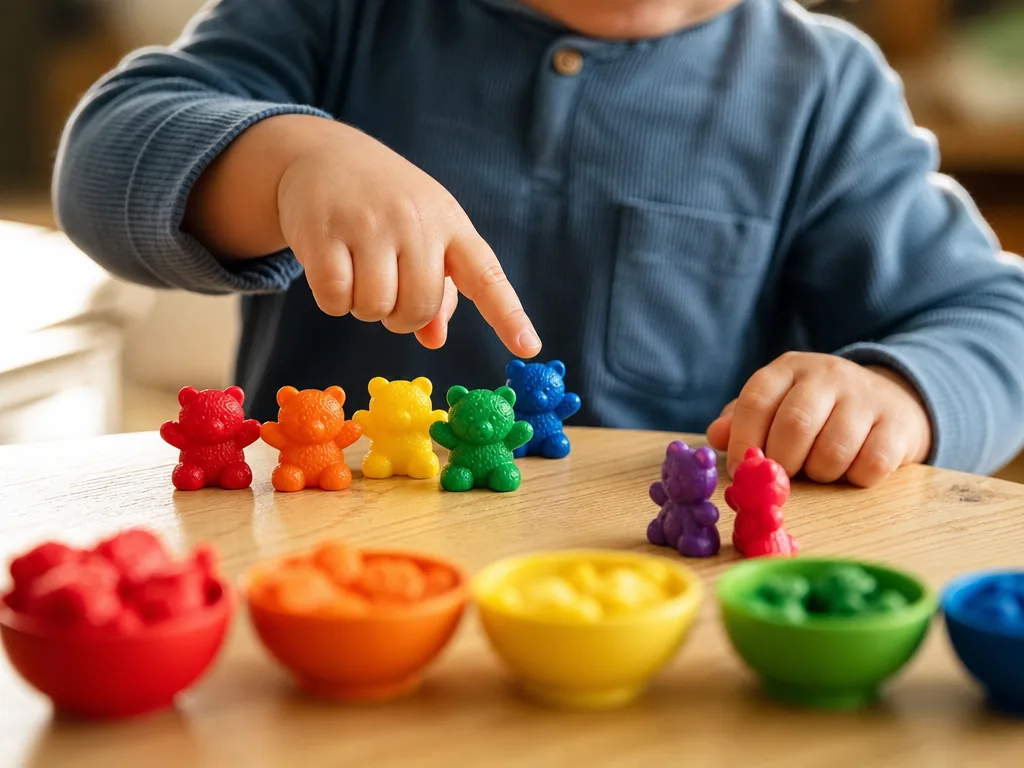
Use of Visuals and Manipulatives
Children use tangible materials like:
- Counting bears, number cards, abacuses
- Puzzles and board games
- Storybooks with mathematical concepts
What Are the Learning Goals?
The aim is to help children:
Confidence & Interest
Develop confidence and interest in mathematics.
Vocabulary & Concepts
Understand basic math vocabulary and concepts.
Real-Life Application
Apply math skills to real-life contexts.
P1 Readiness
Build readiness for Primary One (P1) mathematics in a smooth, stress-free way.
How Can Parents Support Math Learning at Home?
Here are some simple yet effective ways:
- Count everything——Steps, fruits, toys—make counting a part of everyday life.
- Talk about math——Use math language like “more than”, “less than”, “same as”.
- Play math games——Board games, card games, or even apps with age-appropriate challenges.
- Use household items——Sorting laundry by color or size, measuring rice or water when cooking.
- Read math-themed storybooks——Such as Ten Black Dots or The Very Hungry Caterpillar.
Final Thoughts: It’s More Than Just Numbers
Early childhood mathematics in Hong Kong is about much more than preparing for tests—it’s about developing children’s ability to think critically, solve problems, and understand the world in a logical way. With the right support from both educators and parents, young children can develop a lifelong positive attitude toward mathematics.
So next time your child is stacking blocks or setting the table, remember: they’re not just playing—they’re learning math in the most natural way possible.
Frequently Asked Questions (FAQ)
Q: At what age do children start learning mathematics in Hong Kong?
Early childhood mathematics typically covers ages 3 to 6, delivered in kindergartens and nursery schools and guided by the Kindergarten Education Curriculum Guide from the Education Bureau (EDB) of Hong Kong.
Q: Does early childhood math involve tests and worksheets?
No. The goal is not advanced calculation or written drills; it is building a foundation for mathematical thinking and reasoning through hands-on experiences, exploration, and meaningful play.
Q: What are the five core learning areas?
They are Number Sense; Shapes and Space; Measurement; Patterns and Relationships; and Problem-Solving and Logical Thinking.
Q: How can I support my child’s math at home without formal lessons?
Count everyday objects, use math language such as “more than” and “less than”, play board and card games, sort household items, and read math-themed storybooks.
Further Resources & Next Steps
- Official Resources——The Education Bureau (EDB) Kindergarten Education Curriculum Guide, which sets the framework for early childhood mathematics in Hong Kong.
- Further Reading——Math-themed storybooks such as Ten Black Dots and The Very Hungry Caterpillar.
- Parent Tips——Fold counting into daily routines, talk about shapes and patterns, and choose age-appropriate math games.
Note: The information above is for reference only. Please consult professional education institutions for details.
This article was initially drafted and organised with AI. Editor / Professor Chan Kwok-wai; Managing Editor / Kong Yee-leung
Act Now: Find a Tutor / Register as a Tutor
For parents & students: looking for a home or online tutor for this subject? Click the button below to post a free tuition case (subject, level and preferred time) — TutorZone will match you with suitable tutors:
For tutors: do you teach this subject? Click the button below to register for free and receive more suitable cases — you pay only when a match is made: