
 Chinese (Traditional)
 Chinese (Simplified)
 English



What is the origin of the Italian language?
TUTORZONE SUBJECT GUIDE · CONVERSATION COURSES
Italian (Italiano), one of the world’s most celebrated Romance languages, is a global favorite for language learners and cultural enthusiasts thanks to its elegant phonology, rich literary tradition, and profound cultural heritage. This article provides a detailed, clearly structured analysis of the origins and development of Italian, from the Latin of ancient Rome to the universal language spoken today.
Direct Answer:What is the origin of the Italian language?
Italian is one of the world’s most celebrated Romance languages, known for its elegant phonology and rich literary tradition.

What Is Italian?
Italian belongs to the Romance language family within the Indo-European language family. It is directly descended from the Latin of the Roman Empire, particularly Vulgar Latin — the spoken form used by Roman citizens. Along with Spanish, French, Portuguese, Romanian, and other languages, Italian is a descendant of Latin.
The Origin and Development of Italian
1. Old Latin Period (3rd Century BC – 5th Century AD)
In the 3rd century BC, the Roman Republic rose to power, and Latin became the official language of the entire Italian peninsula and surrounding areas. Latin varied by social class: Classical Latin was used by the upper nobility, while common people spoke Vulgar Latin.
Vulgar Latin is the true ancestor of Italian.
2. Regional Evolution of Vulgar Latin (5th–8th Centuries)
With the fall of the Western Roman Empire in 476 and the collapse of centralized power, Latin began to gradually evolve into different local dialects. On the Italian peninsula, popular Latin developed diverse local characteristics, forming the prototypes of early Italian dialects such as Tuscan, Neapolitan, and Venetian.
Characteristics: differences between regional dialects intensified, and phonology, vocabulary, and grammar gradually drifted from the original Latin.
3. Italian Medieval Language (9th–13th Century)
During the Middle Ages, Italy was politically divided into many city-states and small countries, such as Florence, Venice, Milan, and Genoa, each of which developed its own unique local language. At this time, “Italian” had not yet become a unified language — people communicated in local dialects, while Latin remained the language of academic and official occasions.
Features: the written language was mainly Latin, while the spoken language gradually developed into regional vernacular (volgare).
4. The Renaissance and the Birth of Standard Italian (13th–16th Centuries)
From the 13th to the 16th century, the Renaissance emerged in Italy, promoting the literary use of the local vernacular. The dialect of the Florentine region (Tuscany) rose to prominence through its cultural, economic, and political influence, and gradually became the basis of standard Italian.
Dante Alighieri
La Divina Commedia, written in the Tuscan dialect, established the language’s status.
Petrarch
Poetry written in the Tuscan style.
Boccaccio
The Decameron promoted the popularization of vernacular literature.
Dante is honored as the “Father of the Italian Language.”
5. National Unification and Language Standardization (19th Century)
In 1861, the Kingdom of Italy was established, promoting national language unification. At that time, only a small number of people (about 2.5%) could speak standard Italian fluently, and the majority of the population still spoke local dialects. The government, education system, and military enforced the use of standard Italian (based on the Tuscan–Florentine dialect), gradually reducing the influence of local dialects.
6. Modern Italian (20th Century to Present)
In the 20th century, standard Italian spread rapidly across the country through public education, radio, television, and film. Contemporary Italian continues to absorb many foreign words, especially from English — such as computer, internet, and marketing — while local dialects (such as Sicilian and Neapolitan) still retain a certain vitality among the people.
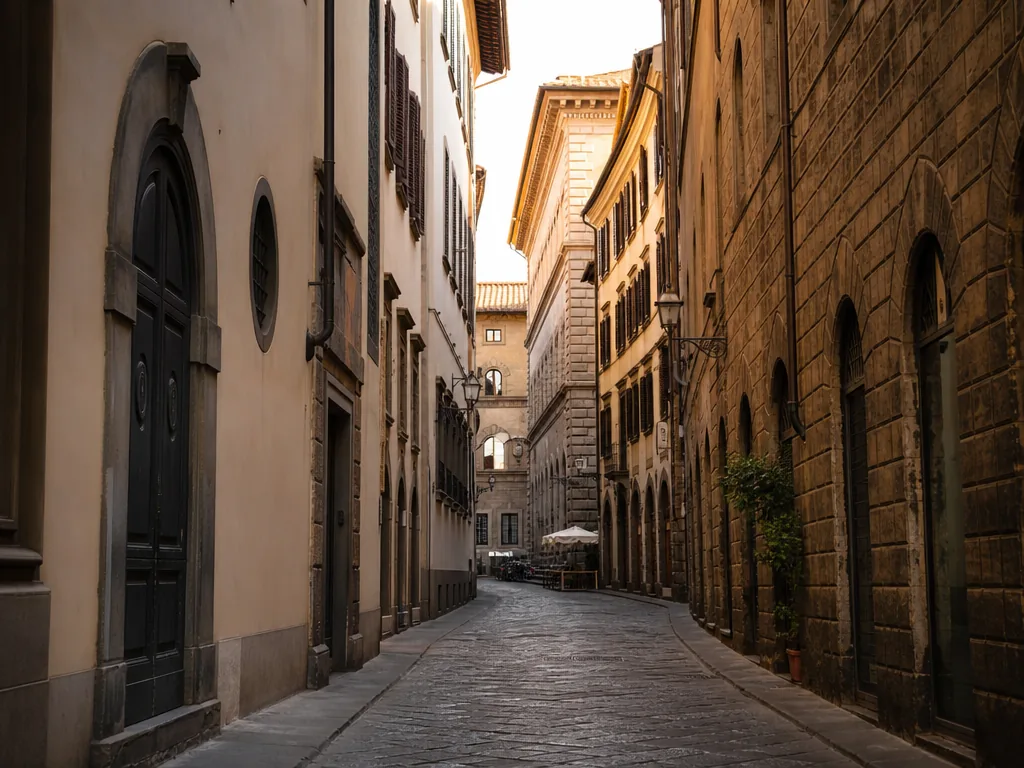
Linguistic Characteristics of Italian
| Feature | Illustration |
|---|---|
| Clear pronunciation | Spelling and pronunciation are highly consistent, and almost every letter is pronounced. |
| Nouns have gender | Each noun is masculine or feminine, affecting adjectives and articles. |
| Rich verb variation | Verbs change in complex ways according to tense, voice, person, and number. |
| Strong musicality | Italian is known as the “most singing language” because of its consistent vowels and strong sense of rhythm. |
| Preserving Latin heritage | Many words and grammatical structures are still clearly inherited from classical Latin. |
Summary: The Origins of Italian at a Glance
| Period | Key Points of Language Evolution | Influence |
|---|---|---|
| Old Latin period | The Roman Empire promoted Latin | Language foundation formed |
| Vulgar Latin differentiation period | Local languages emerged, and phonetics and grammar began to vary | Dialect buds |
| Development of medieval vernacular | Local dialects flourished, and literature written in the vernacular began to emerge | Literary promotion |
| Renaissance | Standardization of the Tuscan dialect based on literary works | Establishment of standard Italian |
| National unity and modernization | Mandatory promotion of the standard language, accelerated by media and education | National standard language |
Conclusion
Italian, born from Latin, has evolved through the differentiation of regional dialects, the rise of the medieval vernacular, and the literary advancements of the Renaissance, ultimately becoming one of the world’s most elegant languages. A deeper understanding of Italian’s origins not only improves language-learning efficiency but also deepens your appreciation for the essence of Italian art, history, and culture.
Frequently Asked Questions (FAQ)
Q: Is Italian the same as Latin?
No. Italian descends from Vulgar Latin — the everyday spoken form of Latin — rather than from the Classical Latin used in writing. Over the centuries, Vulgar Latin evolved into the regional dialects that eventually produced modern Italian.
Q: Which dialect became the basis of standard Italian?
The Tuscan dialect, specifically the Florentine variety, became the foundation of standard Italian, largely through the literary prestige of Dante, Petrarch, and Boccaccio during the Renaissance.
Q: Why is Dante called the “Father of the Italian Language”?
Dante wrote La Divina Commedia (The Divine Comedy) in the Tuscan dialect at a time when Latin dominated literature, proving that the vernacular could express profound ideas and establishing its status as a literary language.
Q: Are regional dialects still spoken in Italy today?
Yes. Standard Italian is used nationwide in education and media, but regional dialects such as Sicilian and Neapolitan remain alive in everyday life, and many Italians move comfortably between the two.
Further Resources & Next Steps
- Official Resources——Consult the Italian Cultural Institute (Istituto Italiano di Cultura) or the Società Dante Alighieri for accredited courses and certification.
- Further Reading——Read The Divine Comedy by Dante Alighieri and The Decameron by Boccaccio to experience the literary roots of the language first-hand.
- Parent Tips——Pair language study with music and opera, which showcase Italian’s famously strong musicality, to make pronunciation and rhythm easier to pick up.
Note: The information above is for reference only. Please consult professional education institutions for details.
This article was initially drafted and organised with AI. Editor / Professor Chan Kwok-wai; Managing Editor / Kong Yee-leung
Act Now: Find a Tutor / Register as a Tutor
For parents & students: looking for a home or online tutor for this subject? Click the button below to post a free tuition case (subject, level and preferred time) — TutorZone will match you with suitable tutors:
For tutors: do you teach this subject? Click the button below to register for free and receive more suitable cases — you pay only when a match is made: