
 Chinese (Traditional)
 Chinese (Simplified)
 English



Time Signature
TUTORZONE SUBJECT GUIDE · MUSIC THEORY
A time signature — the two numbers printed at the start of every score — tells musicians how many beats fill each bar and which note value counts as one beat. Master it, and the rhythm, metre and pulse of any piece falls into place.
Direct Answer:What is a time signature in music?
A time signature is the two numbers printed at the start of a score that tell musicians how many beats fill each bar and which note value counts as。

What Is a Time Signature?
In music theory, a time signature is used to indicate the number of beats per measure and the duration of each beat. It is a symbol, typically consisting of two numbers, located at the beginning of a musical score. The time signature plays a crucial role in the structure, rhythm, and performance of music. Understanding the time signature is an essential step in learning and playing music, as it tells us how to correctly divide notes and rests within a measure and indicates the basic organization of rhythm.
A time signature is the map of rhythm: it shows how many beats fill each bar and what each beat is worth.
Time Signature Structure
The time signature usually consists of two numbers and is located at the beginning of the musical staff, to the right of the staff:
- The upper number (numerator): indicates how many beats there are in each measure.
- The lower number (denominator): represents the duration of each beat, usually the duration of a note.
The Numerator (Upper Number)
The numbers above tell us how many beats there are in each measure. For example:
- 4/4 time: There are 4 beats per measure.
- 3/4 time: There are 3 beats per measure.
- 6/8 time: There are 6 beats per measure.
The Denominator (Lower Number)
The numbers below tell us which note represents each beat. The common correspondence between numbers and notes is as follows:
- 4——Represents a quarter note, meaning each beat is equal to a quarter note.
- 8——Represents an eighth note, that is, the duration of each beat is one eighth note.
- 16——Represents a sixteenth note, that is, the duration of each beat is one sixteenth note.
- 2——Represents a half note, that is, the duration of each beat is half a note.
For example, the 4 in the time signature 4/4 means there are 4 beats per measure, and each beat is a quarter note. The 4 in 3/4 also means each beat is a quarter note, but there are only 3 beats per measure.
Common Time Signature Types
Time signatures can be divided into several types, depending on the upper and lower numbers. Each time signature affects the rhythm and structure of the music. Common time signatures include:
Simple Time
Beats divide evenly into two — 4/4, 2/4 and 3/4.
Compound Time
Eighth-note beats grouped in threes — 6/8, 9/8 and 12/8.
Irregular Time
Uneven beats that resist even division — 5/4 and 7/8.
Simple Time Signatures
A simple time signature means that the beats within each measure can be further divided into even note values. Common simple time signatures include:
- 4/4 (quadruple time): One of the most common time signatures. Each measure has four beats, each consisting of a quarter note. This time signature is used in most pop, classical, and rock music. Also known as regular time.
- 2/4 time (two beats): Each measure has two beats, each beat being a quarter note. This is often used in marches, dances, or some fast-paced music.
- 3/4 time (triplet): Each measure has three beats, each consisting of a quarter note. This is the typical time signature for waltzes and is also common in dance music such as waltzes.
Compound Time Signatures
Compound time signatures are when each measure can be divided into two or more smaller units. These time signatures are usually based on the eighth note as the basic unit, and each beat can be further divided into three parts. Common compound time signatures include:
- 6/8 (six-eight time): Each measure has six beats, each consisting of an eighth note. This time signature is often used for fast dance music, and the beats within each measure are usually divided into two groups of three beats, with each two beats forming a unit.
- 9/8 time: There are 9 beats per measure, and each beat is an eighth note. This makes the music sound more complex and is often used in some classical music or folk dances.
- 12/8: Each measure has 12 beats, each consisting of an eighth note. This time signature is common in blues, gospel, and some forms of rock music.
Irregular Time Signatures
Irregular time signatures are those where the beats of each measure don’t divide evenly into equal parts. These time signatures often give the music an unusual or unstable rhythmic feel.
- 5/4: Each measure has five beats, each consisting of a quarter note. This time signature can make the music sound a bit irregular and is often found in modern classical music or some experimental music.
- 7/8: Each measure has 7 beats, each consisting of an eighth note. This time signature is often used to create asymmetrical and more challenging rhythmic structures, often found in certain folk or avant-garde music.
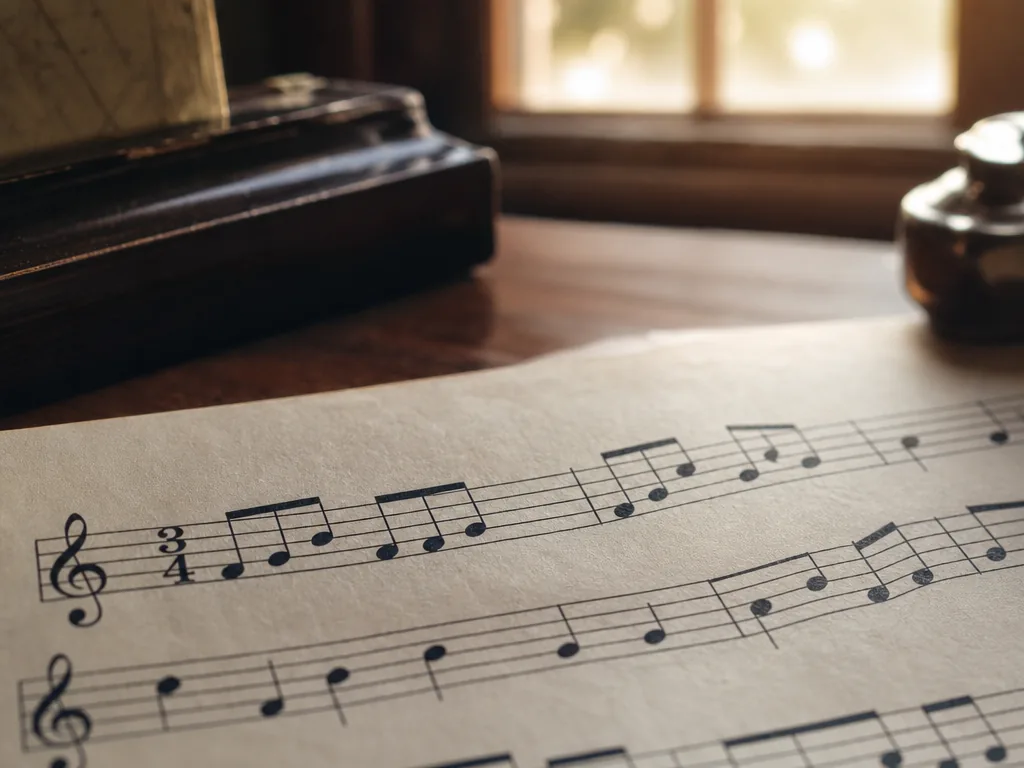
Time Signatures in Practice
Different time signatures influence the emotion and rhythm of music. Choosing the right time signature allows composers and performers to express a specific emotion or style. Time signatures are more than just technical notation; they also create a certain pulse in the music, making it easier for listeners to perceive the changes in volume.
- 4/4 Time: Most popular music uses 4/4 time, a stable and even rhythmic structure that’s well-suited to songs with a strong rhythmic feel. Whether it’s rock, pop, or modern classical music, 4/4 time is prevalent.
- 3/4 Time: Waltz and other dance music usually use 3/4 time. This makes each measure have a strong pulse, which is suitable for dances and waltzes.
- 6/8 Time: Much fast-paced dance music uses 6/8 time. This time signature often gives the music a sense of movement and creates a strong sense of movement within the fast rhythm.
Strong and Weak Beats
Within each time signature, there are typically strong and weak beats. The strong beat is the strongest beat in each measure, while the weak beat is the weaker beat. This alternation of strong and weak beats is crucial to creating a rhythmic feel in the music.
For example:
- In 4/4 time, the first beat is the strongest beat, usually the strong beat; the second and third beats are weaker; the fourth beat is relatively strong, thus forming a sense of rhythm that alternates between strong and weak.
- In 3/4 time, the first beat is the strong beat, and the next two beats are weaker beats, which usually gives the music a soft, danceable effect.
Conclusion
Time signatures are crucial symbols in music, indicating the number of beats per measure and the duration of each beat. They determine the rhythmic structure and performance of a piece. Different time signatures can create distinct musical emotions and styles. Understanding the meaning and application of time signatures is a crucial part of learning music theory and forms the foundation of performance, composition, and music analysis.
Frequently Asked Questions (FAQ)
Q: What does the bottom number of a time signature mean?
The lower (denominator) number tells you which note value counts as one beat — 4 means a quarter note, 8 an eighth note, 16 a sixteenth note, and 2 a half note.
Q: What is the difference between simple and compound time?
In simple time (4/4, 2/4, 3/4), each beat divides evenly into two. In compound time (6/8, 9/8, 12/8), the beats are based on the eighth note and typically group into threes.
Q: Which time signature is most common in pop music?
4/4 time (quadruple time) — four quarter-note beats per bar — is used in most pop, rock and classical music, and is also known as regular time.
Q: How do strong and weak beats work in 4/4 time?
The first beat is the strongest, the second and third beats are weaker, and the fourth beat is relatively strong, creating the alternating strong–weak pulse of the music.
Further Resources & Next Steps
- Official Resources——ABRSM (Associated Board of the Royal Schools of Music) publishes grade-by-grade music theory syllabuses and practice papers that cover time signatures in detail.
- Further Reading——Eric Taylor’s The AB Guide to Music Theory, Part I is a clear, widely used introduction to rhythm, metre and time signatures.
- Parent Tips——Clap and count aloud: have your child tap the strong beat while counting “1-2-3-4” so they can feel the metre before they play.
Note: The information above is for reference only. Please consult professional education institutions for details.
This article was initially drafted and organised with AI. Editor / Professor Chan Kwok-wai; Managing Editor / Kong Yee-leung
Act Now: Find a Tutor / Register as a Tutor
For parents & students: looking for a home or online tutor for this subject? Click the button below to post a free tuition case (subject, level and preferred time) — TutorZone will match you with suitable tutors:
For tutors: do you teach this subject? Click the button below to register for free and receive more suitable cases — you pay only when a match is made: