
 Chinese (Traditional)
 Chinese (Simplified)
 English



Grading Standard of the Clavichord – A Complete Guide for Students and Performers
TUTORZONE SUBJECT GUIDE · PERCUSSION
The clavichord is one of the oldest and most expressive keyboard instruments in Western music, prized for its delicate touch and its signature vibrato (bebung). This guide walks students and performers through every grading criterion — from finger control and rhythm to historically informed interpretation.
Direct Answer:What are the grading criteria for the clavichord?
Clavichord grading covers finger control, rhythm, and historical performance, focusing on delicate touch and vibrato (bebung).
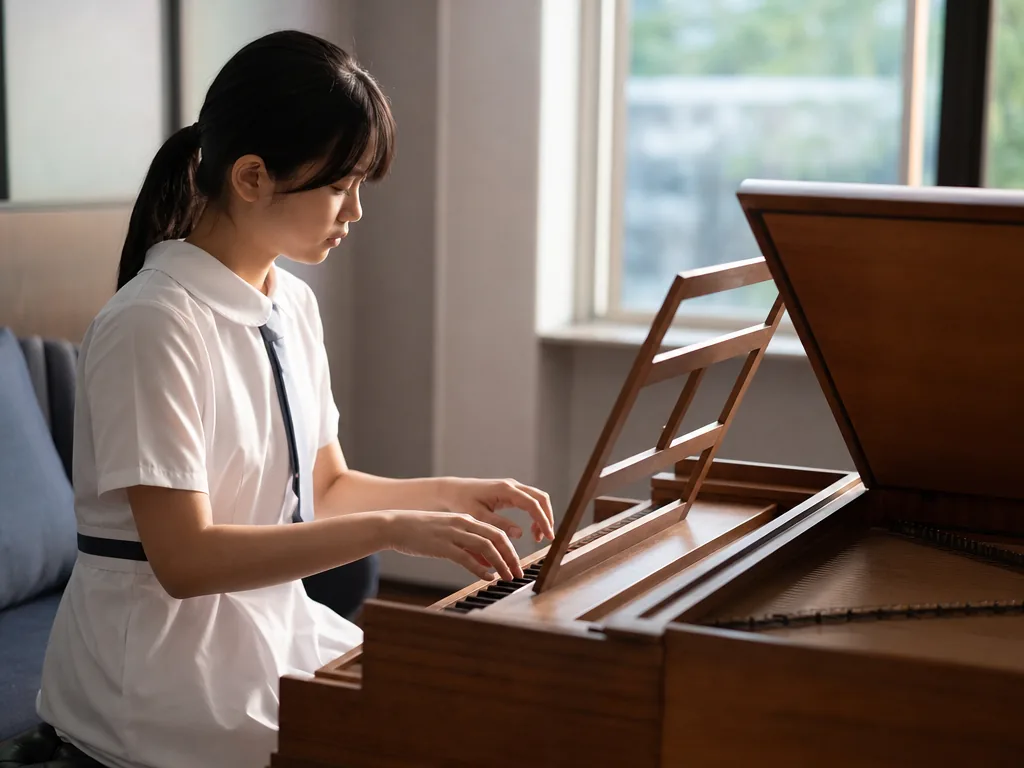
The Clavichord: An Overview
The clavichord is one of the oldest and most expressive keyboard instruments in Western music history. Popular in the Baroque and Classical periods, it offers a delicate, intimate sound, ideal for practicing and nuanced solo performance. Unlike the harpsichord or piano, the clavichord allows for dynamic control and vibrato (known as bebung), making it uniquely expressive despite its quiet volume.
Though the clavichord is rarely used in modern concerts, it remains a vital instrument in historical performance practice and music education. Evaluating clavichord performance requires a deep understanding of its technical, musical, and stylistic demands. This guide explores the grading standards used to assess clavichord performance at beginner through advanced levels.
The Importance of the Clavichord in Music Education
The clavichord plays a critical role in understanding historical keyboard technique and Baroque/Classical interpretation. It was favored by composers such as Carl Philipp Emanuel Bach, and even Ludwig van Beethoven practiced on it in his early years.
Grading standards for clavichord performance focus on:
- Historical stylistic awareness
- Touch sensitivity
- Articulation control
- Musical expression within dynamic constraints
This makes it essential for historically informed performance and early keyboard education.
Key Grading Criteria for Clavichord Players
Assessment criteria generally include:
- Technical Facility——finger independence, strength, and secure fingering
- Touch and Articulation——legato, non-legato, and control of slurs
- Rhythmic Accuracy——steady tempo and precise subdivisions
- Dynamic and Bebung Control——shading and the signature clavichord vibrato
- Stylistic Interpretation——period-appropriate phrasing and ornamentation
- Performance Presentation——poise, expression, and stage presence
Let’s explore each of these in detail.
Technical Facility
Finger Independence and Strength
Grading standards evaluate finger control and independence. On the clavichord, each note’s volume and quality depend on how precisely the tangent (a small metal blade) is pressed into the string. Weak or inconsistent finger control leads to tonal imbalance.
Examiners assess:
- Evenness in scales and arpeggios
- Clarity in fast passages
- Control over ornaments like trills, mordents, and turns
Hand Position and Fingering
Proper fingering technique is essential, especially in pre-piano repertoire. Examiners look for:
- Historically appropriate fingering
- Natural hand positioning
- Smooth transitions between intervals and hand crossings
Rhythmic Accuracy
Since the clavichord’s sound is so delicate, rhythmic flaws stand out. Players are evaluated on their ability to:
- Maintain steady tempo
- Execute precise subdivisions (especially in ornamented passages)
- Perform rhythmic contrasts (e.g., triplets against duplets)
Advanced grades will often include dance forms (Allemande, Courante, Gigue) or fugal passages where internal pulse and rhythmic complexity are critical.
Articulation and Touch Sensitivity
This is one of the most unique grading areas for clavichord players. Unlike the harpsichord, the clavichord allows continuous dynamic variation, depending on touch. Touch sensitivity is vital to bringing the music to life.
Legato and Non-legato Control
Students must demonstrate:
- Clean legato (smooth, connected tone)
- Sharp détaché and non-legato playing
- Stylistic control of slurs and phrase groupings
Control of Bebung (Clavichord Vibrato)
Bebung is the clavichord’s signature expressive tool. Performed by maintaining finger pressure on the key and applying small pulsations, it mimics vibrato on string instruments.
Grading evaluates:
- Evenness of vibrato
- Timing of bebung (used only on sustained notes or cadences)
- Tastefulness (overuse or mechanical application is discouraged)
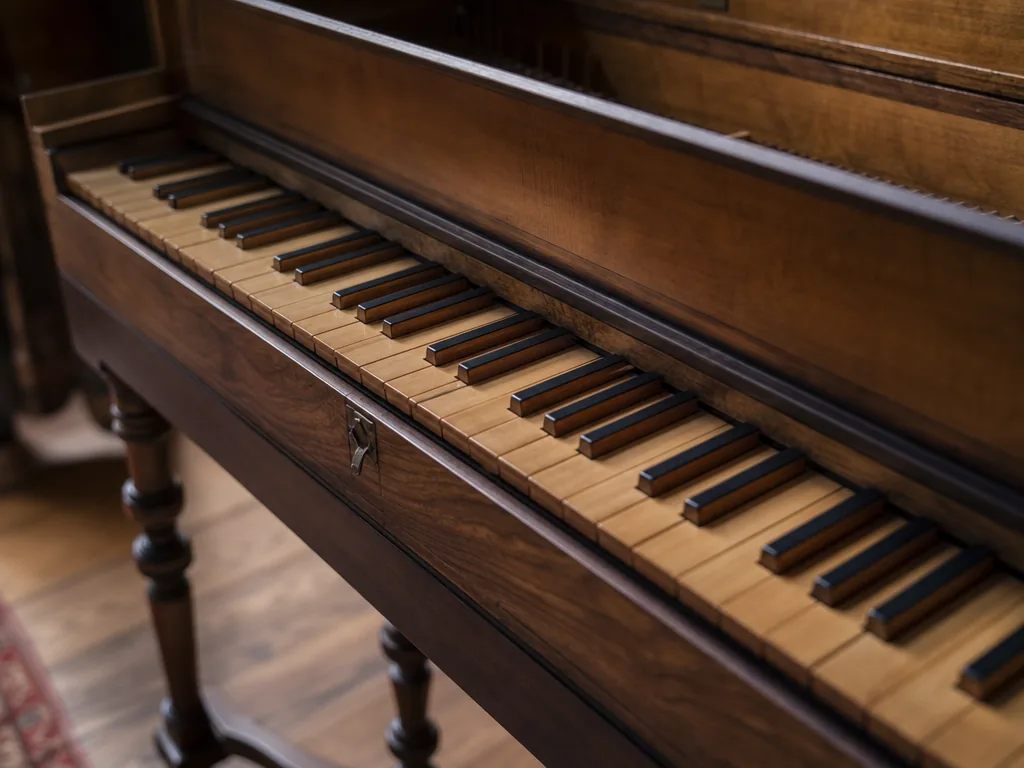
Dynamic Control and Voicing
Though quiet, the clavichord allows dynamic nuance unlike any other early keyboard. Students are graded on:
Dynamic Shading
- Pianissimo to forte within a passage
- Gradual crescendo/decrescendo (rare in early music but possible on clavichord)
- Expressive volume shaping within phrases
Polyphonic Voicing
In two-voice or three-voice music (especially in Bach or Scarlatti), the player must highlight melodic lines and de-emphasize inner voices.
Grading considers how well the player:
- Differentiates voices using touch and dynamics
- Emphasizes phrasing of primary melody
- Balances counterpoint with articulation
Stylistic and Historical Awareness
Understanding the style and period of a piece is essential to proper clavichord playing. Grading standards often include:
- Use of appropriate ornamentation (with or without written-out signs)
- Correct articulation patterns based on period conventions (e.g., notes inégales, over-dotting)
- Faithfulness to Baroque and Classical phrasing and cadential structure
Performers must be able to interpret the music not as one would on a modern piano but in a historically informed manner, aligning with composers like C.P.E. Bach, J.S. Bach, Froberger, and Haydn.
Presentation and Expression
Interpretation
Advanced grades (e.g., diploma level) require students to:
- Justify interpretive choices
- Shape phrases with intention
- Communicate musical ideas clearly through the subtle voice of the clavichord
Stage Presence
Even in a recital or exam setting, posture and engagement matter. Graders assess:
- Calm and poised demeanor
- Attention to details in transitions and silences
- Responsiveness to musical character
Grade Level Breakdown
| Grade Level | Typical Requirements |
|---|---|
| Grades 1–3 | Simple binary/ternary pieces, basic ornaments, clear rhythm |
| Grades 4–5 | Early dance forms, more complex fingerings, clean articulation |
| Grades 6–8 | Multi-voice works, bebung, period phrasing, expressive dynamics |
| Diploma Level | Advanced repertoire (C.P.E. Bach, Haydn), ornament improvisation, deep stylistic accuracy, full dynamic and interpretive control |
Bringing It All Together
The grading standard of the clavichord is unique in the world of keyboard instruments. It emphasizes not just technical skill and rhythm but also sensitive touch, stylistic awareness, and historically informed performance. By mastering these criteria, clavichordists can achieve authenticity, nuance, and expressive depth in their playing.
Whether you’re studying early music, preparing for exams, or performing Baroque repertoire, understanding these grading standards will set you on the path to success.
Frequently Asked Questions (FAQ)
Q: Is the clavichord graded differently from the piano or harpsichord?
Yes. Grading places far more weight on touch sensitivity, bebung (vibrato), and historically informed style than on volume or pedal technique, reflecting the clavichord’s unique mechanics.
Q: What is bebung, and why does it matter in an exam?
Bebung is the clavichord’s vibrato, produced by pulsing finger pressure on a held key. Examiners look for even, well-timed vibrato used only on sustained notes or cadences — overuse or mechanical application is discouraged.
Q: Which composers’ works appear most often at higher grades?
Works by C.P.E. Bach, J.S. Bach, Froberger, and Haydn are common, alongside dance forms (Allemande, Courante, Gigue) and fugal passages that test polyphonic voicing and rhythmic control.
Q: How can a student prepare for a clavichord grading exam?
Practise even scales and arpeggios, work on legato and non-legato articulation, develop controlled bebung, and study period ornamentation and phrasing for the chosen repertoire.
Further Resources & Next Steps
- Official Resources——Consult the syllabuses of music examination boards (such as ABRSM and Trinity) for early-keyboard and historical-performance requirements.
- Further Reading——Explore C.P.E. Bach’s “Essay on the True Art of Playing Keyboard Instruments” and modern studies on Baroque performance practice.
- Parent Tips——Encourage slow, attentive practice that builds finger control and a sensitive ear; the clavichord’s quiet voice makes it ideal for home study.
Note: The information above is for reference only. Please consult professional education institutions for details.
This article was initially drafted and organised with AI. Editor / Professor Chan Kwok-wai; Managing Editor / Kong Yee-leung
Act Now: Find a Tutor / Register as a Tutor
For parents & students: looking for a home or online tutor for this subject? Click the button below to post a free tuition case (subject, level and preferred time) — TutorZone will match you with suitable tutors:
For tutors: do you teach this subject? Click the button below to register for free and receive more suitable cases — you pay only when a match is made: