 Chinese (Traditional)
 Chinese (Simplified)
 English



The origins of martial arts
TUTORZONE SUBJECT GUIDE · SPORTS
Martial arts — a sport that blends skill, strength, wisdom, and culture — boasts thousands of years of history and a profound global impact. From China to every corner of the world, these arts of self-defense, combat, and spiritual cultivation are deeply rooted in the cultures of many nations.
Direct Answer:What are the origins of martial arts?
Martial arts span thousands of years, rooted in Chinese culture, blending self-defense, combat, and spiritual cultivation.
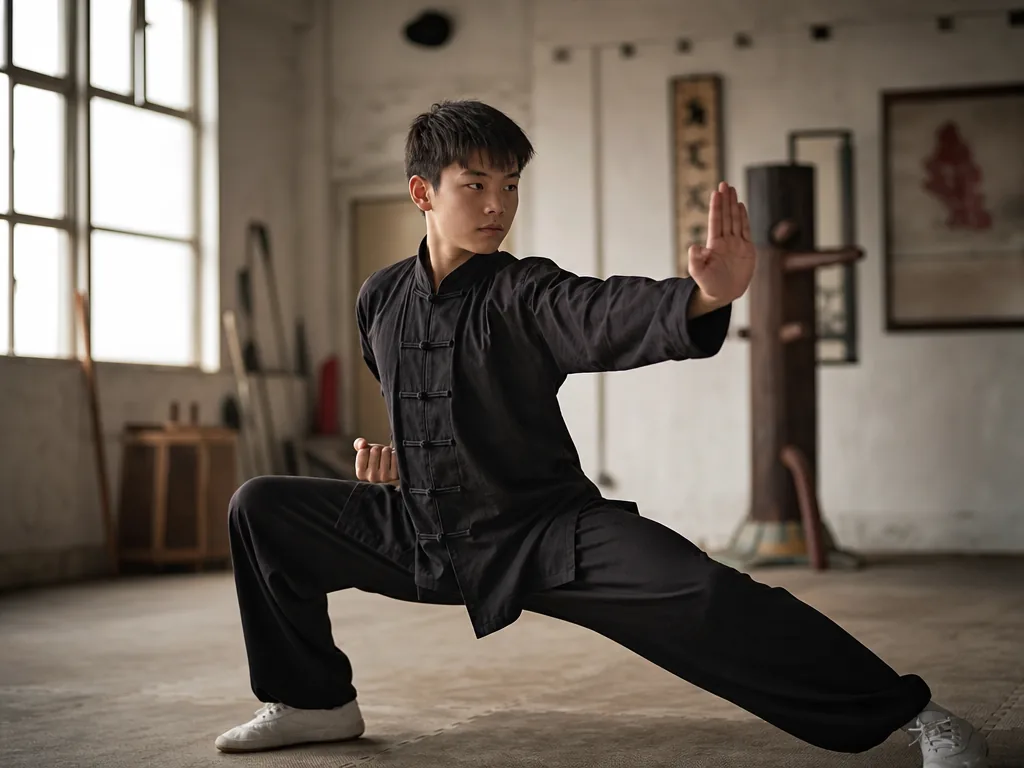
Introduction
Martial arts, a sport that blends skill, strength, wisdom, and culture, boasts thousands of years of history and has a profound global impact. Whether in China or elsewhere, martial arts, as a means of self-defense, combat, and spiritual cultivation, are deeply rooted in the cultures of various nations. Today, martial arts are more than just a sport; they represent traditional culture and are widely used in film, entertainment, fitness, and other fields.
So, how did martial arts originate and develop? The following sections provide a detailed introduction from the perspectives of historical background, early development, Chinese martial arts, and other martial arts around the world.
Martial arts are more than just a sport — they represent traditional culture and are widely used in film, entertainment, fitness, and beyond.
The Development of Early Martial Arts
Ancient Combat Techniques and Weapon Use
The origins of martial arts are closely tied to warfare and defense. Ancient martial arts primarily developed various combat techniques designed to cope with life-or-death challenges in war. These techniques encompassed not only bare-handed combat but also combat methods using various weapons.
- The origin of the need to fight——Early in human history, conflicts between tribes and nations necessitated the development of effective self-defense and offensive techniques. These techniques were probably first developed by primitive people to protect themselves from wild beasts and other tribal threats.
- The use of weapons and the evolution of technology——With the discovery of metals and the improvement of smelting technology, humans began to create various weapons such as swords, spears, bows and arrows. The use of these weapons prompted the emergence of specialized combat techniques and martial arts forms, which were developed in various civilizations.
The Origins of Chinese Martial Arts
The Early Development of Chinese Martial Arts
Chinese martial arts (also known as Wushu) boast thousands of years of history, deeply influenced by Confucianism, Taoism, and Buddhism. Beyond physical techniques, Chinese martial arts also emphasize spiritual cultivation and possess profound philosophical connotations. Originating in ancient times, their development can be divided into the following stages.
- Primitive combat techniques——As early as the Neolithic Age, primitive tribes in China had already developed simple combat techniques, including hand-to-hand combat and combat with simple weapons. With the development of agricultural civilization, these techniques gradually became part of self-defense and military defense.
- Warfare and military strategy during the Spring and Autumn and Warring States periods——During the Spring and Autumn Period and the Warring States Period, Chinese martial arts experienced significant advancements. Constant wars between various states during this period necessitated a deepening study of military tactics and strategies. This period not only produced the renowned military treatise The Art of War but also a wealth of military techniques and combat methods, which later became the foundation of Chinese martial arts.
Systematisation After the Tang and Song Dynasties
In the history of Chinese martial arts, Shaolin Temple and Wudang Mountain are undoubtedly the two most representative schools. Shaolin martial arts are known for boxing and staff techniques, while Wudang martial arts focus on Tai Chi, emphasizing internal energy and the use of Qi.
- Shaolin Kung Fu——Located on Songshan Mountain in Henan Province, Shaolin Temple is one of the most influential birthplaces of Chinese martial arts. The Shaolin monks created a style characterized by speed, power, and skill, and it has been used in numerous battles against foreign enemies throughout history.
- Wudang Martial Arts——Located in Hubei Province, Wudang Mountain is one of the birthplaces of Taoist culture. Wudang martial arts emphasize inner cultivation, particularly Tai Chi, a slow, gentle form that emphasizes mind–body coordination and the flow of Qi.
The Development of Modern Chinese Martial Arts
- The New Culture Movement and the reform of martial arts——As modern China transformed, traditional martial arts also faced the challenge of modernization. During the New Culture Movement in the early 20th century, some martial artists began to explore how to integrate traditional martial arts with modern techniques and concepts. The establishment of the Chinese Wushu Association led to the standardization of martial arts and its integration with international standards.
- Internationalization and influence——With the rise of martial arts films (such as the influence of Bruce Lee) and kung fu films, Chinese martial arts have gradually become international. Many international martial arts enthusiasts have begun to learn Chinese martial arts and promote them.
Origins of Martial Arts in Other Parts of the World
Japanese Martial Arts: Karate and Judo
- Karate——Originating in Okinawa, karate began as a form of unarmed combat developed by the island’s indigenous people for self-defense.
- Judo——Judo originates from the Japanese martial art of jujutsu, which focuses on wrestling, grappling, and counterattacks. Founded by Jigoro Kano in the late 19th century, it became an Olympic sport in the early 20th century. Judo emphasizes skill and intelligence over sheer physical strength.
Korean Martial Arts: Taekwondo
- Taekwondo——A Korean martial art, it originated on the ancient Korean Peninsula. It emphasizes kicking, punching, and defensive techniques, combining traditional Korean martial arts with those of China and Japan. The modern development of Taekwondo began in the 1950s, culminating in modern competitive Taekwondo, which became an official Olympic sport in the 1960s.
Summary: The Origin and Development of Martial Arts
- The origins of martial arts——These can be traced back to the fighting techniques that ancient humans needed for self-defense and survival, techniques that were gradually developed in different civilizations.
- Chinese martial arts——Deeply influenced by Taoism, Confucianism, and Buddhism, they have developed into many schools including Shaolin Kung Fu and Tai Chi, and have had a profound impact on the development of martial arts in other parts of the world.
- Other regions——Japan‘s karate and judo, and South Korea‘s taekwondo, also have their own history of martial arts development and are widely popular around the world.
Frequently Asked Questions (FAQ)
Q: Where did martial arts come from?
Martial arts grew out of the fighting techniques that ancient people needed for self-defense and survival, which were gradually refined into formal systems across different civilizations over thousands of years.
Q: What is the difference between Shaolin and Wudang martial arts?
Shaolin Kung Fu, from Songshan Mountain in Henan, is known for fast, powerful boxing and staff techniques, while Wudang martial arts, from Hubei, emphasize inner cultivation — particularly slow, gentle Tai Chi and the flow of Qi.
Q: Are martial arts only about fighting?
No. Beyond combat and self-defense, martial arts are a form of spiritual cultivation shaped by Confucianism, Taoism, and Buddhism, and today they are widely used in film, entertainment, and fitness.
Q: Which martial arts are Olympic sports?
Judo became an Olympic sport in the early 20th century, and modern competitive Taekwondo later followed as an official Olympic sport.
Further Resources & Next Steps
- Official Resources——The International Wushu Federation (IWUF), the World Karate Federation (WKF), and World Taekwondo (WT), together with national bodies such as the Chinese Wushu Association.
- Further Reading——Sun Tzu’s The Art of War for the strategic roots of Chinese martial arts, alongside histories of Shaolin Temple and Wudang Mountain.
- Parent Tips——Choose a style suited to your child’s age and interest — slow Tai Chi for coordination, or structured taekwondo and judo for discipline — and look for certified instructors who teach safety and respect alongside technique.
Note: The information above is for reference only. Please consult professional education institutions for details.
This article was initially drafted and organised with AI. Editor / Professor Chan Kwok-wai; Managing Editor / Kong Yee-leung
Act Now: Find a Tutor / Register as a Tutor
For parents & students: looking for a home or online tutor for this subject? Click the button below to post a free tuition case (subject, level and preferred time) — TutorZone will match you with suitable tutors:
For tutors: do you teach this subject? Click the button below to register for free and receive more suitable cases — you pay only when a match is made: