
 Chinese (Traditional)
 Chinese (Simplified)
 English



The origins of swimming (breaststroke)
TUTORZONE SUBJECT GUIDE · SPORTS
Swimming is both an essential survival skill and a sport with a long history, and the breaststroke is widely regarded as one of the oldest and most primitive swimming styles. This guide traces its origins from prehistoric murals to modern competition, covering its historical context, technical evolution, and competitive development.
Direct Answer:What is the breaststroke swimming style?
The breaststroke is widely regarded as one of the oldest and most primitive swimming styles, with origins traced from prehistoric murals to modern 。

The Ancient Origins of the Frog Pose
The Prototype of the Frog in Prehistoric Times
As early as prehistoric times, humans learned to move through water in order to survive. Archaeologists have discovered prehistoric murals — such as those found in the “Swimmer’s Cave” in Egypt’s Western Desert, dating back to approximately 6000 BC — that depict humans engaging in aquatic activities. These early swimming strokes often exhibit characteristics similar to the modern breaststroke: the hands paddle forward to break the surface of the water, while the legs push outward for propulsion, mimicking the movements of a frog swimming. They are therefore considered the earliest forms of the breaststroke.
Records of Frog Style in Ancient Civilizations
- Ancient Egypt and Ancient Greece——Documents show that when people swam in rivers, they generally used a symmetrical paddling of the arms and an opening-and-closing kick of the legs to push against the water, very similar to the modern breaststroke.
- Ancient Roman Period——Breaststroke was also one of the basic swimming styles in military training, used by soldiers to cross rivers and engage in water battles.
The Technical Evolution of the Breaststroke
Middle Ages to Renaissance
During the European Middle Ages (5th to 15th centuries), swimming declined due to religious prohibitions and myths about disease. During the Renaissance, however, interest in the natural movement of the human body revived, and the breaststroke was redeveloped and documented.
- 1538——German scholar Nikolaus Wynmann publishes the world’s first book on swimming, “Der Schwimmer oder ein Zwiegespräch über die Schwimmkunst”, which describes a swimming method clearly similar to the breaststroke, with the purpose of “preventing drowning”.
Standardization of the Modern Breaststroke
- 19th century——With the rise of modern competitive swimming, the breaststroke becomes the most common stroke in Britain.
- 1844 London Swimming Competition——The breaststroke is officially recorded as a competitive swimming stroke for the first time. At the time, British spectators were more accustomed to the breaststroke and found the faster “crawl” performed by Native Americans unusual and offensive.
- 1875——Matthew Webb successfully swims across the English Channel using the breaststroke, making the stroke well-known in Europe and establishing it as one of the mainstream swimming strokes.
The Competitive Development of the Modern Breaststroke
Differentiation Between Breaststroke and Freestyle
By the late 19th and early 20th centuries, swimming had begun to differentiate between distinct strokes. Because of the slower speed of the breaststroke, freestyle competitions gradually became dominated by the crawl (modern freestyle), while the breaststroke gradually became a separate event.
Frog-Style Technique Evolution and Rule-Making
- 1930s——The “butterfly breaststroke” technique appeared, with arm movements similar to the butterfly stroke while the legs still retained the breaststroke kick. The butterfly stroke was later officially separated into another independent swimming style.
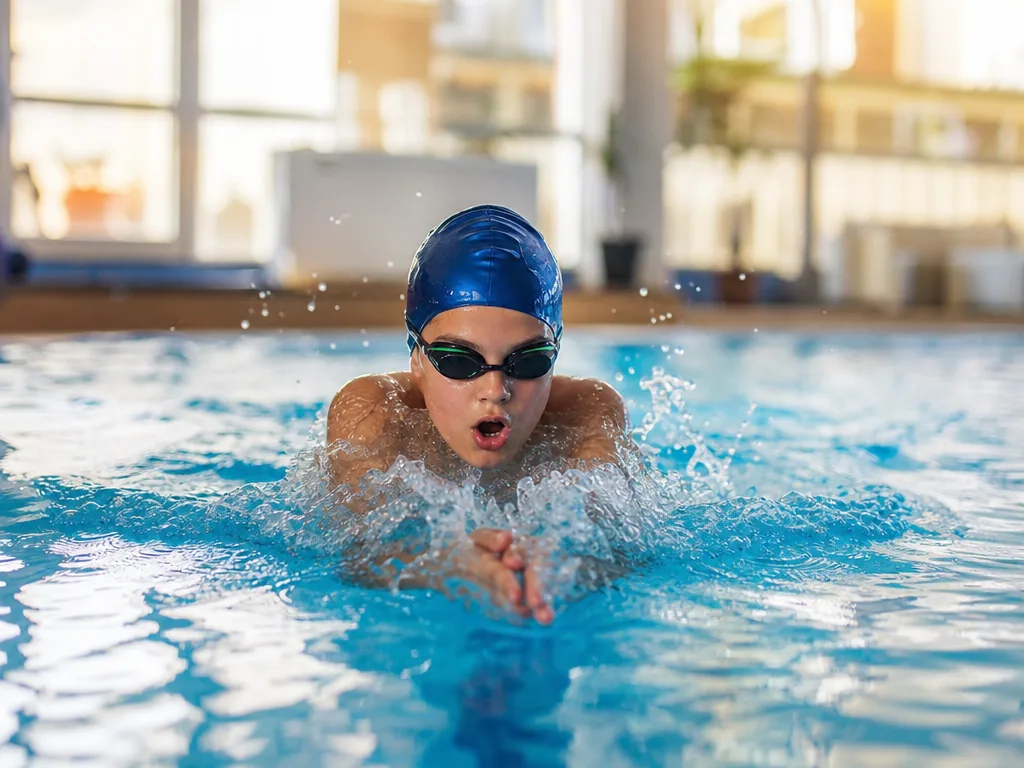
- After the 1950s——The International Swimming Federation (FINA) clearly defined the rules for breaststroke competitions, requiring athletes to simultaneously paddle forward with both hands, kick the water with both legs symmetrically at the same time, and expose their mouths and noses to breathe at a certain point in each movement cycle.
Characteristics and Modern Significance of the Breaststroke
Technical Features
Slow but Steady
Perfect for long swims, with a relaxed and sustainable rhythm.
Gentle on the Body
Compared with other swimming styles, it puts less strain on the heart and lungs and is suitable for people of all ages.
Coordination and Rhythm
It focuses on movement coordination and a sense of rhythm, improving body flexibility and core muscle strength.
Modern Importance
- Everyday Value——Widely used in recreational swimming, life-saving techniques, and rehabilitation training.
- Beginner-Friendly——The breaststroke is the first proper swimming stroke that many beginners learn.
- Competition——International competitions such as the Olympics and World Championships have dedicated breaststroke events, including the 100m breaststroke and 200m breaststroke.
Key Takeaways
- Origin——Prehistoric murals → Ancient Egypt and Ancient Greece → Ancient Roman military training.
- Evolution——Decline in the Middle Ages → Renaissance revival → competition in the 19th century → standardization in the 20th century.
- Modern Significance——Suitable for all ages, with roles in rehabilitation, life-saving, competition, and fitness.
As one of the oldest swimming styles in human history, the breaststroke perfectly embodies the evolution from a natural survival skill to modern sportsmanship and remains an indispensable part of swimming.
Frequently Asked Questions (FAQ)
Q: Why is the breaststroke considered the oldest swimming style?
Prehistoric murals such as those in the “Swimmer’s Cave” in Egypt (around 6000 BC) already show the symmetrical arm and leg movements that define the modern breaststroke, and ancient Egyptian, Greek, and Roman records describe a very similar stroke.
Q: When did the breaststroke become an official competitive stroke?
It was first recorded as a competitive stroke at the 1844 London Swimming Competition, gained fame when Matthew Webb crossed the English Channel in 1875, and received formal rules from FINA after the 1950s.
Q: Is the breaststroke suitable for beginners and all ages?
Yes. It is slow and steady, places less strain on the heart and lungs than other strokes, and is often the first formal stroke beginners learn, making it ideal for recreational swimming, life-saving, and rehabilitation.
Q: What are the key rules of the modern breaststroke?
Competitors must paddle forward with both hands simultaneously, kick symmetrically with both legs at the same time, and break the surface to breathe with the mouth and nose at a set point in each movement cycle, as defined by World Aquatics (formerly FINA).
Further Resources & Next Steps
- Official Resources——World Aquatics (formerly FINA) publishes the official rules and standards for breaststroke competition.
- Further Reading——Nikolaus Wynmann’s “Der Schwimmer” (1538), the world’s first book on swimming, documents an early breaststroke-like technique.
- Parent Tips——Enrol children in certified swimming lessons, where the breaststroke is a safe, confidence-building first stroke that develops rhythm and water safety.
Note: The information above is for reference only. Please consult professional education institutions for details.
This article was initially drafted and organised with AI. Editor / Professor Chan Kwok-wai; Managing Editor / Kong Yee-leung
Act Now: Find a Tutor / Register as a Tutor
For parents & students: looking for a home or online tutor for this subject? Click the button below to post a free tuition case (subject, level and preferred time) — TutorZone will match you with suitable tutors:
For tutors: do you teach this subject? Click the button below to register for free and receive more suitable cases — you pay only when a match is made: