
 Chinese (Traditional)
 Chinese (Simplified)
 English



The origins of butterfly swimming
TUTORZONE SUBJECT GUIDE · SPORTS
The butterfly stroke is the newest of the four competitive swimming styles, admired for its graceful movement, explosive power, and demanding technique. Here is the full story of how it evolved out of the breaststroke into a distinct stroke of its own.
Direct Answer:What is butterfly swimming?
The butterfly stroke is the newest of the four competitive swimming styles, admired for its graceful movement, explosive power, and demanding techn。
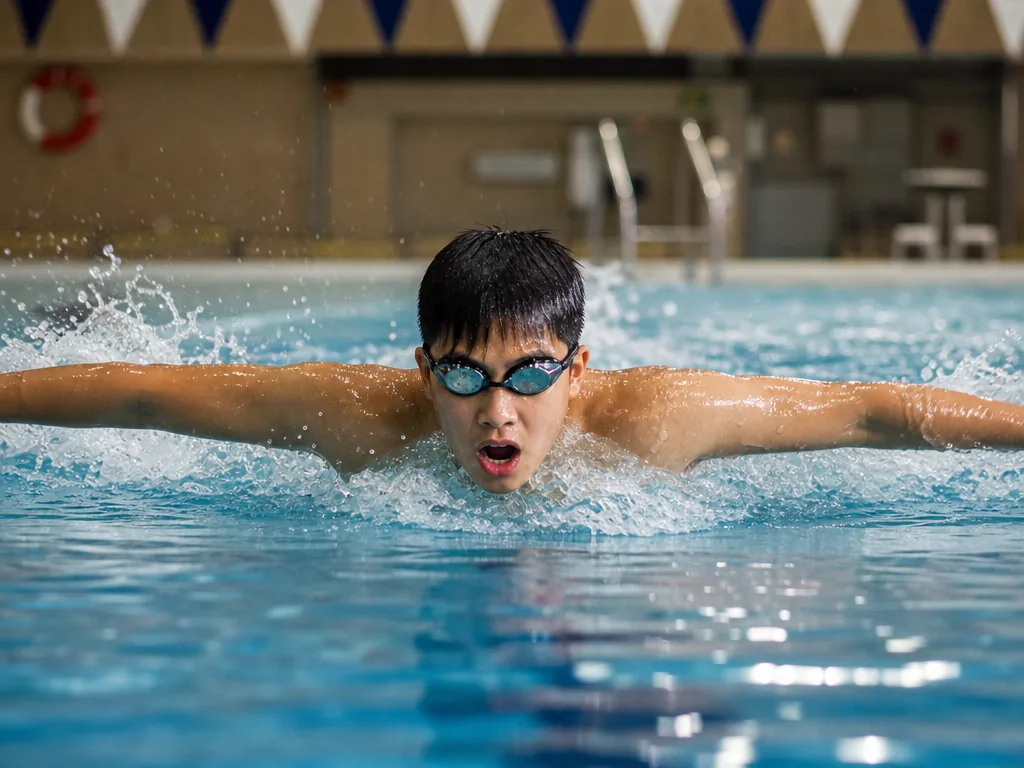
What Is the Butterfly Stroke?
The butterfly stroke, one of the four major swimming styles, is renowned for its graceful movements, explosive power, and demanding technique. As the latest of the standard swimming styles, it not only holds a pivotal position in competition but is also beloved by swimming enthusiasts of all kinds. So, how did the butterfly stroke originate? And what are its evolutions? This article provides a detailed analysis of the butterfly stroke’s origins and development.
How the Butterfly Stroke Was Born
Originated from the improvement of breaststroke
The butterfly stroke wasn’t originally a distinct swimming style; it actually evolved from the breaststroke. In the early 20th century, swimmers and coaches experimented with improving the breaststroke to increase speed. The traditional breaststroke required simultaneous underwater thrusting with both arms and backward kicking with both legs, but this movement presented significant resistance underwater, limiting speed.
To improve their racing performance, some athletes began experimenting with shifting their arms to paddle forward out of the water and then back in. This motion, similar to the flapping of butterfly wings, became known as the “butterfly arm.” This modification significantly reduced water resistance and led to a significant increase in swimming speed.
The formation of the early butterfly style (1930s)
- In 1933 — American swimmer and coach Henry Myers first demonstrated the technique of pulling both arms out of the water simultaneously in competition.
- In 1935 — another American coach, David Armbruster, further studied and perfected the butterfly arm movement at the University of Iowa, and together with athlete Jack Sieg developed a new kicking method: the dolphin kick, which is to swing both legs up and down simultaneously, imitating the movement of a dolphin when swimming.
In this way, the two core techniques of modern butterfly style — synchronized paddling of the arms and synchronized swinging of the legs — have been initially formed.
Formal Recognition and the Rules
Initially merged with breaststroke for competition
Initially, the butterfly arm and dolphin kick were not considered separate strokes, but rather a variation of the breaststroke. Many competitors used the butterfly action in their breaststroke competitions, significantly improving their performance and sparking controversy among other competitors.
Independent butterfly
- In 1952 — the International Aquatics Federation (FINA) officially recognized the butterfly stroke as the fourth standard swimming style, independent of the breaststroke.
- From then on, the butterfly stroke became an independent event in major competitions, and clear technical specifications were formulated, such as both arms must emerge from the water at the same time and both legs must swing in coordination.
This marked the butterfly stroke officially becoming an indispensable part of modern swimming.

The Evolution of Butterfly Technique
As time went on, the technical details of the butterfly style were constantly refined, and the athletes carefully polished each movement:
- Take-off and entry into the water — a streamlined posture is required to minimize resistance.
- Underwater dolphin kick — in modern competitions, a powerful dolphin kick can be performed during the underwater phase after taking off and turning, greatly increasing speed.
- Arm movement — use your arms to generate force from your shoulders, creating a double “S”-shaped path to push the water, improving propulsion efficiency.
- Breathing rhythm — the swimmer needs to raise his head and breathe quickly after every two or three strokes to avoid stalling.
Top butterfly swimmers are able to demonstrate a high level of rhythm, power, and flexibility.
Modern Butterfly in Competition
Competition events
The butterfly stroke is currently one of the main swimming styles in international competitions, covering events of different distances, including:
- 50m butterfly
- 100m butterfly
- 200m butterfly
- Individual medley (butterfly as one segment)
In addition, the butterfly stroke is a key segment in many relay events (such as the 4×100m medley relay).
Famous players
- Michael Phelps — a legend in American swimming, known as the “Flying Fish”, he has repeatedly set world records in the butterfly event and established numerous gold medal records.
- Kristóf Milák — Hungarian swimmer who broke the world record in the men’s 200m butterfly.
These top athletes have driven the continuous advancement of butterfly stroke technology and brought the charm of butterfly stroke to audiences around the world.
Summary: Origin and Legacy of the Butterfly Stroke
- Origin — it originated from the modification of the breaststroke in the early 20th century, which was formed by the synchronous water exit of both arms and the dolphin kick technique.
- Independence — it was officially recognized as an independent swimming style by the International Aquatics Federation (FINA) in 1952.
- Development — with the evolution of technology, butterfly stroke has become one of the most challenging and spectacular swimming styles in modern swimming competitions.
- Modern significance — the butterfly stroke not only tests the athlete’s physical strength, skills and sense of rhythm, but is also a focal event in swimming competitions that combines speed and beauty.
The butterfly stroke, a swimming style derived from technological innovation, has now become a shining pearl in swimming, continuing to attract the attention of countless athletes and spectators around the world.
Frequently Asked Questions (FAQ)
Q: How did the butterfly stroke get its name?
The over-water arm recovery looks like the flapping of butterfly wings, which is why the movement became known as the “butterfly arm” — and later gave the whole stroke its name.
Q: Is butterfly the same as breaststroke?
No. Butterfly began as a faster variation of breaststroke, but since 1952 it has been recognized by FINA as a fully independent stroke with its own rules and events.
Q: What is the dolphin kick?
The dolphin kick swings both legs up and down at the same time, imitating the movement of a dolphin. It was developed in 1935 by David Armbruster and Jack Sieg and is now a core part of butterfly technique.
Q: Which events use the butterfly stroke?
Butterfly is raced over 50m, 100m and 200m, appears as one segment of the individual medley, and is a key leg of relay events such as the 4×100m medley relay.
Further Resources & Next Steps
- Official Resources — the World Aquatics (formerly FINA) website for current butterfly rules and competition results.
- Further Reading — histories of the four competitive swimming strokes and the development of the dolphin kick.
- Parent Tips — if your child is learning butterfly, focus first on body undulation and the dolphin kick before adding the full arm recovery.
Note: The information above is for reference only. Please consult professional education institutions for details.
This article was initially drafted and organised with AI. Editor / Professor Chan Kwok-wai; Managing Editor / Kong Yee-leung
Act Now: Find a Tutor / Register as a Tutor
For parents & students: looking for a home or online tutor for this subject? Click the button below to post a free tuition case (subject, level and preferred time) — TutorZone will match you with suitable tutors:
For tutors: do you teach this subject? Click the button below to register for free and receive more suitable cases — you pay only when a match is made: