
 Chinese (Traditional)
 Chinese (Simplified)
 English



Banjo Grading Guide: A Comprehensive Evaluation from Materials to Tone
TUTORZONE SUBJECT GUIDE · PLUCKED STRING INSTRUMENTS
Learn how to evaluate banjo quality with this comprehensive guide covering materials, craftsmanship, and tone assessment to find your perfect instrument.
Direct Answer:How is a banjo’s grade determined?
A banjo’s grade is determined by its materials, craftsmanship, and tone, evaluated before the first note.
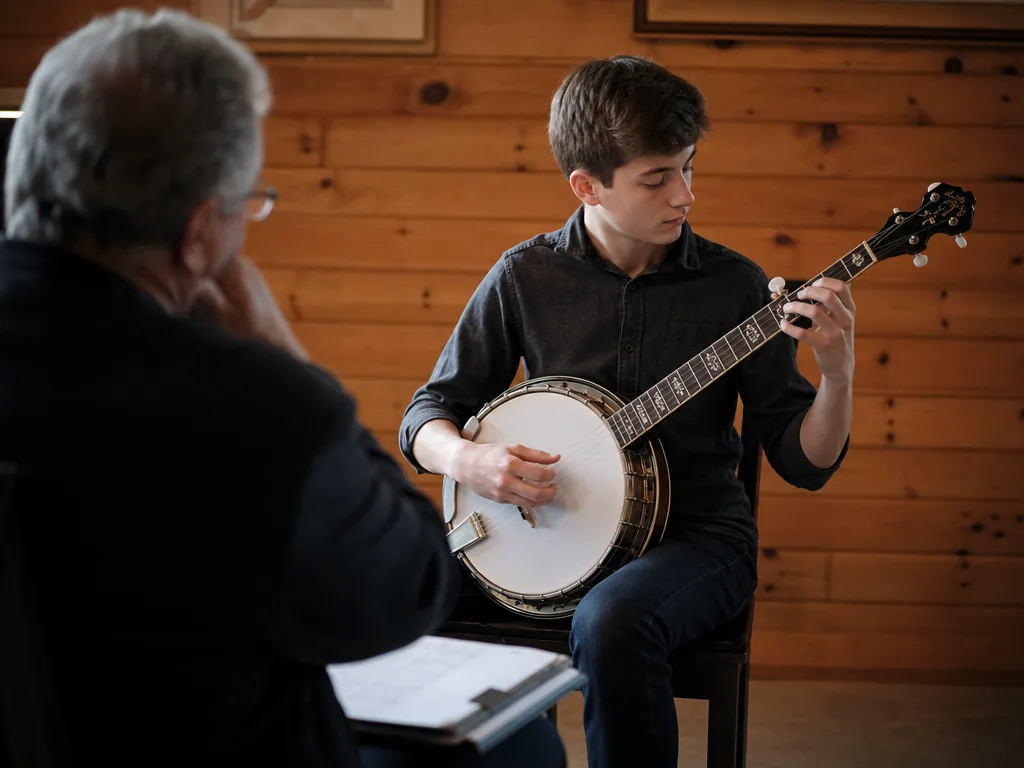
Materials: The Tonal Foundation
Material selection determines the tonal foundation of any banjo. From the body to the neck and the head, every choice shapes the instrument’s voice.
Body Materials
- Maple——Bright highs, ideal for bluegrass
- Mahogany——Warm mids, perfect for folk
- Ebony——Premium choice with balanced tone
Neck Materials
- Standard——Hard maple
- Professional——African mahogany
- Collector’s Grade——Solid ebony
Head Materials
- Entry-level——Remo Weather King synthetic
- Professional——Goatskin
- Premium——Hand-tanned calfskin
Craftsmanship & Playability
Craftsmanship directly affects playability. Even premium materials will underperform without precise joinery and careful setup.
- Neck joint——Dovetail superior to bolt-on
- Fretwork——Stainless steel frets for durability
- Bridge——Ebony provides optimal vibration transfer
The banjo’s voice is decided at the workbench — in the wood, the neck joint, and the head — before a single note is played.
Tone Evaluation Standards
When judging tone, work through each register systematically and listen for balance across the full range.
- Highs——Crisp and clear without harshness
- Mids——Rich and full-bodied
- Lows——Deep and powerful
- Sustain——Minimum 5 seconds
Banjo Grade Comparison
Banjo grades fall into four broad tiers, each matched to a different player and budget.
| Grade | Price Range | Target Users | Representative Models |
|---|---|---|---|
| Entry | $300-700 | Beginners | Deering Goodtime |
| Intermediate | $700-2,000 | Advancing Players | Gold Tone CC-50 |
| Professional | $2,000-4,500 | Working Musicians | Gibson Mastertone |
| Collector | $4,500+ | Collectors | Huber Vintage |
Purchasing Recommendations
Choose the build style that matches how and where you will play.
- Beginners——Open-back models
- Performers——Resonator-equipped professional models
- Studio Use——Closed-back designs recommended
Maintenance Essentials
Routine care protects both tone and longevity, whatever the grade of your banjo.
- Humidity——Maintain 45%-55% humidity
- Strings——Clean strings after each session
- Head——Replace head every 6 months
Frequently Asked Questions (FAQ)
Q: How do I grade a banjo’s quality?
Work through three layers: first the materials (body, neck, and head), then the craftsmanship (neck joint, fretwork, and bridge), and finally the tone — highs should be crisp and clear, mids rich and full-bodied, lows deep and powerful, with at least five seconds of sustain.
Q: How do I choose the right banjo for my level?
Match the grade to your goals. Beginners do well with open-back entry models around $300-700, such as the Deering Goodtime. Advancing players step up to intermediate instruments at $700-2,000, like the Gold Tone CC-50. Working musicians should look at professional models at $2,000-4,500, such as the Gibson Mastertone, while collectors target rarities at $4,500 and above.
Q: How do I test a banjo’s tone before buying?
Play across the full range and listen for crisp, clear highs without harshness; rich, full-bodied mids; deep, powerful lows; and a sustain of at least five seconds. Also check the bridge — ebony provides the best vibration transfer — and inspect the fretwork.
Q: What are the top professional banjo brands, and how should I maintain one?
Respected names include Deering, Gold Tone, Gibson, and Huber. To keep any banjo in top shape, maintain 45%-55% humidity, clean the strings after each session, and replace the head every 6 months.
Further Resources & Next Steps
- Official Resources——Deering, Gold Tone, Gibson, and Huber all publish detailed model and grading information for their instruments.
- Further Reading——Look for guides on banjo grading standards and tone testing to sharpen your ability to evaluate materials, craftsmanship, and sound.
- Parent Tips——For young beginners, an open-back model such as the Deering Goodtime is a forgiving, affordable first banjo that is easy to maintain.
This guide provides the knowledge to accurately assess banjo quality levels, helping everyone from beginners to professionals find their ideal instrument.
Note: The information above is for reference only. Please consult professional education institutions for details.
This article was initially drafted and organised with AI. Editor / Professor Chan Kwok-wai; Managing Editor / Kong Yee-leung
Act Now: Find a Tutor / Register as a Tutor
For parents & students: looking for a home or online tutor for this subject? Click the button below to post a free tuition case (subject, level and preferred time) — TutorZone will match you with suitable tutors:
For tutors: do you teach this subject? Click the button below to register for free and receive more suitable cases — you pay only when a match is made: