
 Chinese (Traditional)
 Chinese (Simplified)
 English



What is the origin of badminton?
TUTORZONE SUBJECT GUIDE · SPORTS
Badminton is a hugely popular sport worldwide, particularly in Asia, where it enjoys high participation and spectator appeal. So, what are the origins of badminton, and how did it evolve from a simple game into a modern competitive sport? This guide provides an in-depth and detailed historical background.
Direct Answer:What is the origin of badminton?
Badminton is hugely popular worldwide, especially in Asia, and evolved from a simple game into a modern competitive sport.

The Ancient Prototype of Badminton
The history of badminton dates back to ancient times, and many cultures around the world played games similar to it.
India: The Game of Poona
The earliest form of badminton appeared in ancient India. It was called “Poona,” an indoor game played with feathers and a racket. The game was brought back to Britain by British officers during the British colonial era in the 18th century.
China and Greece
Similar traditional games exist in China, such as the shuttlecock. While different from badminton, it also involves kicking a small feathered object, demonstrating the long history of feathers in early games. Ancient Greece also had a game similar to badminton called “staki,” played with bamboo objects.
These games laid the foundation for the development of badminton, but the real formation of badminton into a large-scale competitive sport can be traced back to the mid-19th century in Britain.
The Birth of Modern Badminton
The true origins of modern badminton can be traced back to 19th-century England, specifically to Badminton, a place name that is closely associated with the development of the sport.
Badminton House
Badminton’s official name comes from Badminton House, a noble residence in Gloucestershire, England. In the 1860s, local aristocratic families began playing the game in their private gardens, and the rules of the game gradually took shape during this time.
At these gatherings, British aristocrats refined the game of Poona into today’s badminton, adding simple rules to formalize the sport. The shuttlecock used in the game was made of feathers and wood — details that laid the foundation for the future development of badminton.
Developments in the Late 19th Century
As badminton was promoted in British society, it quickly became popular in other parts of the British Empire and its colonies, such as India, Hong Kong, and Canada. In 1873, the first badminton competition was held in London, England, marking the starting point for the sport to enter the formal competitive system.
Standardization and Internationalization of Badminton
The Rules of Badminton Are Established
In 1873, the United Kingdom began to formulate specific rules for badminton and established the Badminton Association. As the rules of the game gradually became standardized, the professionalism and internationalization of the sport gradually took shape.
The Internationalization of Badminton
In 1934, the World Badminton Federation (IBF) was established, marking the beginning of a larger internationalization of badminton. World badminton competitions gradually became the primary competitive platform for players from all over the world.
In 1966, badminton officially became a competition event of the Asian Games, and in 1992 it was included in the Olympic Games, which allowed badminton to further go global and become a world competitive sport.
Development and Characteristics of Badminton
Badminton is a sport that emphasizes reaction speed, skills, flexibility, and endurance. Its characteristics include:
High Speed
Badminton is extremely fast. In professional competitions, the speed of badminton can reach over 200 kilometers per hour.
Flexible Hitting Skills
Badminton features a variety of hitting methods, including forehand, backhand, lob, and smash, which makes the game very varied and challenging.
Fast Pace
Badminton matches are played at a very fast pace, with competition between two players or two teams demanding quick movement and quick reaction.
Competitiveness and Popularity
Badminton has a wide range of participants around the world. Especially in Asia, badminton has a very high popularity rate — in countries such as China, Indonesia, South Korea, and Malaysia, it is one of the most popular sports.
Badminton also has many world-class players around the world, including Lin Dan and Lee Chong Wei. Their outstanding performances make badminton a highly entertaining sport.
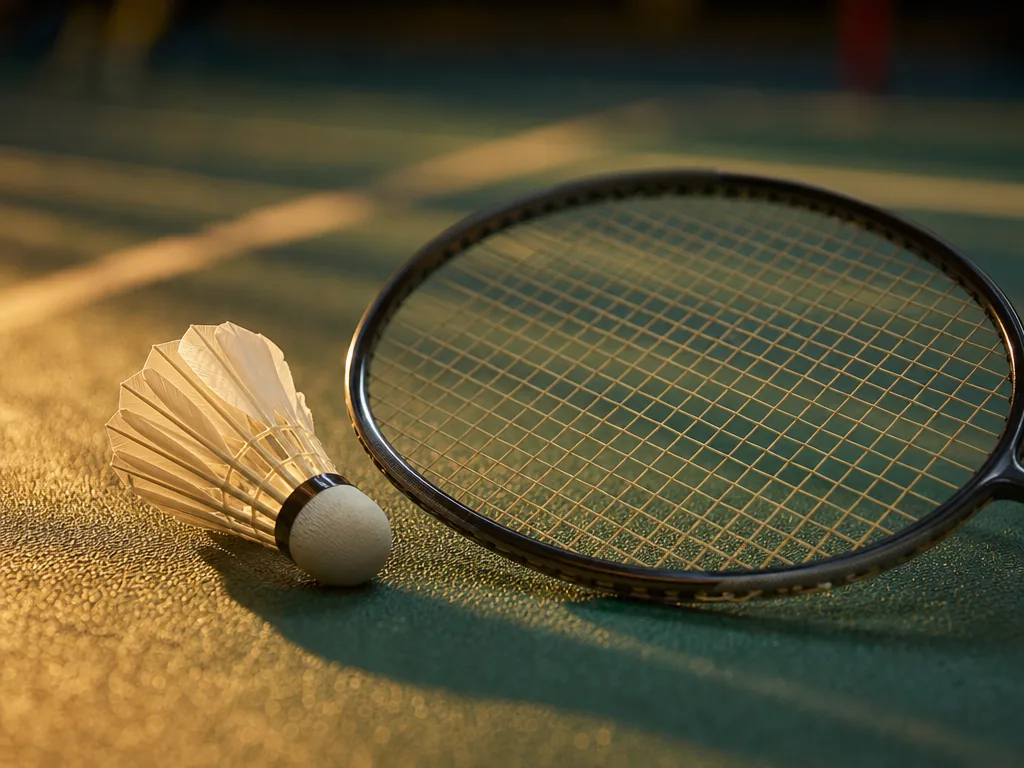
Summary: The Origin of Badminton
- Ancient Roots——Badminton’s origins can be traced back to the ancient Indian game of Poona, but its modern form is credited to the British aristocracy of the 19th century, who perfected and developed it at Badminton House.
- Global Growth——With the standardization and internationalization of rules, badminton gradually became a global competitive sport, and the establishment of the World Badminton Federation (IBF) in 1934 accelerated its internationalization process.
- Modern Appeal——Today, badminton is not only a highly technical and challenging sport, but also has hundreds of millions of fans around the world.
Frequently Asked Questions (FAQ)
Q: Where did badminton originally come from?
Its earliest form is traced to ancient India, where a game called Poona was played with feathers and a racket. British officers brought it back to Britain during the 18th century.
Q: Why is the sport called “badminton”?
The name comes from Badminton House in Gloucestershire, England, where British aristocrats played and refined the game in the 1860s.
Q: When did badminton become an Olympic sport?
Badminton was included in the Olympic Games in 1992, after first becoming an Asian Games event in 1966.
Q: How fast can a badminton shuttlecock travel?
In professional competitions, the shuttlecock can reach speeds of over 200 kilometers per hour.
Further Resources & Next Steps
- Official Resources——Visit the Badminton World Federation (BWF, formerly the IBF) website for the official rules, world rankings, and tournament information.
- Further Reading——Explore books and documentaries on the history of racket sports to learn more about how badminton evolved from Poona into the modern Olympic game.
- Parent Tips——Badminton is a low-cost, safe, and accessible sport for children — a great way to build reaction speed, coordination, and fitness. Look for a local club or school court to get started.
Note: The information above is for reference only. Please consult professional education institutions for details.
This article was initially drafted and organised with AI. Editor / Professor Chan Kwok-wai; Managing Editor / Kong Yee-leung
Act Now: Find a Tutor / Register as a Tutor
For parents & students: looking for a home or online tutor for this subject? Click the button below to post a free tuition case (subject, level and preferred time) — TutorZone will match you with suitable tutors:
For tutors: do you teach this subject? Click the button below to register for free and receive more suitable cases — you pay only when a match is made: