
 Chinese (Traditional)
 Chinese (Simplified)
 English



Wakeboarding
TUTORZONE SUBJECT GUIDE · SPORTS
Wakeboarding is a fast, thrilling water sport in which riders glide across calm water behind a boat and perform spins, flips, and high-flying jumps. This guide covers the core techniques, competition rules, skill levels, and essential gear — plus the questions parents ask most.
Direct Answer:What is wakeboarding?
Wakeboarding is a fast, thrilling water sport where riders glide behind a boat and perform spins, flips, and high-flying jumps.
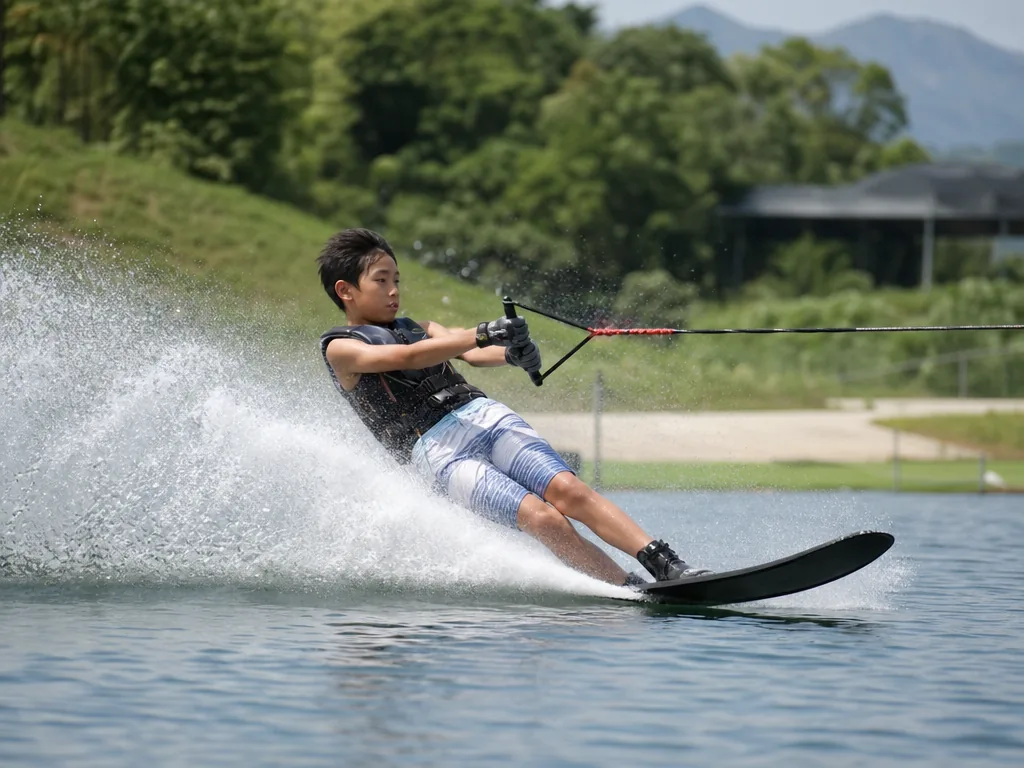
What Is Wakeboarding?
Trick skiing (or trick waterskiing) is a highly entertaining water sport, typically performed on calm waters, where competitors demonstrate skills and tricks by skiing. Unlike other types of water skiing, trick skiing emphasizes the creativity, skill, and difficulty of the rider’s movements, often accompanied by breathtaking jumps, turns, and rolls.
The history of wakeboarding dates back to the early 20th century. In the decades that followed, it gradually developed into a professional sport and gained widespread international attention. Today, wakeboarding is considered a very challenging water sport and has gained a prominent position in various water sports competitions.
Basic Concepts and Techniques
The basic purpose of wakeboarding is to allow the rider to glide across the water while performing a variety of tricks. These tricks can be divided into several main types:
1. Turning and Flipping
- 180-degree and 360-degree rotations——The competitors will complete 180-degree or 360-degree turns on the water. These movements require the competitors to have precise control over the water skiing posture and direction.
- Aerial flips——These usually involve a flip after a jump (such as a front flip or back flip). The water skier uses a jump to perform an aerial flip and then continues gliding after landing.
2. Jump
- Jumping——Jumping is a key element of wakeboarding, with competitors using buoyancy or certain techniques to achieve high altitude leaps. Jumping often requires maintaining balance at the highest point and quickly adjusting to continue gliding after landing.
3. Technical Moves
- Backwards skiing——The athlete will ski with his back facing the water, which requires the athlete to have a very high sense of balance and skills.
- Rope skills——Competitors can perform various fancy skills by controlling the tension of the water ski rope, including rapid sliding changes, sharp turns, etc.
4. Trick Combinations
- Combined techniques——In wakeboarding competitions, competitors often combine multiple techniques, such as spinning after a jump or adding a flip to a handstand. Such combined techniques can effectively improve scores.
Competition Rules
Wakeboarding has its own unique competition rules, and the competition is usually divided into two main events: the trick event and the jump event.
1. Trick Event
- Scoring——In this competition, competitors must demonstrate a variety of difficult fancy moves, and their scores are determined by a comprehensive evaluation of the difficulty, fluidity, and performance of the moves. The scores of competitors are mainly calculated based on the fluidity, creativity, and difficulty of their moves.
- Time limit——Competition time is usually 2 to 3 minutes, and the contestants must complete as many difficult moves as possible within this time.
2. Jump Event
- Measuring jumps——The jumping competition focuses on measuring the height and distance of the jumps. Competitors accelerate and sprint, then jump from a diving platform or natural water surface while water skiing. The distance of the jump and the perfection of the mid-air movements are measured.
- Best jump wins——In this competition, competitors attempt multiple jumps within a fixed timeframe, with the best jump recorded to determine the winner.
Competition Levels
Wakeboarding has different levels of competition, usually based on age, experience, and skill. From beginners to advanced competitors, wakeboarding competitions encompass a wide range of skill levels, making the sport appealing to participants of all ages.
Beginners
Suitable for beginners who are new to wakeboarding and want to learn basic movements such as smooth gliding and basic turns.
Intermediate Players
Players at this level are already able to perform a certain degree of fancy moves, including 180-degree rotations, simple jumps and handstand gliding.
Advanced Competitors
Advanced competitors are able to perform more complex maneuvers, such as 360-degree spins, aerial flips, high jumps, etc., and demonstrate superb skills and creativity in competition.
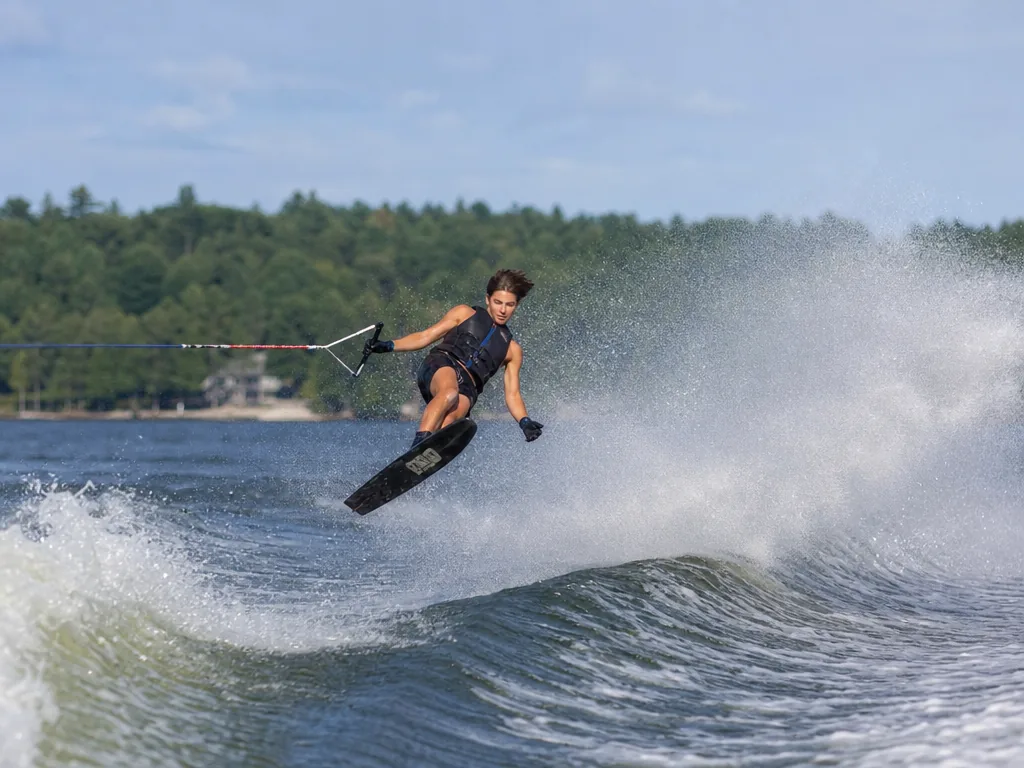
Essential Equipment
Wakeboarding requires specialized equipment that not only ensures the safety of the rider but also enhances their performance. Common equipment includes:
- Water Skis——Wakeboarding typically uses shorter, thinner boards than traditional water skis, allowing athletes to perform more flexible movements on the water.
- Tow Rope——A rope is used to connect the competitor to the boat. The length and tension of the rope will be adjusted according to the needs of the competition.
- Buoyancy Vest or Protective Equipment——In order to ensure the safety of the competitors, many wakeboarders will wear a buoyancy vest or other protective equipment to reduce the risk of accidental injury.
- Water Ski Boots——Water ski boots are used to stabilize the skaters’ feet and help them maintain stability during high-speed movements.
The Challenge and Charm of Wakeboarding
Wakeboarding, a highly entertaining water sport, presents numerous challenges. Competitors must maintain balance and perform challenging tricks while moving rapidly, which greatly challenges their physical strength, coordination, and endurance. Furthermore, the sport demands a high degree of creativity, allowing competitors to showcase unique styles and techniques.
In general, wakeboarding is not only a sport that challenges one’s limits, but also a sport full of entertainment and viewing value. It combines skills and art, attracting countless athletes and spectators who love water sports.
Frequently Asked Questions (FAQ)
Q: What is the difference between wakeboarding, water skiing, and trick skiing?
Water skiing has the rider face forward on two skis, while wakeboarding uses a single board with the rider standing sideways. Trick skiing (also called trick waterskiing) is a specialised discipline performed on calm water where riders earn points for the creativity, skill, and difficulty of their spins, turns, and rolls.
Q: At what age can a child start learning wakeboarding?
Many children begin around age 6 to 8, once they are comfortable swimming and following instructions. Beginners start on short ropes and slow boat speeds, and every session should include a properly fitted buoyancy vest and adult supervision.
Q: Is wakeboarding safe for beginners?
With the right equipment and qualified coaching it is generally safe. A buoyancy vest, correct board and boot size, calm water, and an experienced driver are the essentials; jumps and flips should only be attempted after the basics are mastered.
Q: How is a wakeboarding competition scored?
Competitions are usually split into a trick event and a jump event. In the trick event, riders are judged on the fluidity, creativity, and difficulty of their moves within a 2–3 minute run; the jump event measures height and distance, with each competitor’s best jump recorded.
Further Resources & Next Steps
- Official Resources——The International Waterski & Wakeboard Federation (IWWF) and the World Wake Association (WWA) set competition rules and ranking standards worldwide.
- Further Reading——Look for instructional guides on wakeboarding technique and water-safety certification programmes offered by local water sports clubs and national federations.
- Parent Tips——Always start children with a qualified instructor, a properly fitted buoyancy vest, and calm, uncrowded water — and keep early sessions short and fun to build confidence.
Note: The information above is for reference only. Please consult professional education institutions for details.
This article was initially drafted and organised with AI. Editor / Professor Chan Kwok-wai; Managing Editor / Kong Yee-leung
Act Now: Find a Tutor / Register as a Tutor
For parents & students: looking for a home or online tutor for this subject? Click the button below to post a free tuition case (subject, level and preferred time) — TutorZone will match you with suitable tutors:
For tutors: do you teach this subject? Click the button below to register for free and receive more suitable cases — you pay only when a match is made: