
 Chinese (Traditional)
 Chinese (Simplified)
 English



Key Signature
TUTORZONE SUBJECT GUIDE · MUSIC THEORY
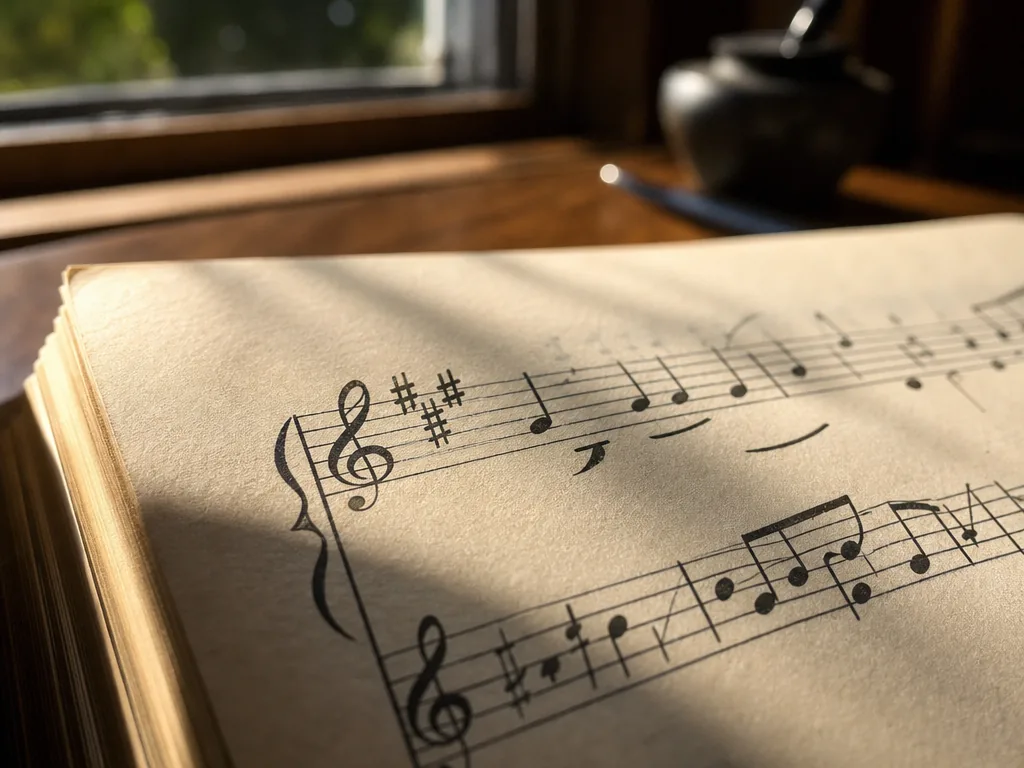
The key signature is the small but powerful set of sharps or flats written at the start of every staff. It tells the performer which notes are raised or lowered throughout the piece — and with it, the whole tonality, mood and technique of the music.
Direct Answer:What is a key signature?
A key signature is a set of sharps or flats at the start of a staff that tells the performer which notes are raised or lowered throughout the piece.

What Is a Key Signature?
The key signature is an important element in musical notation. It identifies the key of a piece and instructs the performer which notes should be raised or lowered throughout the piece. This helps the performer identify which notes to use without having to write the sharp and flat symbols (# or ♭) next to each note. It typically appears at the beginning of a musical score, immediately after the clef, and guides the performer on how to play the notes accurately.
The key signature determines the tonality of the music, which is the “home” or “keynote” of the music. It has a direct impact on the atmosphere, emotion and performance techniques of the music.
The key signature determines the tonality — the “home” or “keynote” — of the music, shaping its atmosphere, emotion and performance techniques.
The Role of Key Signatures
The main purpose of a key signature is to tell the player which notes need to be raised or lowered. It ensures that certain notes remain at the same pitch throughout a piece. For example, if the key signature shows F#, then all F notes should be F# throughout the piece, without the need to write a sharp (#) next to each note.
Identify the key
Read which notes are sharp or flat at a single glance.
Play accurately
Keep the right notes raised or lowered for the entire piece.
Understand the music
Grasp the tonality, mood and performance technique.
Key Signature Symbols
A key signature consists of a set of sharp and flat notes at the beginning of the staff, typically a sharp (#) and a flat (♭). The key signature can be sharp or flat, depending on the key of the piece, and it can appear once or multiple times, with different configurations depending on the key.
Sharp Key Signatures
The key signature of a sharp key contains one or more sharp notes (#), which appear on the sheet music as raising the pitch of the note. For example:
- The key signature of G major——is 1 sharp note (F#).
- The key signature of D major——is 2 sharp notes (F# and C#).
- The key signature of A major——is 3 sharp notes (F#, C# and G#).
The order of sharps is fixed, from left to right: F#, C#, G#, D#, A#, E#, B#.
Flat Key Signatures
A flat key has one or more flat notes (♭) in its key signature, which appear on the sheet music as lowered pitches. For example:
- The key signature of F major——is 1 flat note (B♭).
- The key signature of B♭ major——is 2 flat notes (B♭ and E♭).
- The key signature of E♭ major——is 3 flat notes (B♭, E♭, and A♭).
The order of flats is also fixed, from left to right: B♭, E♭, A♭, D♭, G♭, C♭, F♭.
Natural Key Signatures
Some keys do not require any sharps or flats; the key signature for these keys is blank. These keys include:
- C Major——no sharp or flat notes.
- A Minor——no sharp or flat symbols.
How to Read a Key Signature
Performers need to know how to read information from the key signature. The number and placement of the sharp and flat symbols in the key signature determine the tonality of the piece. This is crucial for musical performance because it tells the performer how the notes in the piece should be played.
Reading Sharp Keys
If the key signature contains a sharp, we can infer the tonality based on the position of the sharp. For keys with sharps, a simple rule for determining the tonality is: find the last sharp in the key signature and raise it by a half step to find the tonic of the key. For example:
- 1 sharp (F#)——indicates the key of G major.
- 2 sharps (F# and C#)——indicate the key of D major.
- 3 sharps (F#, C#, G#)——represent the key of A major.
If the key signature contains only one sharp note, the key is G major.
Reading Flat Keys
If the key signature contains a flat, we can infer the tonality based on the position of the flat. For a flat key, the rules for determining the tonality are: find the last flat in the key signature and raise it by a semitone to find the tonic of the key. For example:
- 1 flat (B♭)——indicates the key of F major.
- 2 flats (B♭ and E♭)——indicate the key of B♭ major.
- 3 flats (B♭, E♭, and A♭)——indicate the key of E♭ major.
If the key signature contains only one flat note, the tonality is F major.
Keys with No Sharps or Flats
If the key signature doesn’t have any sharps or flats, the key is usually C major or A minor. These two keys have the same notes, but C major is a major key and A minor is a minor key.
The Relationship Between Major and Minor Keys
Key signatures are not limited to major keys; there are also minor keys. The relationship between major and minor keys is very close — in fact, all key signatures have a corresponding minor key. For example:
- The corresponding minor key of C major——is A minor.
- The corresponding minor key of G major——is E minor.
- The corresponding minor key of D major——is B minor.
The tonality of a minor key is the opposite of that of a major key, often using the same key signature but with a different scale structure and emotional expression.
Common Key Signatures at a Glance
Here are some examples of common key signatures and their corresponding major and minor keys:
| Key Signature | Major Key | Minor Key |
|---|---|---|
| 1 sharp | G major | E minor |
| 2 sharps | D major | B minor |
| 3 sharps | A major | F# minor |
| 4 sharps | E major | C# minor |
| 1 flat | F major | D minor |
| 2 flats | B♭ major | G minor |
| 3 flats | E♭ major | C minor |
| 4 flats | A♭ major | F minor |
| No sharps or flats | C major | A minor |
Frequently Asked Questions (FAQ)
Q: Where exactly does the key signature appear in a score?
It appears at the beginning of every staff, immediately after the clef and before the time signature, so the performer sees which notes to raise or lower before playing the first note.
Q: How can I tell whether a key signature is major or minor?
The signature alone cannot tell you — one sharp can be G major or E minor. Look at the piece’s tonal centre, the final chord and the melody; the same signature always corresponds to one major key and its relative minor.
Q: Why does the order of sharps and flats never change?
They follow the circle of fifths. Each new sharp or flat is added in a fixed sequence (F#, C#, G#, D#, A#, E#, B# for sharps; B♭, E♭, A♭, D♭, G♭, C♭, F♭ for flats), which keeps every key’s signature predictable.
Q: Do I have to write the sharp or flat next to every note?
No. Once the key signature sets F#, every F in the piece is played as F# automatically, unless a natural sign (♮) overrides it for a single note.
Further Resources & Next Steps
- Official Resources——The ABRSM music theory syllabus covers key signatures across its Grades 1–5 requirements and provides free exam materials.
- Further Reading——“The AB Guide to Music Theory” by Eric Taylor is a clear, widely used introduction to keys, scales and key signatures.
- Parent Tips——Ask your child to read the key signature of every piece they practise and name its major and relative minor key before starting to play.
Note: The information above is for reference only. Please consult professional education institutions for details.
This article was initially drafted and organised with AI. Editor / Professor Chan Kwok-wai; Managing Editor / Kong Yee-leung
Act Now: Find a Tutor / Register as a Tutor
For parents & students: looking for a home or online tutor for this subject? Click the button below to post a free tuition case (subject, level and preferred time) — TutorZone will match you with suitable tutors:
For tutors: do you teach this subject? Click the button below to register for free and receive more suitable cases — you pay only when a match is made: