
 Chinese (Traditional)
 Chinese (Simplified)
 English



What is a Key Signature? A Complete Guide for Beginners
TUTORZONE SUBJECT GUIDE · MUSIC THEORY
Key signatures are the sharp and flat symbols written at the very start of every piece of sheet music — and they hold the key to reading, playing, and writing music with confidence. This guide breaks down what a key signature is, how to read it, and how to master it.
Direct Answer:What is a key signature?
A key signature is the sharp and flat symbols written at the very start of sheet music, indicating the key.

What is a Key Signature?
If you’re learning music theory or just getting started with an instrument, you may have heard the term key signature and wondered what it means. Understanding key signatures is essential for reading sheet music, playing instruments, and composing your own songs. This guide explains what a key signature is, how it works, and why it matters in music.
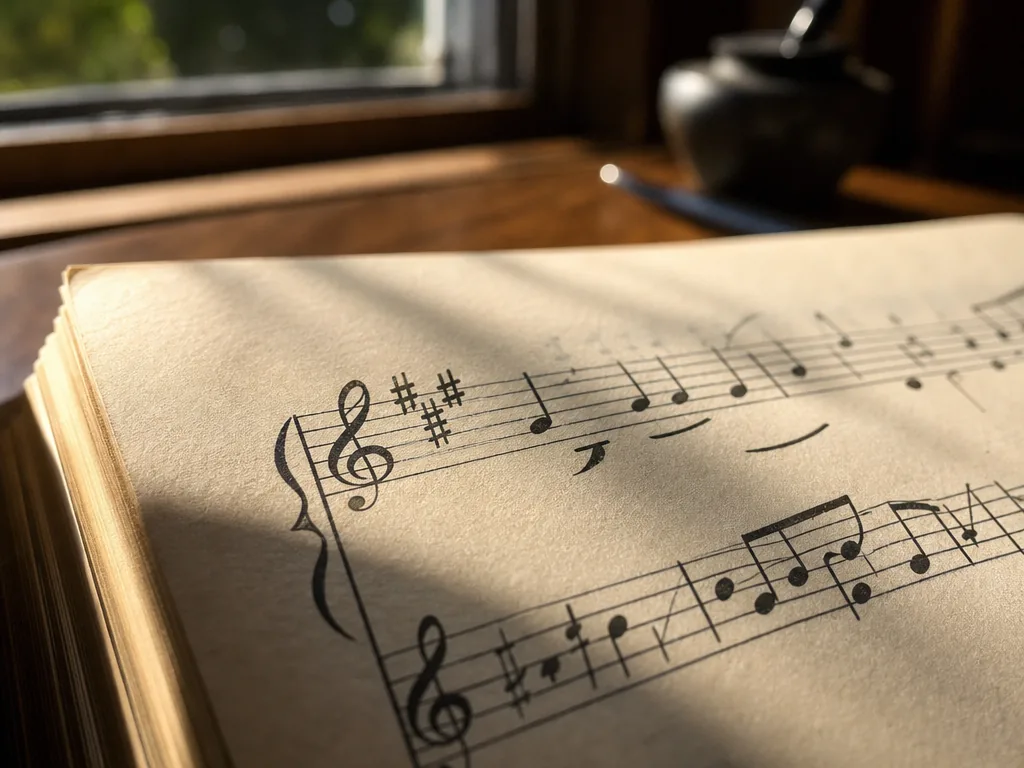
A key signature is a collection of sharps (#) or flats (♭) placed at the beginning of a musical staff, right after the clef (usually the treble or bass clef). It tells you the key of the piece, which means it defines which notes are consistently sharp or flat throughout the music.
For example, if a key signature has one sharp, that sharp is always F#. So every time you see an F note on the staff, you’ll play it as F# unless otherwise indicated.
The key signature helps musicians understand:
- The tonal center (or tonic) of the piece
- The scale that the music is based on
- Which notes will frequently appear
Why is a Key Signature Important?
A key signature provides a quick and efficient way to communicate the structure of the music. Without it, composers would have to place accidentals (individual sharps or flats) in front of every affected note, cluttering the sheet music.
It also helps performers understand the emotional quality of the piece. For example:
- A piece in C major (no sharps or flats) might sound bright and simple.
- A piece in E minor (one sharp) could sound more emotional or mysterious.
- A piece in F# major (six sharps) might sound complex and sophisticated.
Understanding the key signature helps musicians anticipate chords, scales, and melodies, making reading and playing music more intuitive.
Sharps and Flats: The Building Blocks
There are 12 possible keys in Western music, and each major key has a relative minor key that shares the same key signature.
- Sharps (#) raise a note by a half step.
- Flats (♭) lower a note by a half step.
Key signatures can contain between 0 and 7 sharps or flats.
Sharp Key Signatures (in order)
- G major / E minor — 1 sharp (F#)
- D major / B minor — 2 sharps (F#, C#)
- A major / F# minor — 3 sharps (F#, C#, G#)
- E major / C# minor — 4 sharps (F#, C#, G#, D#)
- B major / G# minor — 5 sharps (F#, C#, G#, D#, A#)
- F# major / D# minor — 6 sharps
- C# major / A# minor — 7 sharps
Flat Key Signatures (in order)
- F major / D minor — 1 flat (Bb)
- Bb major / G minor — 2 flats (Bb, Eb)
- Eb major / C minor — 3 flats (Bb, Eb, Ab)
- Ab major / F minor — 4 flats (Bb, Eb, Ab, Db)
- Db major / Bb minor — 5 flats
- Gb major / Eb minor — 6 flats
- Cb major / Ab minor — 7 flats
How to Read a Key Signature
To identify a key from a key signature, you need to count the number of sharps or flats and remember the order in which they appear.
Order of Sharps
F#, C#, G#, D#, A#, E#, B#
To find the major key with sharps, look at the last sharp and go one half-step up. That’s your key.
Example: If the last sharp is C#, the key is D major.
Order of Flats
Bb, Eb, Ab, Db, Gb, Cb, Fb
To find the major key with flats, look at the second-to-last flat. That’s your key.
Example: If you see Bb and Eb, the second-to-last flat is Bb, so you’re in Bb major.
Major and Minor Keys
Every major key has a relative minor key that shares the same key signature. The relative minor is found by going down three half steps from the major key.
Example:
- C major has no sharps or flats.
- The relative minor is A minor.
This concept allows composers to shift between major and minor tonalities within the same key signature, adding emotional depth and variation.
Enharmonic Key Signatures
Some keys sound the same but are written differently. These are called enharmonic keys.
For example:
- C# major and Db major sound the same but are written with different key signatures.
- C# major has 7 sharps.
- Db major has 5 flats.
Composers choose enharmonic equivalents depending on ease of reading and musical context.
Key Signature vs Time Signature
People often confuse key signatures with time signatures, but they’re very different.
- Key Signature tells you the tonal center (C major, D minor, etc.)
- Time Signature tells you the rhythm (like 4/4, 3/4, 6/8)
They’re both found at the beginning of sheet music but serve different purposes.
Modulation: Changing Key Signature Within a Piece
Sometimes music modulates, or changes key in the middle of a piece. When this happens, the key signature will also change, often using a double bar line and a new key signature placed on the staff.
Modulation keeps music interesting and emotionally dynamic.
Practical Tips for Learning Key Signatures
- Memorize the Circle of Fifths — It shows the relationship between different keys and helps you quickly identify key signatures.
- Practice scales — Playing major and minor scales reinforces the notes in each key.
- Use flashcards — To test your recognition of key signatures.
- Analyze songs — Try identifying the key signatures in your favorite pieces of music.
Conclusion
A key signature is a fundamental element of music that tells you which notes are consistently sharp or flat. It defines the tonality of a piece and is crucial for understanding how music is written, read, and performed.
Whether you’re a beginner learning piano or a budding composer writing your own songs, mastering key signatures will help you feel more confident and expressive in your musical journey.
Frequently Asked Questions (FAQ)
Q: How many key signatures are there?
Western music uses 15 standard major key signatures — up to 7 sharps, up to 7 flats, plus C major with no sharps or flats — and each major key pairs with a relative minor that shares the same signature.
Q: What is the difference between a sharp and a flat?
A sharp (#) raises a note by a half step, while a flat (♭) lowers a note by a half step.
Q: How do I quickly find the major key from a key signature?
For sharps, look at the last sharp and go up one half step. For flats, look at the second-to-last flat — that note names the major key.
Q: Why would a piece change its key signature in the middle?
Music modulates when it changes key, and the key signature is updated — often after a double bar line — to reflect the new tonal center, keeping the music interesting and dynamic.
Further Resources & Next Steps
- Official Resources — Check the Associated Board of the Royal Schools of Music (ABRSM) and Trinity College London for graded music theory syllabuses that cover key signatures.
- Further Reading — Study the Circle of Fifths and a standard music theory textbook to deepen your understanding of keys and scales.
- Parent Tips — Encourage daily scale practice and use flashcards to help learners recognise key signatures quickly.
Note: The information above is for reference only. Please consult professional education institutions for details.
This article was initially drafted and organised with AI. Editor / Professor Chan Kwok-wai; Managing Editor / Kong Yee-leung
Act Now: Find a Tutor / Register as a Tutor
For parents & students: looking for a home or online tutor for this subject? Click the button below to post a free tuition case (subject, level and preferred time) — TutorZone will match you with suitable tutors:
For tutors: do you teach this subject? Click the button below to register for free and receive more suitable cases — you pay only when a match is made: