
 Chinese (Traditional)
 Chinese (Simplified)
 English



The Origin of Military Flag (Army Chess)
TUTORZONE SUBJECT GUIDE · HOBBIES
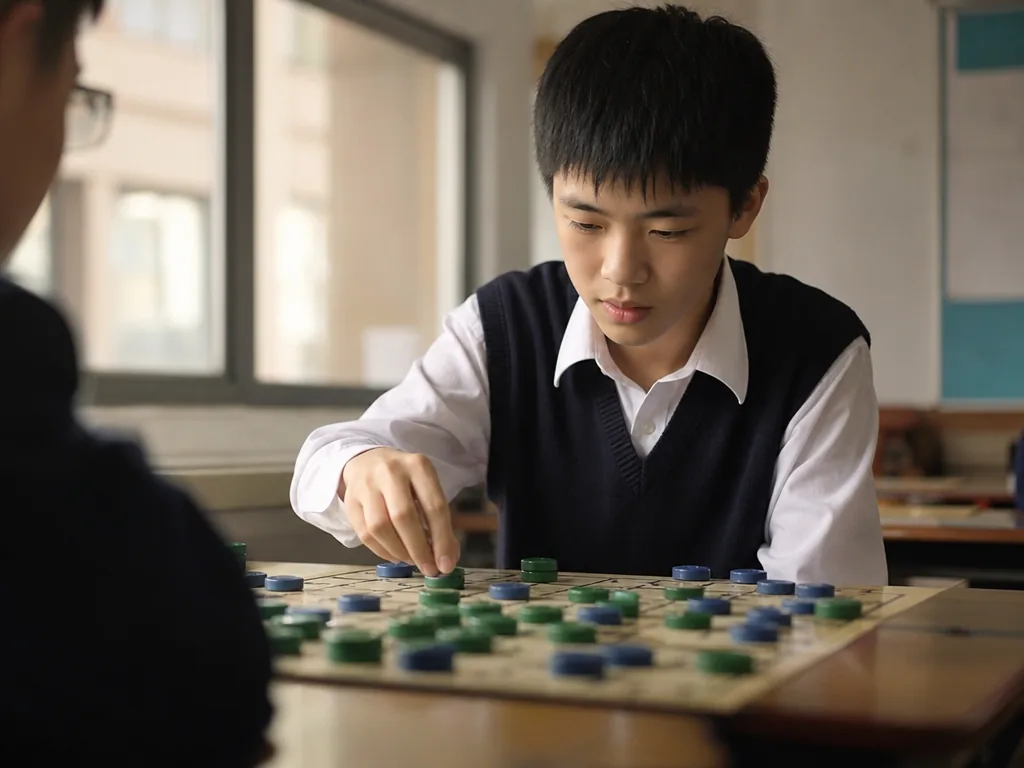
Military Flag — known in Chinese as Junqi and also called Army Chess or Military Chess — is a two-player strategy board game that blends military simulation, strategic planning, and psychological warfare, and it remains widely enjoyed across Asia, particularly in China, Taiwan, and Hong Kong. This guide traces the game’s ancient origins, its official birth in modern China, and its evolution into today’s online and competitive formats.
Direct Answer:What is Military Flag (Army Chess)?
Military Flag (Junqi) is a two-player strategy board game blending military simulation and psychological warfare, popular across Asia.
The Ancient Origins and Inspiration of Military Flag
The Influence of Ancient Military Simulations
The design of Military Flag is inspired by ancient war games, such as the Chinese war chess of antiquity and the military simulation chessboards of the Western medieval tradition.
When ancient generals drew up battle plans, they often used chessboards and pieces to simulate troop movements, layouts, and attacks and defences. This practical training approach laid the conceptual foundation for the Military Flag game that emerged later.
The Indirect Influence of Chinese Chess
As another deeply strategic chess game, Chinese chess also left its mark on Military Flag. The design of its military units — such as the “king”, “soldier”, “chariot”, and “horse” — together with its offensive and defensive strategies, had a potential impact on the unit concepts and rank hierarchy found in Military Flag.
The Official Birth of Military Flag: Modern China
A Prototype in the Early 20th Century
The official form of Military Flag took shape in China in the early 20th century. During the rise of military power and the modernisation of the army in the late Qing Dynasty and early Republic of China, military culture gradually spread among the people and gave birth to entertainment chess games with military themes.
The Military Flag board of that period simulated the terrain of a battlefield, with elements such as “marching routes”, “barracks”, “bunkers”, and “minefields” that made the game more realistic and strategic.
The Arms Class Setting
Military Flag introduces a clear hierarchy of military branches — including the “Commander”, “Army Commander”, “Division Commander”, “Brigade Commander”, “Company Commander”, and “Platoon Leader” — to simulate the command system of a real army.
The rank of each piece directly affects the outcome of the game, while special pieces such as “mines”, “bombs”, and “engineers” add further variability to play.
The Evolution of the Rules and Key Features
Hidden Information and Psychological Warfare
Unlike traditional chess and Western checkers, the pieces in Military Flag are placed face down at the start of the game. An opponent cannot see the rank of your troops directly, and must judge the identity of the opposing pieces through reasoning and trial and error.
This hidden-information design greatly heightens the game’s psychological warfare and stands as one of Military Flag’s defining features.
Terrain Impact and Marching Routes
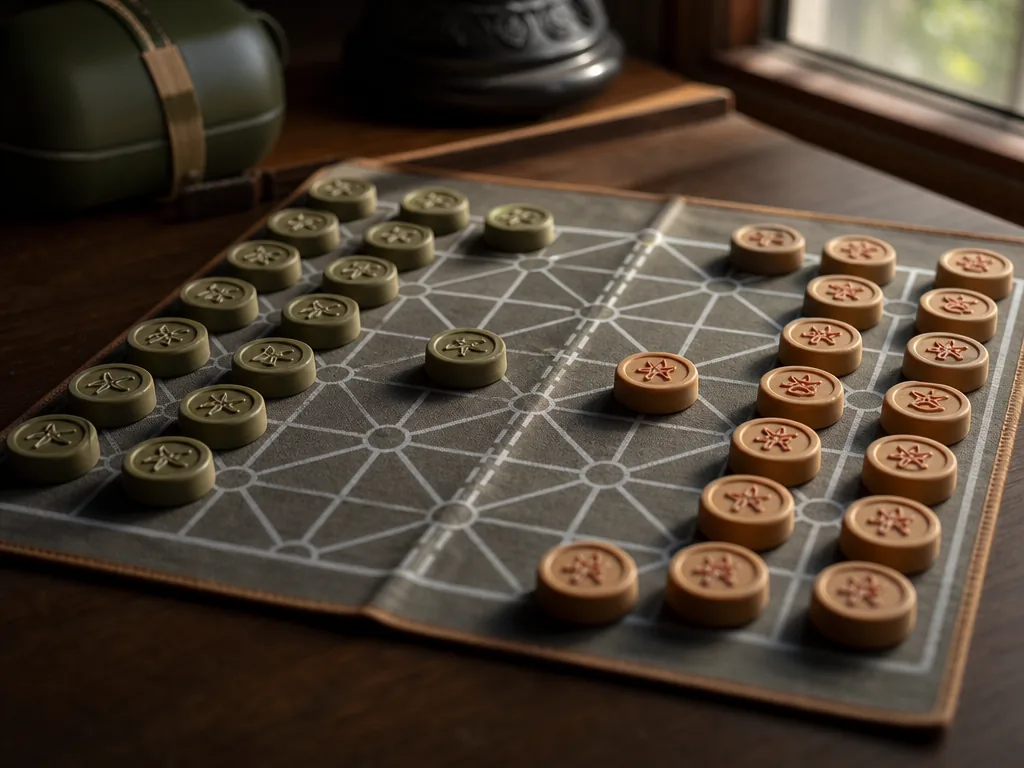
The Military Flag board is designed with specific terrain restrictions that make strategic deployment more diverse and realistic:
Barracks
Can only be entered and exited one step at a time.
Railway
Allows rapid marches in a straight line.
Minefield
Ordinary troops cannot pass through.
The Popularity and Modern Development of Military Flag
Different Versions of Military Flag
- Traditional Army Chess——Each side has 25 to 50 pieces, and the game focuses on terrain control and troop deployment.
- Dark chess version——Pieces are randomly arranged on the board and turned over one at a time, blending luck with strategy; this version is particularly popular.
- Online Military Flag——With the spread of the Internet, platforms such as QQ Military Chess and the Land War Chess APP have carried the game into the digital age and across the global Chinese community.
Competitions and Events
Military Flag competitions are frequently held in China, Taiwan, Hong Kong, Singapore, and beyond. Four-Country Military Chess — a four-player version of the game — is especially loved by young people and on campuses for its team-cooperation element.
Military Flag at a Glance
| Aspect | Details |
|---|---|
| Origin time | Early 20th century China |
| Inspiration | Ancient war-game simulation and Chinese chess |
| Core features | Hidden information, a class system, and terrain warfare |
| Modern development | Online military chess, Four-Country Military Chess, and Military Flag competitions |
As a chess game that combines military strategy, psychological warfare, and the game of wits, Junqi not only continues the spirit of ancient war games but also creates new areas of entertainment and intellectual challenge for modern people. From its humble beginnings to its widespread digital adoption, Junqi has demonstrated boundless vitality, becoming an essential chess form in Chinese culture across Asia and around the world.
Frequently Asked Questions (FAQ)
Q: Where did Military Flag originate?
Its official form was established in China in the early 20th century, inspired by ancient war games and Chinese chess, as military culture spread among the public during the late Qing Dynasty and early Republic of China.
Q: Why are the pieces placed face down?
To create hidden information — a player cannot see the opponent’s ranks and must deduce piece identities through reasoning and trial and error, which is the game’s signature element of psychological warfare.
Q: What special terrain appears on the board?
The board features barracks (entered and exited one step at a time), railways (fast straight-line marches), and minefields (impassable to ordinary troops), making deployment more diverse and realistic.
Q: What are the modern versions of Military Flag?
Traditional Army Chess, the dark chess version, and online platforms such as QQ Military Chess and the Land War Chess APP — together with Four-Country Military Chess competitions popular in China, Taiwan, Hong Kong, and Singapore.
Further Resources & Next Steps
- Official Resources——Online platforms such as QQ Military Chess and the Land War Chess APP offer free digital boards for learning and play, while many Hong Kong board-game cafés and clubs host regular Army Chess sessions.
- Further Reading——Histories of Chinese board games and military simulation, as well as introductory guides to Chinese chess (Xiangqi), provide useful background on the strategy concepts behind Military Flag.
- Parent Tips——Start with face-up practice games to learn the piece hierarchy, then introduce hidden-information play gradually to build reasoning, memory, and patience.
Note: The information above is for reference only. Please consult professional education institutions for details.
This article was initially drafted and organised with AI. Editor / Professor Chan Kwok-wai; Managing Editor / Kong Yee-leung
Act Now: Find a Tutor / Register as a Tutor
For parents & students: looking for a home or online tutor for this subject? Click the button below to post a free tuition case (subject, level and preferred time) — TutorZone will match you with suitable tutors:
For tutors: do you teach this subject? Click the button below to register for free and receive more suitable cases — you pay only when a match is made: