
 Chinese (Traditional)
 Chinese (Simplified)
 English



What Is the Ruan Exam System? A Deep Dive into This Traditional Chinese Instrument’s Grading and Certification Structure
@keyframes tzPulseO { 0%,100% { box-shadow: 0 0 0 0 rgba(255,140,0,.55); transform: scale(1); } 50% { box-shadow: 0 0 0 14px rgba(255,140,0,0); transform: scale(1.04); } }
@keyframes tzPulseN { 0%,100% { box-shadow: 0 0 0 0 rgba(2,30,64,.5); transform: scale(1); } 50% { box-shadow: 0 0 0 12px rgba(2,30,64,0); transform: scale(1.04); } }
.tz-blink-o { animation: tzPulseO 1.6s ease-in-out infinite; }
.tz-blink-n { animation: tzPulseN 1.6s ease-in-out infinite .35s; }
TUTORZONE SUBJECT GUIDE · Ruan Exam System
The Ruan is a traditional Chinese plucked string instrument prized for its warm, rounded tone and expressive character, and a cornerstone of the Chinese orchestra. This guide walks you through its standardized exam system — the major grading boards, the grade-by-grade structure, and the real benefits of working toward formal certification.
Direct Answer:How does the Ruan exam system work?
The Ruan exam system uses standardized grading across major boards, with a grade-by-grade structure assessing technique and musicianship.
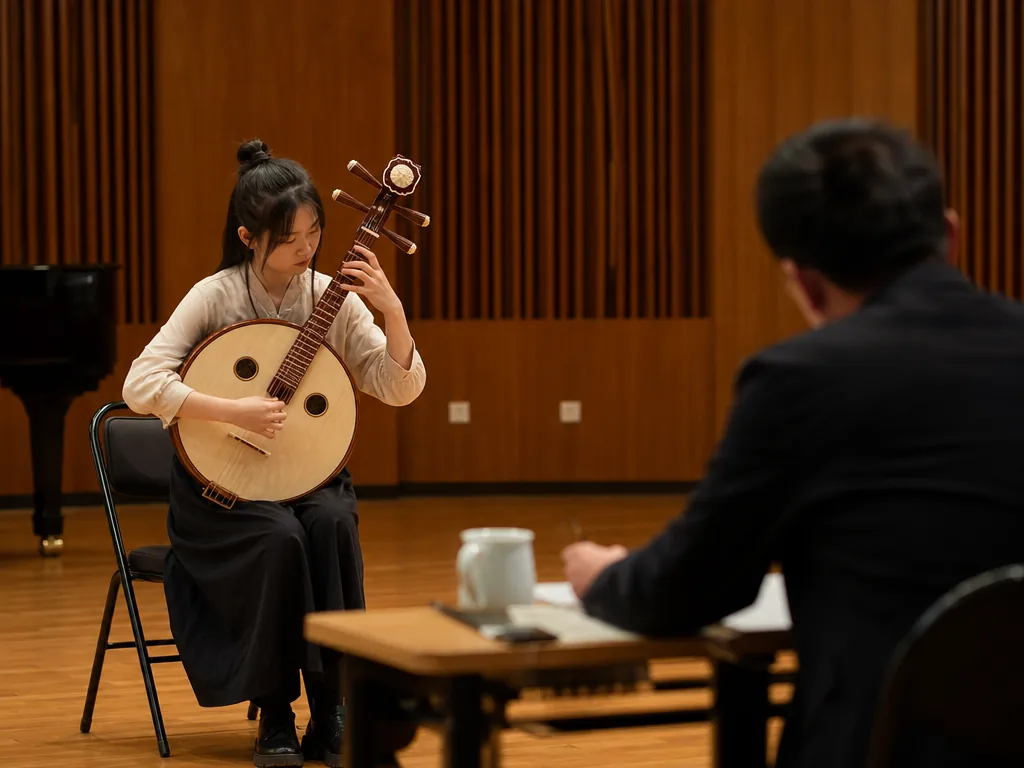
What Is the Ruan Exam System?
The Ruan exam system is a standardized grading structure designed to assess a learner’s technique, musical expression, and theoretical understanding. Its primary goals are to:
Track Your Progress
Help students clearly understand their learning progress at every stage.
Structured Objectives
Provide teachers and learners with clear, structured objectives to work toward.
Formal Qualifications
Serve as formal qualifications for school admissions, music academy applications, or performance opportunities.
Similar to Western instruments like the piano or violin, the Ruan exam system emphasizes fundamental techniques, rhythm, musicality, and expressive interpretation.
Major Exam Boards and Structure
China Conservatory of Music Grading
This is one of the most authoritative music exam systems in China. The Ruan exam is divided into Grade 1 to Grade 10:
| Grade Range | Focus |
|---|---|
| Grades 1–3 | Basic techniques such as posture, simple right-hand picking, and elementary melodies |
| Grades 4–6 | Advanced techniques such as glissando, harmonics, double notes, and rhythm control |
| Grades 7–10 | Mastery of large-scale pieces and expressive musical interpretation |
Each grade typically includes:
- Set pieces
- Technical exercises (scales, arpeggios)
- Aural skills and basic music theory (at certain levels)
Central Conservatory of Music Grading
Another widely recognized grading system, similar in content to the China Conservatory’s, but often placing more emphasis on stylistic variety and expressive performance.
Benefits and Challenges of the Ruan Exam System
Benefits
- Suitable for learners of all ages, especially students in school orchestras
- Provides a systematic path for long-term skill development
- High-level certifications (e.g., Grades 9–10) are recognized for music academy applications
- Boosts performance confidence and stage experience
Challenges
- Right-hand picking and left-hand fingering require consistent training
- Advanced pieces demand strong musical understanding and performance skills
- Beginners may face some hurdles in tuning and instrument maintenance

Who Should Take Ruan Exams?
- Students interested in learning Chinese traditional instruments through a structured path
- Those aiming to join school ensembles or pursue music professionally
- Learners who want to enhance performance skills and gain recognized certifications
- Children preparing for talent shows, school performances, or music competitions
The Future of Ruan Exams and Global Recognition
As Chinese traditional music gains international exposure, more music institutions and international art festivals are recognizing traditional instrument certifications. The Ruan exam system is expected to increasingly align with global music education standards, becoming a bridge for learners worldwide to explore Chinese musical heritage.
As a culturally rich traditional instrument, the Ruan’s exam system offers more than technical evaluation — it provides a structured, inspiring path for artistic growth.
Choosing the right exam path, level, and professional instruction will greatly enhance musical development and performance potential.
Frequently Asked Questions (FAQ)
Q: Is the Ruan harder to learn than the guitar or the pipa?
The Ruan is often considered approachable for beginners thanks to its soft, rounded tone and forgiving strings, though consistent right-hand picking and left-hand fingering practice remain essential. Learners who already play the guitar or pipa typically adapt quickly.
Q: Which grade should a beginner start from?
Most beginners start at Grades 1–3, which focus on posture, basic picking technique, and elementary melodies. Your teacher can recommend a starting level after assessing your current ability and reading skills.
Q: Are Ruan exam certificates recognized internationally?
Certificates from the China Conservatory of Music and the Central Conservatory of Music are widely recognized across Asia and are increasingly accepted by overseas institutions and festivals as Chinese traditional music gains global exposure.
Q: How long does it take to reach Grade 10?
This varies with practice time and prior musical experience, but many students take several years of consistent weekly lessons and daily practice to progress from beginner to the advanced grades.
Further Resources & Next Steps
- Official Resources—Refer to the grading syllabi published by the China Conservatory of Music and the Central Conservatory of Music for the latest repertoire and requirements.
- Further Reading—Work through a graded Ruan method book and listen to recordings of standard repertoire to build musicality and interpretation.
- Parent Tips—Encourage short, daily practice sessions and let children perform for family and friends to build confidence before the exam room.
Note: The information above is for reference only. Please consult professional education institutions for details.
This article was initially drafted and organised with AI. Editor / Professor Chan Kwok-wai; Managing Editor / Kong Yee-leung
Act Now: Find a Tutor / Register as a Tutor
For parents & students: looking for a home or online tutor for this subject? Click the button below to post a free tuition case (subject, level and preferred time) — TutorZone will match you with suitable tutors:
For tutors: do you teach this subject? Click the button below to register for free and receive more suitable cases — you pay only when a match is made: