
 Chinese (Traditional)
 Chinese (Simplified)
 English



Electric Bass Grading Guide: Professional Evaluation Standards from Materials to Tone
TUTORZONE SUBJECT GUIDE · STRING INSTRUMENTS
Electric bass quality rests on three pillars — wood, pickups, and craftsmanship — as much as on the name on the headstock. This guide walks through the professional evaluation standards, from body timber to electronics, so students, parents, and buyers can grade any instrument with confidence.
Direct Answer:What are the professional evaluation standards for electric bass?
Electric bass grading depends on wood, pickups, and craftsmanship, covering body timber to electronics, beyond headstock name.
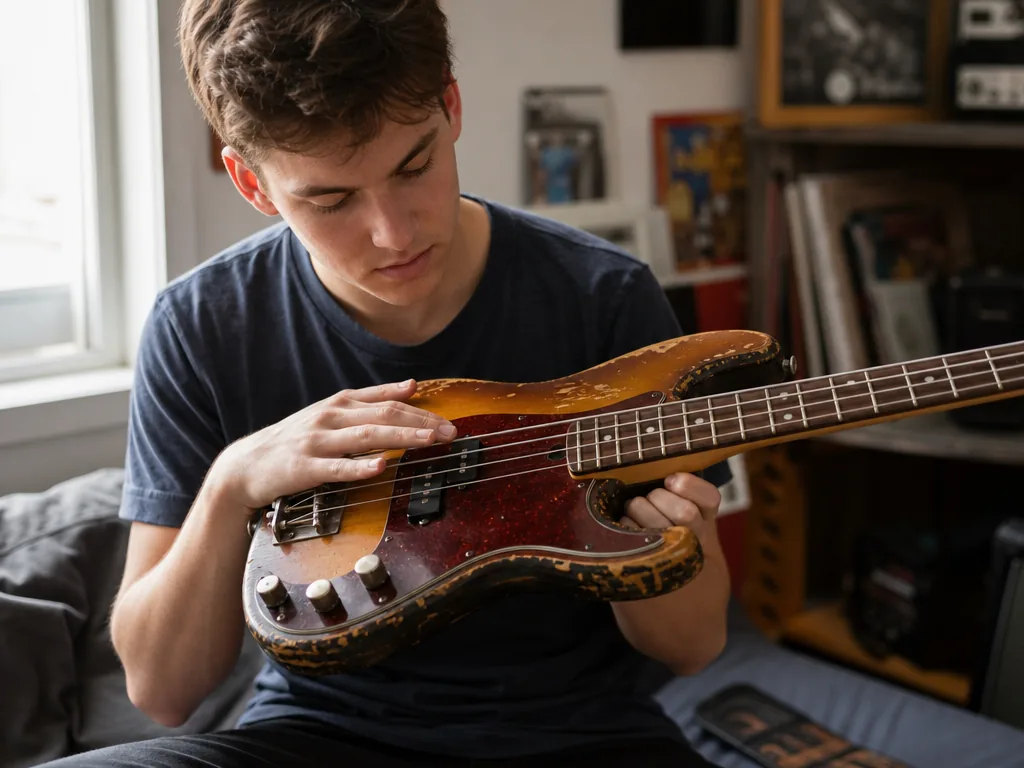
Wood Selection Determines the Fundamental Tone
The single biggest factor in how an electric bass sounds is the timber used in its body, neck, and fingerboard. Understanding each option helps you predict the character of an instrument before you ever plug it in.
Body Wood Types
- Alder: Balanced tone, suitable for various music genres.
- Ash: Bright and clear tone, ideal for funk and pop music.
- Mahogany: Warm and heavy tone, perfect for rock and metal.
- Basswood: Pronounced midrange with excellent cost-performance ratio.
Neck Wood
- Maple: Fast response and bright tone.
- Mahogany: Longer sustain and warmer tone.
- Carbon Fiber-Reinforced Necks: Highest stability and warp resistance.
Fingerboard Wood
- Maple: Bright tone, commonly found in Jazz Bass models.
- Rosewood: Warm tone, often used in Precision Bass models.
- Ebony: Premium option with smooth feel.
Pickup System Influences Tone Performance
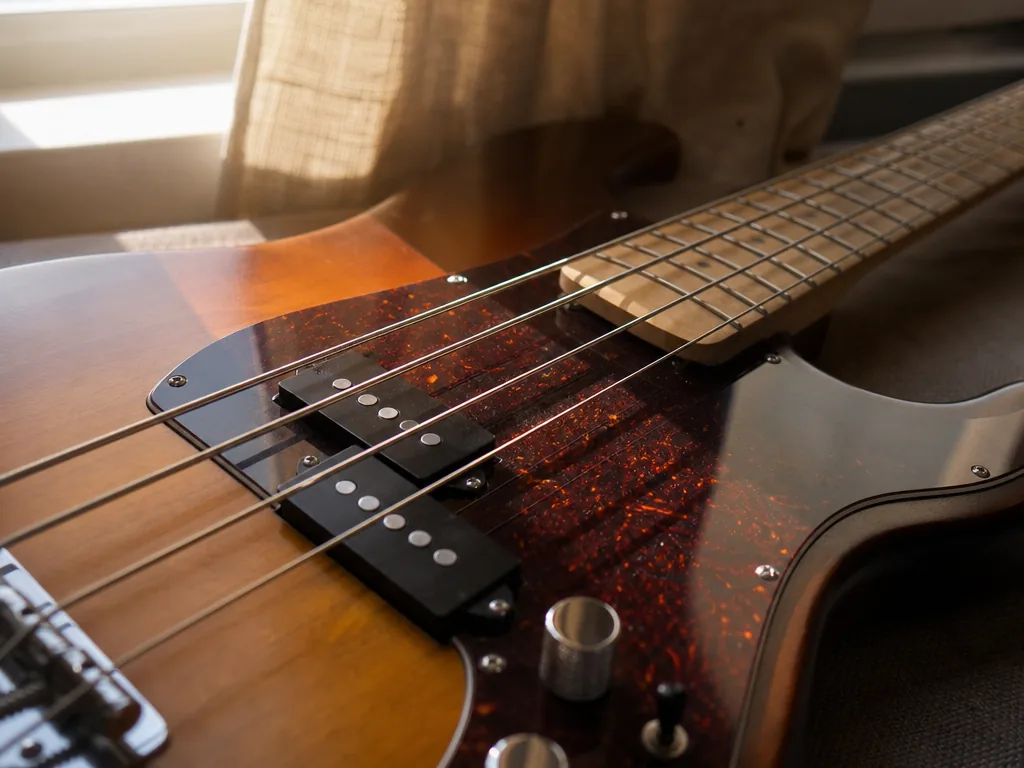
The pickup converts string vibration into signal, so its design shapes the entire output. Four main configurations dominate the market:
Single-coil
Clear and bright tone, suitable for funk and pop.
Humbucker
Full and thick tone, ideal for rock and metal.
Active Pickups
High output with low noise, great for heavy music.
P/J Hybrid Configuration
Combines the tonal characteristics of both pickup types.
Craftsmanship Affects Playing Experience
Beyond materials and electronics, the way a bass is put together decides how it feels and how long it lasts.
A great-sounding bass that is uncomfortable to play will never become a player’s favourite instrument.
- Neck Joint Types——Bolt-on vs. set-neck vs. neck-through, each impacting sustain and resonance.
- Fret Crafting——Stainless steel frets offer higher durability.
- Bridge System——Influences tuning stability and sustain.
- Electronics Design——Quality components reduce signal loss and noise.
Electric Bass Grading Reference Table
Use this quick-reference table to place any bass into a grade band by price, intended user, and benchmark models.
| Grade | Price Range (NTD) | Target Users | Representative Models |
|---|---|---|---|
| Entry-Level | 3,000–8,000 | Beginners | Squier Affinity, Ibanez GSR200 |
| Mid-Range | 8,000–25,000 | Intermediate | Fender Player, Yamaha TRBX504 |
| Professional | 25,000–60,000 | Professional | Fender American Professional, Music Man StingRay |
| Collector | 60,000 and above | Collectors | Limited Signature Editions, Vintage Basses |
Buying Advice
- Match the genre——Choose a body shape and pickup configuration based on your musical genre.
- Check the neck——During testing, verify that the neck is straight and the frets are level.
- Confirm stability——Ensure bridge stability and accurate tuning.
- Test the electronics——Inspect all electronics to make sure they work properly and are noise-free.
- Consider scale length——34 inches is the standard scale length.
Try before you buy
Whenever possible, play the instrument in person and run through the checks above — a quick in-store test reveals issues that photos and specs never will.
Maintenance Tips
- Clean regularly——Regularly clean the fingerboard and body.
- Refresh strings——Replace old strings as needed.
- Control humidity——Maintain humidity between 40–60%.
- Adjust the truss rod——Periodically adjust the truss rod to maintain neck relief.
- Protect the contacts——Clean the electronic contacts to prevent oxidation.
- Store it well——Loosen the strings if the bass won’t be played for an extended period.
Frequently Asked Questions (FAQ)
Q: What wood should a beginner choose for their first electric bass?
Basswood is the smartest starting point — it offers a pronounced midrange with an excellent cost-performance ratio. Alder is another safe, balanced choice that suits almost any genre.
Q: Single-coil or humbucker — which pickup is better?
It depends on your music. Single-coils deliver a clear, bright tone ideal for funk and pop, while humbuckers produce a full, thick sound suited to rock and metal. A P/J hybrid configuration gives you the best of both.
Q: How much should I budget for a decent electric bass?
A mid-range instrument in the NT$8,000–25,000 band — such as a Fender Player or Yamaha TRBX504 — serves most intermediate players well. Entry-level models from around NT$3,000 are fine for complete beginners.
Q: How do I keep my bass in good condition?
Clean the fingerboard and body regularly, keep humidity between 40–60%, adjust the truss rod periodically, and loosen the strings if the instrument won’t be played for a long period.
Further Resources & Next Steps
- Official Resources——Consult manufacturer specification sheets from Fender, Ibanez, and Yamaha for official grading standards and model details.
- Further Reading——Read maker guides and reviews on neck joint construction, pickup configurations, and scale length to sharpen your evaluation skills.
- Parent Tips——Visit a store with your child and let them physically test neck straightness, fret level, and tuning stability before committing to a purchase.
Note: The information above is for reference only. Please consult professional education institutions for details.
This article was initially drafted and organised with AI. Editor / Professor Chan Kwok-wai; Managing Editor / Kong Yee-leung
Act Now: Find a Tutor / Register as a Tutor
For parents & students: looking for a home or online tutor for this subject? Click the button below to post a free tuition case (subject, level and preferred time) — TutorZone will match you with suitable tutors:
For tutors: do you teach this subject? Click the button below to register for free and receive more suitable cases — you pay only when a match is made: