
 Chinese (Traditional)
 Chinese (Simplified)
 English



Music Analysis
TUTORZONE SUBJECT GUIDE · MUSIC THEORY
Music analysis breaks a piece down into its form, harmony, melody and rhythm to reveal how it was written and why it moves us. Here is a complete guide to its purpose, main areas, methods and everyday applications for students, performers and teachers.
Direct Answer:What is music analysis?
Music analysis breaks a piece into its form, harmony, melody, and rhythm to reveal how it was written and why it moves us.
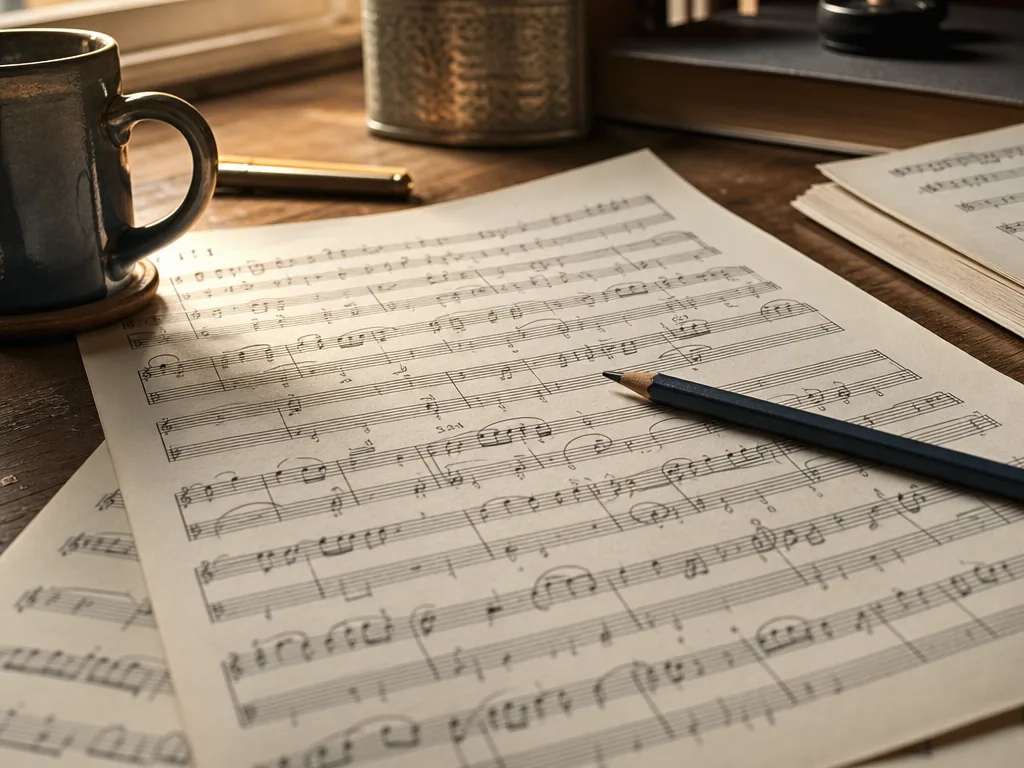
What Is Music Analysis?
Music analysis is a crucial area of music theory, primarily concerned with the structural, technical, and emotional analysis and interpretation of musical works. Through music analysis, we can gain a deeper understanding of a piece’s compositional approach, structural arrangement, harmonic arrangement, melodic development, rhythmic patterns, and other elements, thereby revealing the work’s internal logic and emotional expression. Music analysis is not only an academic tool; it can also aid musicians in their performances and provide audiences with a deeper understanding of musical works.
Music analysis is the systematic study of a musical work, breaking down and discussing its key musical elements, including structure, harmony, melody, and rhythm. This analysis allows for a clear understanding of how a composer employed various musical techniques to achieve a particular expressive purpose, and reveals the formal structure and emotional depth of a musical work. Music analysis can be applied to a wide range of musical genres, including symphonies, sonatas, chamber music, and songs.
Purpose of Music Analysis
Reveal the Musical Structure
Analyse the internal structure of the work, such as the arrangement of the form, the distribution of sections, and the development of the theme.
Understand Musical Language
Understand how composers use elements such as melody, harmony, and rhythm to express emotion, create tension, and provide release.
Improve Performance
Music analysis can help performers interpret music more effectively and accurately express the technique and emotion of the work.
Music analysis is not only an academic tool — it can also aid musicians in their performances and provide audiences with a deeper understanding of musical works.
The Main Areas of Music Analysis
Music analysis is very broad and usually covers the following aspects:
Form Analysis
Form analysis is the most basic and important part of music analysis, which aims to reveal the external structure of a musical work, including its various sections, repetitions, changes, developments, etc. Common form analyses include:
- Sonata Form — Analyse the structure of the exposition, development, and recapitulation sections and the development of the theme.
- Rondo Form — Analyse the return of section A and the changes in the contrasting sections.
- Ternary Form and Binary Form — Analyse the two-part or three-part structure of music and its contrasting qualities.
Harmonic Analysis
Harmonic analysis focuses on chord structure, chord progressions, and the harmonic relationships within music. Music analysts label each chord, identifying its type (e.g., major, minor, augmented, diminished, etc.), and analyse the progressions between chords, exploring how chords support the melody and create harmony or tension.
- Harmonic Function — Analyse how chords play different functions in a piece, such as tonic, dominant, subdominant, etc.
- Chord Progressions — Analyse the transitions between chords and explore how they drive the music forward.
Melody, Rhythm and Timbre
Melody Analysis
Melodic analysis focuses on the form, motive, and progression of a melody. This includes the melody’s intervals, rhythm, repetition, and variations. Analysing melodies can help us understand how composers use melodies to express emotion, create contrast, and relate to harmony.
- Melodic Motives — Analyse patterns or themes within a melody and study how they develop, vary, or repeat in the music.
- Melodic Progression — Study the interval progression of the melody and analyse the characteristics of the melody’s ascending or descending, leaping or continuous movement.
Rhythm and Beat Analysis
Rhythm and meter analysis studies the rhythmic structure of a piece, including the use of time signatures, the repetition and variation of rhythmic patterns, and the impact of rhythm on the flow and emotion of the music. Analysts will focus on the following:
- Beat Structure — Analyse the choice of time signature and how it affects the rhythm of the music.
- Rhythmic Variations — Analyse the variety of rhythmic patterns and explore how composers use different rhythms to create contrast or intensify emotion.
Timbre and Instrumentation Analysis
Timbre and instrumentation analysis studies how different instruments function in music and how different timbres enhance the musical expression. For example, how different instruments in an orchestral piece work together and how variations in instrumentation can be used to create dynamics and color.
- Instrument Allocation — Analyse the role, division of labour and timbre characteristics of each instrument in the work.
- Timbre Variation — Investigate how variations in timbre relate to emotion and musical structure.
Motive and Development Analysis
Motivic analysis focuses on the smallest musical unit in music, the motive, and explores how it recurs, develops, or changes throughout a piece. This analysis helps us understand the internal logic and structure of a piece.
- Motivic Repetition and Variation — Analyse how motives emerge and develop in music, for example, from simple motifs to more complex forms.
- Development — Explore how motives change between parts and drive the development of the music.
Methods of Music Analysis
The methods of music analysis can vary according to different schools or purposes. The following are some common methods:
Harmonic Analysis
This approach focuses on studying chord progressions, noting the types of chords, their functions, and their relationships to each other. This approach helps analyse harmonic structure and understand how chords drive the music in a piece.
Formal Analysis
Formal analysis focuses on the macrostructure of a musical work, analysing the arrangement and development of the musical form. This approach often involves the study of segmentation, contrast, and repetition, and the relationship between different sections.
Motivic Analysis
Motivic analysis focuses on the motives in music, revealing the internal logic and development of the work by studying the small units in the music and their changes.
Melodic and Rhythmic Analysis
This type of analysis focuses on the progression of melodic lines and the development of rhythmic patterns. Through this approach, one can understand how the melody develops and interacts with the rhythm to enhance the emotional expression of the music.
Applications of Music Analysis
Music analysis has important applications for composers, performers and musicologists:
- Composers — Music analysis helps composers understand the creative techniques of their predecessors and provide inspiration for their own creations.
- Performers — By analysing a piece’s structure and emotional expression, performers can more accurately interpret the work and express the composer’s intentions.
- Musicologists — Music analysis is fundamental to academic research, revealing musical history, stylistic changes, and the development of compositional techniques.

Conclusion
Music analysis is an integral part of music theory. Whether in academic research or performance, it helps people gain a deeper understanding of the structure and emotion of musical works. By analysing elements such as harmony, melody, rhythm, and form, we can uncover the inherent logic of musical works and enhance our appreciation and interpretation of music.
Frequently Asked Questions (FAQ)
Q: What is music analysis in simple terms?
Music analysis is the systematic study of how a piece is built — its form, harmony, melody and rhythm — to understand how the composer created a particular structure and emotional effect.
Q: Do performers really need music analysis?
Yes. By understanding a work’s structure and emotional design, performers can shape dynamics, phrasing and tempo more convincingly and get closer to the composer’s intentions.
Q: What is the difference between harmonic analysis and formal analysis?
Harmonic analysis studies chords, their functions and progressions, while formal analysis studies the large-scale structure — the arrangement of sections, contrast, repetition and development.
Q: Can music analysis be applied to any genre?
Yes. It works across symphonies, sonatas, chamber music and songs, and its principles extend to popular and contemporary styles as well.
Further Resources & Next Steps
- Official Resources — The Associated Board of the Royal Schools of Music (ABRSM) publishes graded theory syllabuses and materials that formalise the skills described here.
- Further Reading — Fundamentals of Musical Composition by Arnold Schoenberg and Classical Form by William E. Caplin are classic introductions to form and motivic analysis.
- Parent Tips — Listen together and ask your child to describe the structure of a favourite piece: naming sections, themes and moods turns passive listening into active analysis.
Note: The information above is for reference only. Please consult professional education institutions for details.
This article was initially drafted and organised with AI. Editor / Professor Chan Kwok-wai; Managing Editor / Kong Yee-leung
Act Now: Find a Tutor / Register as a Tutor
For parents & students: looking for a home or online tutor for this subject? Click the button below to post a free tuition case (subject, level and preferred time) — TutorZone will match you with suitable tutors:
For tutors: do you teach this subject? Click the button below to register for free and receive more suitable cases — you pay only when a match is made: