
 Chinese (Traditional)
 Chinese (Simplified)
 English



Scales and Modes
TUTORZONE SUBJECT GUIDE · MUSIC THEORY
Scales and modes are the building blocks of melody and harmony. This guide explains what each one is, how scales are classified, and how the seven modes give music its distinctive emotional color.
Direct Answer:What are scales and modes?
Scales and modes are the building blocks of melody and harmony, classified by patterns of whole tones and semitones, with seven modes giving distin。

What Is a Scale?
Scales and modes are two key concepts in music theory that help musicians understand and create music. They play a crucial role in creating and interpreting aspects of music, including its structure, emotion, and harmony. Simply put, a scale is a set of regular pitches, while a mode is a variation of a scale that defines the note structure and emotional coloration of the music.
A musical scale is a sequence of notes arranged in a regular pattern within a specific pitch range. These notes can ascend (from low to high) or descend (from high to low), and they generally follow a specific interval structure. Scales are fundamental to music composition and performance, determining how melodies and harmonies are constructed.
A scale is a set of regular pitches; a mode is a variation of a scale that shapes its emotional coloration.
The Main Types of Scales
There are several main types of scales, each with its own specific interval structure. The most important are outlined below.
Major ScaleBright and cheerful
The major scale is one of the most common musical scales, with a bright, cheerful feel. It consists of seven notes, with an interval structure of whole tone–whole tone–half tone–whole tone–whole tone–whole tone–half tone.
For example, the C major scale runs C – D – E – F – G – A – B – C. Reading the structure of C major: C to D is a whole tone, D to E is a whole tone, E to F is a half tone, F to G is a whole tone, G to A is a whole tone, A to B is a whole tone, and B to C is a half tone.
Minor ScaleMelancholic and darker
Minor scales often express a more melancholic or darker mood. They have a different interval structure from major scales, and there are three main forms of minor scales:
- Natural Minor Scale — the interval structure is whole tone–half tone–whole tone–whole tone–half tone–whole tone–whole tone.
- Harmonic Minor Scale — the seventh note of the natural minor scale is raised a semitone; the structure is whole tone–half tone–whole tone–whole tone–half tone–augmented whole tone–half tone.
- Melodic Minor Scale — the sixth and seventh notes of the natural minor scale are raised a semitone; the structure is whole tone–half tone–whole tone–whole tone–whole tone–whole tone–half tone.
For example, the A minor scale runs A – B – C – D – E – F – G – A. This is the structure of the natural minor scale: A to B is a whole step, B to C is a half step, C to D is a whole step, and so on.
Harmonic ScaleAugmented seventh for strong endings
The main characteristic of the harmonic scale is the augmented interval on the seventh note, which makes it very popular for creating a strong ending in harmony. The structure of the harmonic scale is as follows:
- Harmonic scale — whole tone–half tone–whole tone–whole tone–half tone–augmented whole tone–half tone.
For example, the A harmonic minor scale runs A – B – C – D – E – F – G# – A. The seventh note (G#) is a semitone higher than the G in the natural minor scale, making the scale sound more tense.
Other ScalesPentatonic and whole-tone
There are also other forms of scales, such as:
- Pentatonic Scale — a five-note scale without semitones, commonly used in folk music and blues music.
- Whole Tone Scale — made up of six whole tones and no semitones, it sounds more ambiguous and unstable.
What Is a Mode?
A mode is a variation of a scale — an arrangement of musical notes — and is closely related to the emotional characteristics of the tonality. Modes have their origins in ancient Greece and are frequently used in classical music. In modern music, modes are still used to create different musical styles and emotions.
Most modes are based on either a major or a minor scale, but they start on different notes (their roots), which creates different emotional overtones.
The Seven Common Modes
Ionian ModeThe bright major mode
The Ionian mode is essentially the traditional major scale. It expresses a bright and cheerful mood. Its structure is: whole tone–whole tone–half tone–whole tone–whole tone–whole tone–half tone.
For example, the C Ionian mode is C – D – E – F – G – A – B – C.
Dorian ModeA brighter minor mode
The Dorian mode is a minor mode, but compared to the natural minor mode, its sixth tone is raised a semitone, making it sound brighter. Its structure is: whole tone–half tone–whole tone–whole tone–whole tone–half tone–whole tone.
For example, the D Dorian mode is D – E – F – G – A – B – C – D.
Phrygian ModeA darker minor mode
The Phrygian mode is a minor scale characterized by a semitone dip on the second note of the scale, making it sound darker. The structure is: half tone–whole tone–whole tone–whole tone–half tone–whole tone–whole tone.
For example, the E Phrygian mode is E – F – G – A – B – C – D – E.
Lydian ModeBright and intense
The Lydian mode is a major mode, but its fourth note is raised a semitone, making it sound brighter and more intense. Its structure is: whole tone–whole tone–whole tone–half tone–whole tone–whole tone–half tone.
For example, the F Lydian mode is F – G – A – B – C – D – E – F.
Mixolydian ModeA slightly unstable major mode
The Mixolydian mode is a major scale, but with a lowered seventh that sounds a bit unstable. Its structure is: whole tone–whole tone–half tone–whole tone–whole tone–half tone–whole tone.
For example, the G Mixolydian mode is G – A – B – C – D – E – F – G.
Aeolian ModeThe natural minor
The Aeolian mode is actually the natural minor scale, which sounds quite melancholic. Its structure is: whole tone–half tone–whole tone–whole tone–half tone–whole tone–whole tone.
For example, the A Aeolian mode is A – B – C – D – E – F – G – A.
Locrian ModeUnstable and dissonant
The Locrian mode is a less common mode that is characterized by being very unstable and somewhat dissonant. Its structure is: half tone–whole tone–whole tone–half tone–whole tone–whole tone–whole tone.
For example, the B Locrian mode is B – C – D – E – F – G – A – B.
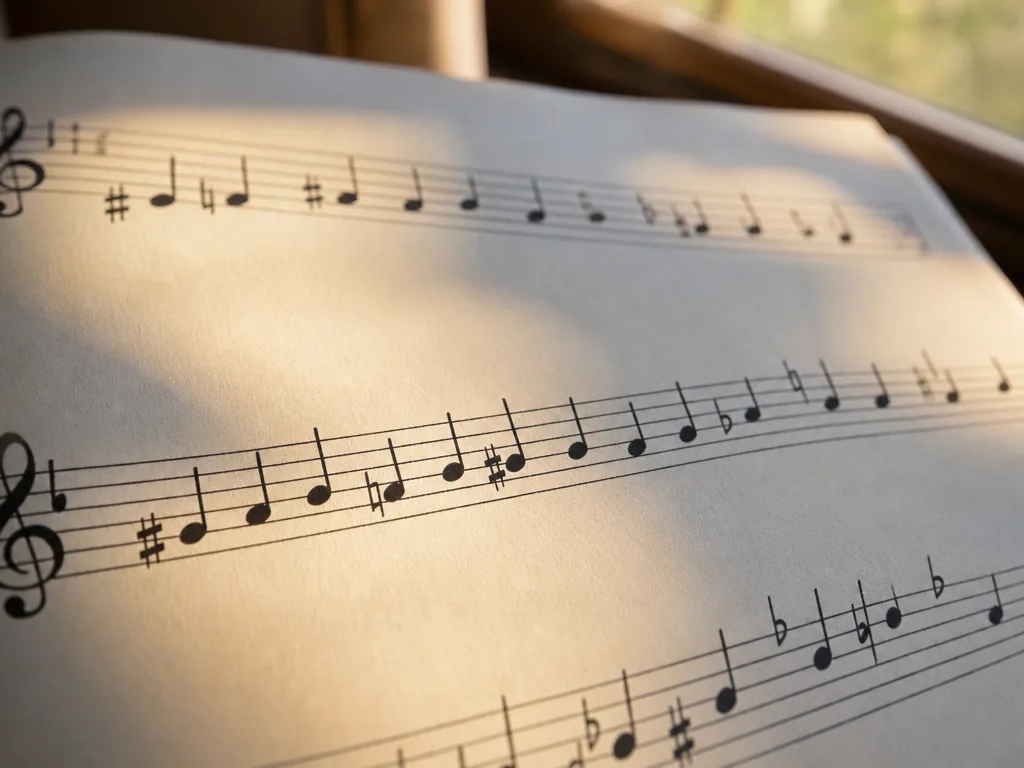
Scales vs Modes: How They Relate
Scales and modes are closely related, but there are some differences:
- A musical scale — a set of notes arranged in sequence within a certain range and with a fixed interval structure.
- A mode — a variation of a scale that focuses not only on the order of notes but also on the interval relationships and emotional expression of certain notes (such as the root, third, and fifth).
Summary
Scales are the foundation of music, consisting of notes and defining the intervals between them. Modes are variations of scales, creating different emotional tones by adjusting the arrangement of notes. Understanding scales and modes is crucial for music composition and performance, and they play a central role in musical expression — whether in classical music, jazz, or contemporary music.
Frequently Asked Questions (FAQ)
Q: What is the difference between a scale and a mode?
A scale is a set of notes arranged in a fixed interval pattern, while a mode is a variation of that scale that begins on a different degree, which changes its emotional character.
Q: How many modes are there?
Western music uses seven diatonic modes — Ionian, Dorian, Phrygian, Lydian, Mixolydian, Aeolian and Locrian — each one a rotation of the same major-scale notes starting on a different root.
Q: Which scale should a beginner learn first?
Start with C major and its relative minor, A natural minor, because they use no sharps or flats. From there, the pentatonic scale is a friendly next step for improvising.
Q: Are modes only used in classical music?
No. Modes appear throughout jazz, folk, rock and film music — for example, the Dorian mode is common in folk and jazz, while the Mixolydian mode shows up often in rock and blues.
Further Resources & Next Steps
- Official Resources — ABRSM and Trinity College London publish graded music-theory syllabuses that cover scales and modes systematically.
- Further Reading — The AB Guide to Music Theory by Eric Taylor is a clear, widely used introduction to scales, intervals and modes.
- Parent Tips — Encourage a few minutes of daily scale practice on the instrument with a metronome, and ask your child to describe the mood of each mode as they play it.
Note: The information above is for reference only. Please consult professional education institutions for details.
This article was initially drafted and organised with AI. Editor / Professor Chan Kwok-wai; Managing Editor / Kong Yee-leung
Act Now: Find a Tutor / Register as a Tutor
For parents & students: looking for a home or online tutor for this subject? Click the button below to post a free tuition case (subject, level and preferred time) — TutorZone will match you with suitable tutors:
For tutors: do you teach this subject? Click the button below to register for free and receive more suitable cases — you pay only when a match is made: