 Chinese (Traditional)
 Chinese (Simplified)
 English



Complete Guide to Junior Secondary Chemistry in Hong Kong
TUTORZONE SUBJECT GUIDE · LOCAL SECONDARY SCHOOL
Junior Secondary Chemistry is a foundational science subject in Hong Kong’s secondary curriculum. This guide walks through the curriculum, core topics, assessment methods, effective study strategies, and the university and career pathways that chemistry opens up.
Direct Answer:What is Junior Secondary Chemistry in Hong Kong?
Junior Secondary Chemistry is a foundational science subject in Hong Kong’s secondary curriculum, covering core topics with hands-on laboratory work.
What Is Junior Secondary Chemistry?
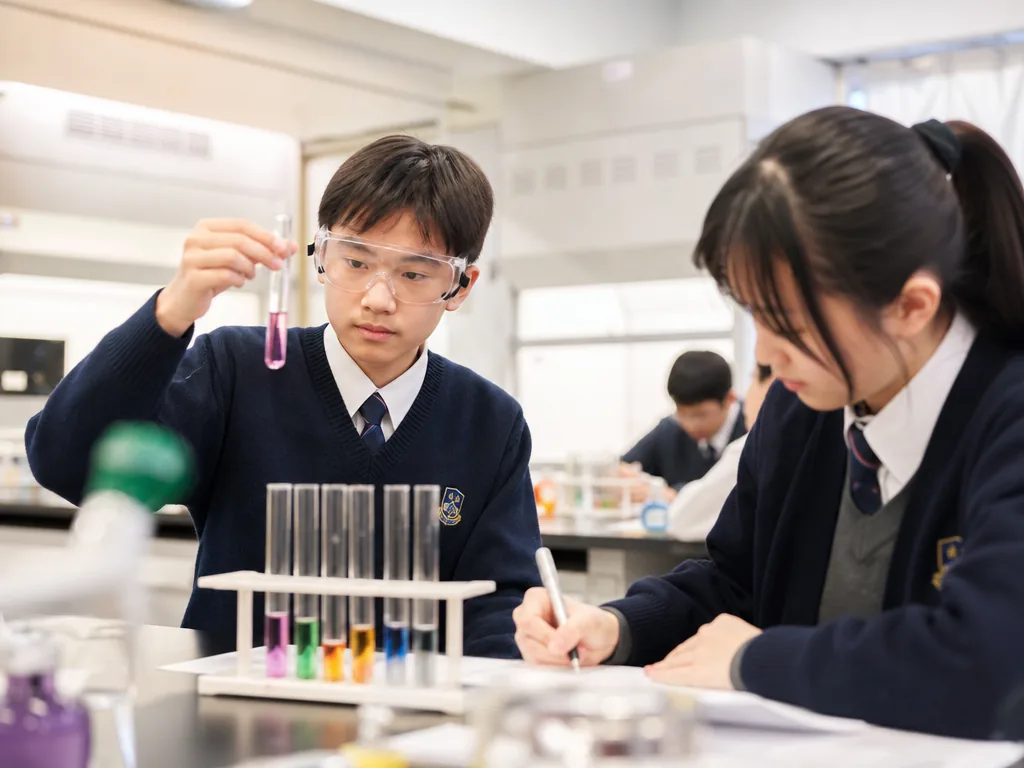
Junior Secondary Chemistry is a foundational science subject in Hong Kong’s secondary school curriculum. It helps students understand the properties, structures, changes, and interactions of matter, while developing essential chemical principles and experimental skills.
The course emphasises not only theoretical knowledge but also hands-on experimentation and real-world application. Students learn to explain everyday phenomena using chemistry and gain the ability to solve basic chemical problems.
Interdisciplinary Learning
Chemistry integrates with other sciences such as Physics and Biology. Through chemical theory and experimentation, students gain insight into how the material world functions and how chemistry connects to broader scientific concepts.
Key Curriculum Topics
The curriculum covers core concepts such as:
- Structure and properties of matter
- Elements and compounds
- Chemical reactions
- Acids and bases
- Redox reactions
Students will conduct experiments to explore material properties and understand the principles behind chemical processes — linking theory with real-world application in both natural and human contexts.
Core Components of the Course
1. Structure and Properties of Matter
- Atomic structure: Understanding atoms, nuclei, electron shells, and periodic trends.
- Elements and compounds: Identifying molecules, elements, and their behaviour under various conditions.
2. Chemical Reactions
- Chemical equations: Learn to represent reactions and explain matter transformation.
- Reaction rates & equilibrium: Explore what affects reaction speed and how equilibrium is achieved.
3. Acids and Bases
- Properties and classifications of acids and alkalis, including solubility and reactivity.
- pH and indicators: Using pH indicators and studying neutralisation reactions.
4. Redox Reactions
- Concept of oxidation and reduction: Understand electron transfer and changes in oxidation states.
- Electrochemistry: Study batteries and electrolysis through chemical reactions.
Assessment Methods & Criteria
Student performance is evaluated through:
- Classwork and assignments
- Laboratory reports
- Quizzes and tests
- Final examinations — theoretical and practical
Classwork & Tests
Assess understanding of core concepts and the ability to apply chemistry to explain real-world phenomena.
Lab Reports
Demonstrate observation, analysis, and reporting skills. Reports should include objective, methods, results, and conclusion.
Final Exam
Includes both theoretical and experimental components to assess mastery of the subject.
Effective Learning Strategies
1. Strengthen Theoretical Knowledge
- Build conceptual frameworks: Connect new topics with prior knowledge for better retention.
- Understand, don’t just memorise: Grasp the principles behind formulas and laws to apply them effectively.
2. Develop Experimental Skills
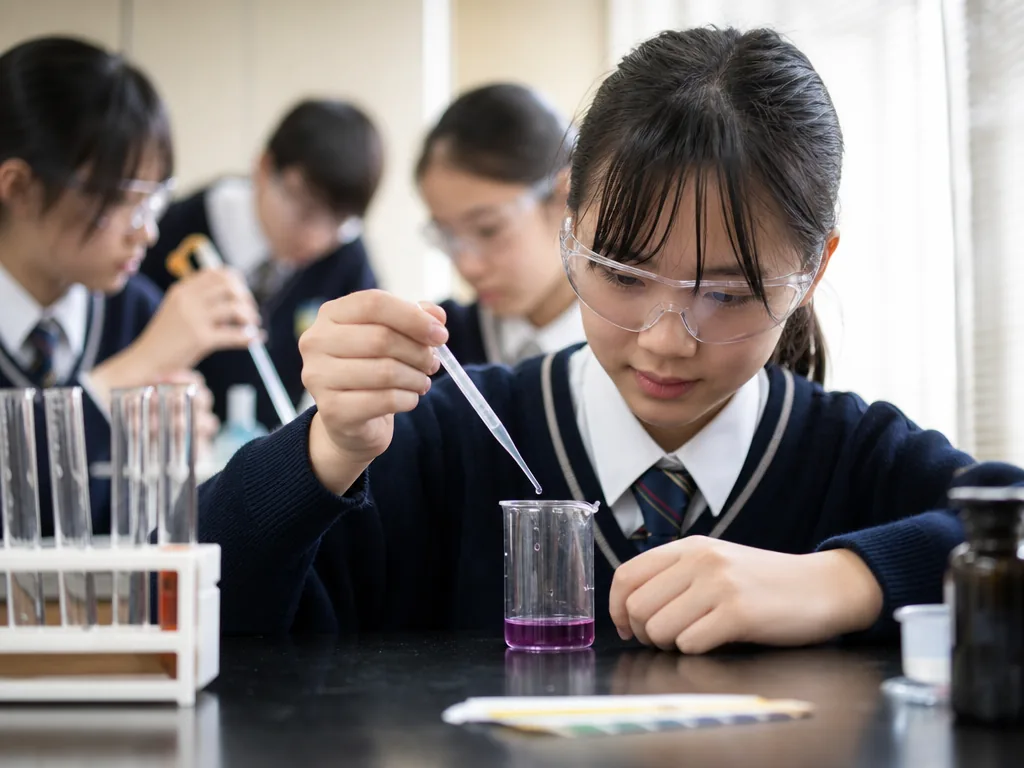
- Practice lab techniques: Engage actively in experiments, record accurate observations, and understand the rationale behind procedures.
- Reflect post-lab: Review what worked, what didn’t, and why. Use this to improve future experiments.
3. Improve Problem-Solving Abilities
- Use case-based learning: Apply chemical concepts to real-life scenarios for better understanding.
- Regular self-testing: Check understanding and adjust study strategies accordingly.
Understand, don’t just memorise — grasp the principles behind formulas and laws so you can apply them with confidence.
Common Challenges & How to Overcome Them
| Difficulty | Solution |
|---|---|
| Abstract theories are hard to grasp | Use real-life examples and experiments to visualise complex ideas. |
| Weak lab skills | Increase lab participation, practise equipment handling, and seek guidance from teachers or peers. |
| Struggling with chemical calculations | Master core techniques like molar calculations and conservation of mass; practise regularly. |
Further Study & Career Pathways
University Pathways
Chemistry is a gateway to many academic disciplines, including:
- Chemistry
- Environmental Science
- Medicine
- Pharmacy
- Materials Science
Career Opportunities
- Scientific Research: Chemist, Lab Technician
- Environmental & Energy Sectors: Environmental Analyst, Energy Specialist
- Medical & Pharmaceutical Fields: Pharmacist, R&D Specialist
- Engineering & Manufacturing: Chemical Engineer, Materials Engineer
Time Management for Exam Preparation
Study Schedule Recommendations
- Theory: Study chemistry fundamentals daily; revise reaction types and principles weekly.
- Lab Practice: Conduct experiments at least once a month and keep detailed records of each.
Actionable Tips & Why Chemistry Matters
- Practise regularly — work through chemical equations and stoichiometry to build fluency.
- Get involved — join science competitions or exhibitions to boost interest and academic motivation.
- Make connections — use concept maps and summary cards to reinforce links between different chemistry topics.
Hong Kong’s junior chemistry curriculum helps students build a solid foundation in science, fosters experimental thinking, and encourages problem-solving and curiosity — all essential for future success in STEM fields like medicine, engineering, and environmental science.
Solid Foundation in Science
Understand the properties, structures, changes, and interactions of matter.
Experimental Thinking
Build hands-on lab skills, careful observation, and analytical reasoning.
Problem-Solving & Curiosity
Learn to explain everyday phenomena and tackle real-world problems.
Frequently Asked Questions (FAQ)
Q: Is junior secondary chemistry difficult for beginners?
It is demanding but very manageable. Start by building a clear conceptual framework of atoms, elements, and compounds, then link each new topic back to that foundation rather than memorising facts in isolation.
Q: How can I improve my marks in the practical and lab component?
Practise equipment handling regularly, record accurate observations during experiments, and write lab reports that clearly cover objective, methods, results, and conclusion. Reflecting on what went well and what did not after each lab session also helps.
Q: What should I focus on when revising chemical calculations?
Master the core techniques first — especially molar calculations and the conservation of mass — and then practise a steady stream of problems. Consistency matters more than cramming before the exam.
Q: Does chemistry require strong maths skills?
Junior secondary chemistry uses only basic arithmetic and proportional reasoning, mainly for balancing equations and simple calculations. Confidence with numbers helps, but the emphasis is on understanding concepts and applying them correctly.
Further Resources & Next Steps
- Official Resources——The Hong Kong Education Bureau (EDB) at www.edb.gov.hk for official curriculum updates and subject information.
- Further Reading——A reputable junior chemistry textbook or revision guide aligned with the Hong Kong curriculum, plus past school papers for exam-style practice.
- Parent Tips——Support your child’s lab practice at home, use everyday examples (cooking, batteries, cleaning products) to make chemistry concrete, and encourage regular self-testing rather than last-minute cramming.
Note: The information above is for reference only. Please consult professional education institutions for details.
This article was initially drafted and organised with AI. Editor / Professor Chan Kwok-wai; Managing Editor / Kong Yee-leung
Act Now: Find a Tutor / Register as a Tutor
For parents & students: looking for a home or online tutor for this subject? Click the button below to post a free tuition case (subject, level and preferred time) — TutorZone will match you with suitable tutors:
For tutors: do you teach this subject? Click the button below to register for free and receive more suitable cases — you pay only when a match is made: