
 Chinese (Traditional)
 Chinese (Simplified)
 English



Understanding the Hong Kong Junior Secondary Geography Curriculum: A Comprehensive Guide
@keyframes tzPulseO { 0%,100% { box-shadow: 0 0 0 0 rgba(255,140,0,.55); transform: scale(1); } 50% { box-shadow: 0 0 0 14px rgba(255,140,0,0); transform: scale(1.04); } }
@keyframes tzPulseN { 0%,100% { box-shadow: 0 0 0 0 rgba(2,30,64,.5); transform: scale(1); } 50% { box-shadow: 0 0 0 12px rgba(2,30,64,0); transform: scale(1.04); } }
.tz-blink-o { animation: tzPulseO 1.6s ease-in-out infinite; }
.tz-blink-n { animation: tzPulseN 1.6s ease-in-out infinite .35s; }
TUTORZONE SUBJECT GUIDE · geography curriculum
Geography in Hong Kong’s junior secondary years spans physical landscapes and human geography — from landforms and climate to population, settlement, and environmental challenges. This guide walks students, parents, and educators through the Form 1–3 curriculum, its assessments, and the practical skills it builds.
Direct Answer:What does Hong Kong’s junior secondary Geography curriculum cover?
It spans physical and human geography, including landforms, climate, population, settlement, and environmental challenges, with a Form 1–3 guide an。
What Is the Junior Secondary Geography Curriculum?
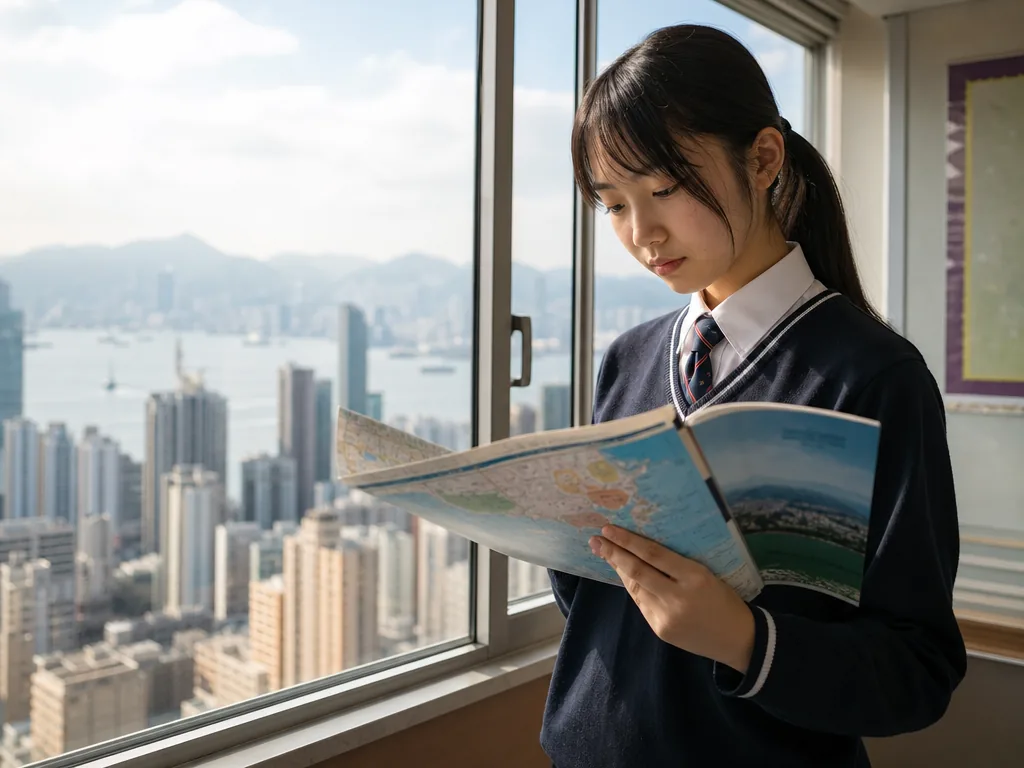
The Hong Kong Junior Secondary Geography is part of the broader Junior Secondary Curriculum, designed for students in Form 1 to Form 3 (Grades 7-9). The course focuses on both physical geography, such as landforms and climate, and human geography, which includes population, settlement, and environmental issues.
The curriculum aims to nurture students’ awareness of geographical issues while helping them develop critical thinking and problem-solving skills. It also prepares students to understand global challenges, such as climate change, resource management, and urbanization, all of which have local and global consequences.
Key Features of the Geography Curriculum
- Comprehensive Scope——The curriculum covers a broad range of topics, ranging from physical landforms to the complex human-environment interactions.
- Practical Application——The curriculum emphasizes fieldwork and the use of geographical tools, such as maps, statistics, and geographical information systems (GIS). Students are encouraged to apply their knowledge to real-world scenarios.
- Interdisciplinary Focus——Geography links closely with other subjects like history, economics, and environmental science, helping students see the interconnectedness of knowledge.
- Global Perspective——Although the curriculum has a local context, it integrates global issues, encouraging students to think about how geographical factors affect people worldwide.
- Focus on Environmental Awareness——A significant portion of the curriculum deals with environmental sustainability, conservation, and the impact of human activity on the environment.
Structure and Breakdown of Topics
The Hong Kong Junior Secondary Geography curriculum is structured across three years (Form 1 to Form 3), with each year building on the knowledge gained in the previous one. Let’s break down the key topics by grade level.
Form 1 (Grade 7) — Introduction to Basic Geographical Concepts
In the first year of Junior Secondary, students are introduced to foundational geographical concepts and learn to understand the world through a geographical lens.
- Introduction to Geography——Students learn what geography is and its importance. This includes an introduction to maps, basic geographical tools, and concepts such as location, scale, and direction.
- Physical Geography——
- Earth’s Structure——Students explore the Earth’s physical features, including landforms, rocks, and minerals.
- Weather and Climate——A basic understanding of weather patterns and climate zones around the world is introduced.
- Human Geography——
- Population——Students study world population distribution, growth patterns, and factors influencing population density.
- Settlement Patterns——Basic concepts about the location and growth of human settlements (rural and urban).
- Geographical Tools and Fieldwork——Students are introduced to tools like maps, graphs, and statistical data. Fieldwork is encouraged to develop practical skills in data collection and observation.
Form 2 (Grade 8) — In-Depth Study of Physical and Human Geography
In Form 2, students delve deeper into both physical and human geography, developing a more complex understanding of the world’s geography.
- Landforms and Landscapes——Students study various landforms such as mountains, plains, plateaus, and valleys. They learn about the processes that shape the Earth, including weathering, erosion, and tectonic activity.
- Weather and Climate——A deeper exploration into global weather systems, including the factors that influence climate, such as latitude, altitude, and wind patterns.
- Human Geography——
- Urbanization——Students analyze the causes and effects of urbanization, including the growth of cities and the problems that arise (e.g., congestion, pollution, housing).
- Resource Distribution——The distribution and use of natural resources, including renewable and non-renewable resources, is discussed.
- Environmental Issues——Students start exploring the effects of human activities on the environment, including deforestation, pollution, and climate change.
Form 3 (Grade 9) — Advanced Geographic Understanding and Real-World Application
In the final year of Junior Secondary Geography, students focus on more advanced topics and practical applications of geographical concepts.
- Physical Geography——
- Natural Disasters——Students study natural disasters such as earthquakes, hurricanes, and floods, focusing on their causes, effects, and ways to mitigate damage.
- Climate Change and Global Warming——An in-depth look at climate change, its impacts on the environment, and the global response to these issues.
- Human Geography——
- Globalization——Students explore the effects of globalization on different countries, including economic, cultural, and social impacts.
- Sustainable Development——The importance of sustainable development, focusing on balancing economic growth with environmental protection and social well-being.
- Geographical Investigation and Fieldwork——Students conduct more advanced fieldwork projects, collecting and analyzing geographical data, creating maps, and exploring case studies related to the curriculum.
Assessment and Examination
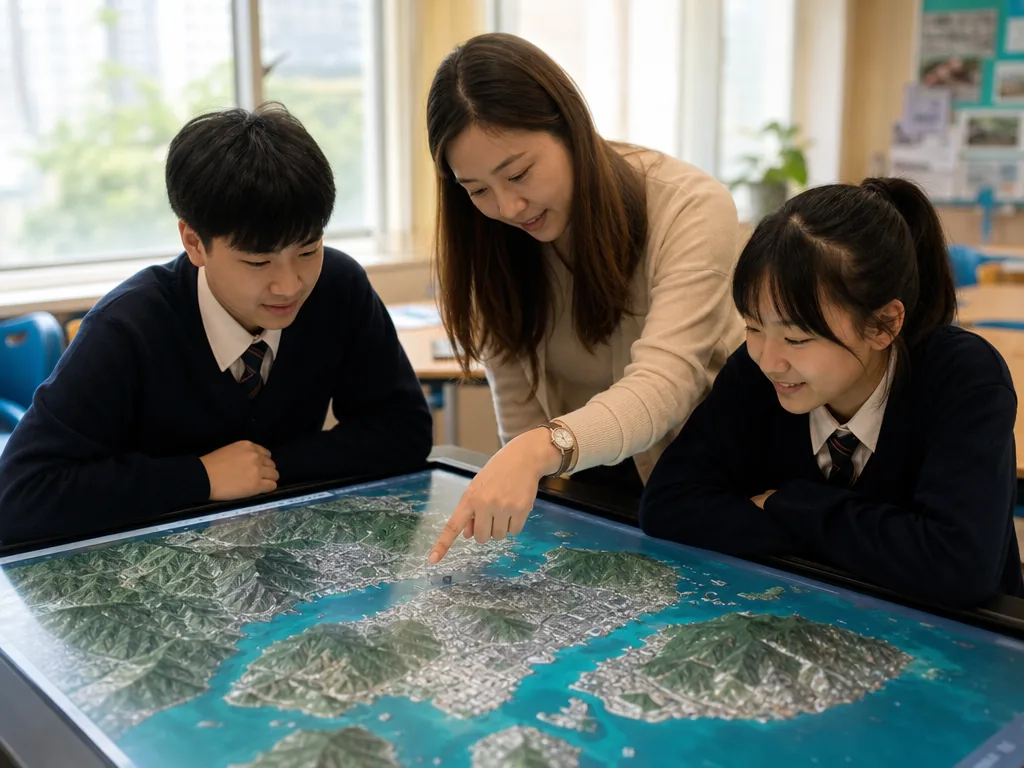
Geography is assessed through a combination of regular quizzes, assignments, projects, and exams. These assessments focus on both theoretical understanding and practical skills, such as map reading and data interpretation.
Types of Assessment
- Written Examinations——These exams assess students’ understanding of key geographical concepts, their ability to analyze geographical patterns, and their problem-solving skills.
- Fieldwork Projects——Students may be required to conduct fieldwork, which involves collecting real-world geographical data, observing landscapes, or exploring human-environment interactions.
- Geographical Reports and Presentations——Students are often asked to produce reports or deliver presentations on specific geographical topics, demonstrating their research, analysis, and communication skills.
- Continuous Assessment——This includes regular quizzes, assignments, and class participation to track students’ progress over the course of the year.
Skills Developed in Geography
The Hong Kong Junior Secondary Geography Curriculum is designed to help students develop a variety of skills that are applicable not only in academic settings but also in real life. These skills include:
- Critical Thinking——Students learn to analyze and evaluate geographical information, think critically about environmental issues, and propose solutions to real-world problems.
- Problem-Solving——Geography encourages students to think about how to solve geographical and environmental problems, such as managing resources, dealing with climate change, or planning for urban growth.
- Data Interpretation——Students learn how to interpret maps, graphs, and statistical data, helping them understand the spatial relationships between different phenomena.
- Research Skills——Geography encourages independent research, helping students develop skills in gathering information, evaluating sources, and synthesizing data.
- Communication——Whether through written reports, oral presentations, or group discussions, geography helps students develop effective communication skills.
Challenges and Tips for Success
While geography can be an engaging subject, students may face some challenges as they progress through the curriculum.
Common Challenges
- Understanding Complex Concepts——Some students may find it difficult to grasp complex concepts like climate systems, population dynamics, and global interconnections.
- Fieldwork and Data Collection——Conducting fieldwork can be challenging, particularly for students who are unfamiliar with outdoor research or working with geographic tools.
- Global Issues——The global nature of some topics (e.g., climate change, globalization) may seem overwhelming at first due to their complexity.
Tips for Success
- Review Key Concepts Regularly——Geography builds on previous knowledge, so it’s important to regularly review key concepts and reinforce what you’ve learned.
- Use Visual Aids——Maps, graphs, and charts are essential tools in geography. Practice interpreting these aids to better understand geographical patterns.
- Stay Informed on Global Issues——Reading the news and staying informed on global events (such as climate change or urbanization) will help you contextualize the lessons in class.
- Engage in Fieldwork——Participating actively in fieldwork and applying theoretical knowledge to real-world situations can improve understanding and retention.
Why Geography Matters
The Hong Kong Junior Secondary Geography curriculum is an exciting journey that not only helps students understand the world around them but also prepares them to engage with some of the most pressing global challenges today. By combining physical geography, human geography, and environmental studies, the curriculum ensures that students develop the critical thinking, problem-solving, and analytical skills they need to succeed.
Whether you’re a student eager to learn about the world or a parent supporting your child’s education, understanding the key elements of the geography curriculum is crucial for success.
Geography is not just about memorizing facts — it’s about understanding the world and thinking critically about how we can shape it for the better.
Frequently Asked Questions (FAQ)
Q: What forms (grades) does the Hong Kong Junior Secondary Geography curriculum cover?
It covers Form 1 to Form 3, which correspond to Grades 7–9, with each year building progressively on the previous one.
Q: What is the difference between physical and human geography in the curriculum?
Physical geography focuses on natural features and processes — landforms, weather, climate, and natural disasters — while human geography examines population, settlement, urbanization, resource use, and globalization.
Q: How is Geography assessed?
Through a mix of written examinations, fieldwork projects, reports and presentations, and continuous assessment such as quizzes and class participation, covering both theory and practical skills.
Q: What skills will my child develop through this subject?
Critical thinking, problem-solving, data interpretation, research, and communication skills — all of which transfer to other subjects and to everyday life.
Further Resources & Next Steps
- Official Resources——For official curriculum details, visit the Hong Kong Education Bureau (EDB) at www.edb.gov.hk.
- Further Reading——Explore EDB-published curriculum guides and geography textbooks approved for the junior secondary level to supplement classroom learning.
- Parent Tips——Encourage map-reading at home and discuss current global issues — from weather events to urbanization — to help your child connect classroom concepts to the real world.
Note: The information above is for reference only. Please consult professional education institutions for details.
This article was initially drafted and organised with AI. Editor / Professor Chan Kwok-wai; Managing Editor / Kong Yee-leung
Act Now: Find a Tutor / Register as a Tutor
For parents & students: looking for a home or online tutor for this subject? Click the button below to post a free tuition case (subject, level and preferred time) — TutorZone will match you with suitable tutors:
For tutors: do you teach this subject? Click the button below to register for free and receive more suitable cases — you pay only when a match is made:
