 Chinese (Traditional)
 Chinese (Simplified)
 English



Understanding the Hong Kong Junior Secondary Mathematics Curriculum: A Detailed Guide
@keyframes tzPulseO { 0%,100% { box-shadow: 0 0 0 0 rgba(255,140,0,.55); transform: scale(1); } 50% { box-shadow: 0 0 0 14px rgba(255,140,0,0); transform: scale(1.04); } }
@keyframes tzPulseN { 0%,100% { box-shadow: 0 0 0 0 rgba(2,30,64,.5); transform: scale(1); } 50% { box-shadow: 0 0 0 12px rgba(2,30,64,0); transform: scale(1.04); } }
.tz-blink-o { animation: tzPulseO 1.6s ease-in-out infinite; }
.tz-blink-n { animation: tzPulseN 1.6s ease-in-out infinite .35s; }
TUTORZONE SUBJECT GUIDE · Hong Kong Junior Secondary Mathematics
A parent-friendly walk-through of the Hong Kong Junior Secondary Mathematics curriculum for Forms 1–3 — what students learn at each grade, how they are assessed, and the strategies that help them succeed.
Direct Answer:What is the Hong Kong Junior Secondary Mathematics curriculum for Forms 1–3?
A parent-friendly guide covering what students learn in Forms 1–3, how they are assessed, and strategies that help them succeed.
What Is the Hong Kong Junior Secondary Mathematics Curriculum?
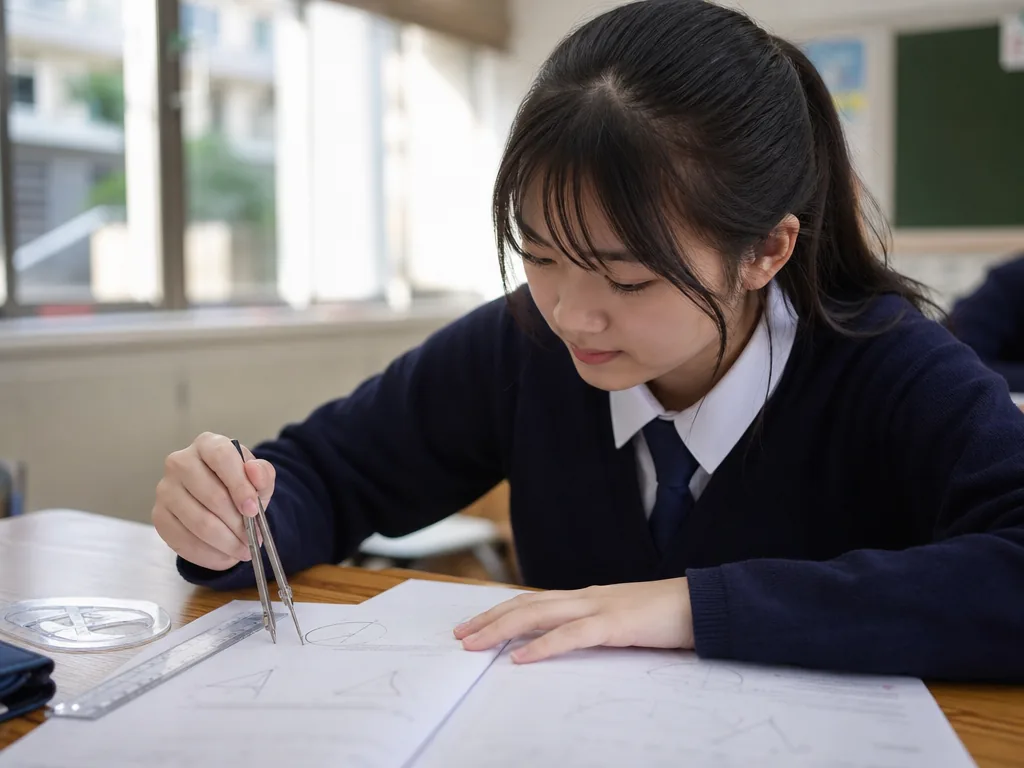
The mathematics curriculum for Junior Secondary school in Hong Kong is part of the broader Secondary School Curriculum and is structured to lay a solid foundation for students’ mathematical understanding and problem-solving skills. It is designed for students in the 7th to 9th grades, typically ranging from ages 12 to 15.
The curriculum aims to nurture students’ interest and understanding of mathematics by emphasizing practical problem-solving, logical thinking, and mathematical reasoning. It also incorporates real-world applications to ensure that students see the relevance of what they are learning.
Key Features of the Curriculum
- Comprehensive Coverage——The curriculum covers a broad range of topics, including:
- Number and Algebra: Basic arithmetic, algebraic expressions, equations, inequalities, and sequences.
- Geometry: Understanding of shapes, properties, measurement, area, volume, and spatial reasoning.
- Data Handling: Data collection, interpretation, representation, and basic probability.
- Functions and Relations: Exploring relationships between variables, graph plotting, and basic function types.
- Mathematical Problem Solving: Applying mathematical concepts to solve real-life problems.
- Emphasis on Mathematical Thinking——Rather than focusing solely on rote memorization, the curriculum emphasizes logical thinking and problem-solving strategies. It encourages students to work through problems systematically, explore multiple solutions, and understand the reasoning behind mathematical principles.
- Real-World Applications——The curriculum integrates practical applications, such as calculating the cost of items, working with statistics, and applying geometric concepts in architecture and design. This helps students relate what they learn in the classroom to everyday life.
- Continuous Assessment——Throughout the three years of Junior Secondary school, students are assessed through regular tests, quizzes, assignments, and projects. These assessments are designed to evaluate their understanding and application of mathematical concepts.
- Use of Technology——In recent years, technology has become an integral part of the mathematics curriculum. Tools like graphing calculators, computer software, and online resources are used to help students explore more complex mathematical concepts and improve their computational skills.
Structure and Breakdown of Topics
Let’s break down the key topics you can expect in the Junior Secondary Mathematics curriculum.
Grade 7 (Form 1) – Building the Foundation
At this level, students are introduced to more advanced concepts that expand upon the basic arithmetic learned in primary school.
- Numbers——Students review whole numbers, decimals, fractions, and percentages.
- Algebra——Introduction to algebraic expressions, simple linear equations, and basic manipulation of algebraic terms.
- Geometry——Basic concepts of geometry, including angles, triangles, and quadrilaterals.
- Measurement——Learning about units of measurement, perimeter, area, and volume of basic shapes.
- Data and Statistics——Introduction to data collection, simple graphs, and averages (mean, median, and mode).
Grade 8 (Form 2) – Deepening Knowledge
At this stage, students start to delve deeper into the different branches of mathematics, applying previous knowledge to more complex problems.
- Advanced Algebra——Working with linear equations, inequalities, and systems of equations.
- Geometry——More detailed exploration of 2D and 3D shapes, including circles, angles in polygons, and properties of triangles.
- Statistics——Understanding frequency tables, bar charts, histograms, and more advanced averages.
- Probability——Basic concepts of probability and how to calculate simple probabilities.
- Functions and Graphs——Introduction to the concept of functions and plotting graphs of linear equations.
Grade 9 (Form 3) – Mastering Core Concepts
In the final year of Junior Secondary school, students work towards mastering the key concepts that will prepare them for Senior Secondary education.
- Algebra——Further study of quadratic equations, polynomials, and more complex algebraic manipulation.
- Geometry——In-depth study of geometric theorems, properties of circles, and coordinate geometry.
- Advanced Statistics and Probability——Further work on probability theory, more complex data analysis, and interpretation.
- Mathematical Proof——Students are introduced to the concept of mathematical proofs, learning to justify solutions with logical reasoning.
- Preparation for Senior Secondary——The curriculum starts to align more closely with the Senior Secondary level, particularly in areas like algebra and geometry.
Assessment and Examination
In Hong Kong, mathematics is assessed regularly throughout the Junior Secondary years. The end-of-year assessments play a significant role in determining a student’s overall grade. The Hong Kong Diploma of Secondary Education (HKDSE) examination at the end of Senior Secondary school is where students’ mathematical proficiency will be thoroughly tested, but the Junior Secondary years are pivotal in laying the groundwork.
Assessments typically consist of:
- Written Examinations——These focus on testing students’ knowledge and understanding of mathematical concepts.
- Projects and Assignments——Some schools use projects to assess problem-solving skills and real-world applications.
- Class Participation and Regular Tests——Continuous assessments help teachers gauge student progress.
Challenges and Tips for Success
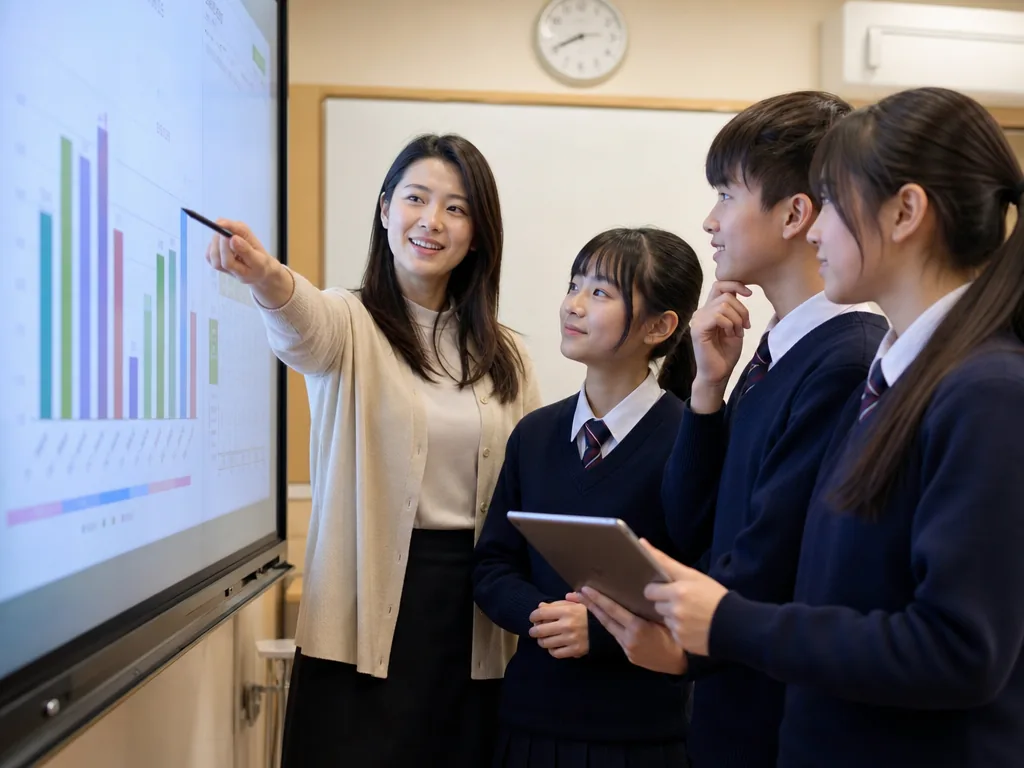
While the Hong Kong Junior Secondary Mathematics curriculum is highly structured, it can be quite demanding for students, especially those who find mathematics difficult. However, with the right mindset and strategies, students can excel.
Common Challenges
- Abstract Concepts——Some students may struggle with abstract mathematical concepts, especially when transitioning from basic arithmetic to algebra and geometry.
- Pacing——The curriculum can move quickly, and students may need to keep up with a large amount of material.
- Pressure to Perform——The competitive nature of the Hong Kong education system can create added stress, especially when students are aiming for high marks.
Tips for Success
- Practice Regularly——Mathematics is a subject that improves with consistent practice. Solve problems regularly to reinforce concepts.
- Ask for Help——Don’t hesitate to ask teachers or tutors for help when concepts are unclear. Group study sessions can also be effective.
- Stay Organized——Keep track of assignments, tests, and key concepts. Being organized helps reduce stress and ensures you don’t fall behind.
- Use Online Resources——There are plenty of online platforms, tutorials, and apps that can help explain tricky mathematical concepts in a more digestible way.
Frequently Asked Questions (FAQ)
Q: What age group does the Junior Secondary Mathematics curriculum cover?
The curriculum is designed for students in the 7th to 9th grades, typically aged 12 to 15, covering the three years of Junior Secondary school (Forms 1–3).
Q: What are the main topic areas covered?
The curriculum spans Number and Algebra, Geometry, Data Handling, Functions and Relations, and Mathematical Problem Solving, with a growing emphasis on statistics, probability, and mathematical proof as students advance.
Q: How is mathematics assessed during the Junior Secondary years?
Students are assessed continuously through written examinations, projects and assignments, and class participation and regular tests. These assessments help teachers track progress and feed into end-of-year grades.
Q: How can parents help their child succeed in mathematics?
Encourage regular practice, help them stay organized with assignments and key concepts, and make use of online resources and tutors when concepts become unclear.
Further Resources & Next Steps
- Official Resources——The Education Bureau’s mathematics curriculum guides and the HKDSE subject information are the authoritative references for what students will face in Senior Secondary.
- Further Reading——Look for textbooks and revision guides aligned to the Hong Kong Junior Secondary syllabus, particularly for algebra, geometry, and statistics.
- Parent Tips——Build a steady practice routine at home, celebrate small wins, and connect abstract topics to everyday situations such as shopping, budgeting, and design.
Note: The information above is for reference only. Please consult professional education institutions for details.
This article was initially drafted and organised with AI. Editor / Professor Chan Kwok-wai; Managing Editor / Kong Yee-leung
Act Now: Find a Tutor / Register as a Tutor
For parents & students: looking for a home or online tutor for this subject? Click the button below to post a free tuition case (subject, level and preferred time) — TutorZone will match you with suitable tutors:
For tutors: do you teach this subject? Click the button below to register for free and receive more suitable cases — you pay only when a match is made: