 Chinese (Traditional)
 Chinese (Simplified)
 English

Primary Mathematics Curriculum at Hong Kong International Schools: What Do Students Learn?
@keyframes tzPulseO { 0%,100% { box-shadow: 0 0 0 0 rgba(255,140,0,.55); transform: scale(1); } 50% { box-shadow: 0 0 0 14px rgba(255,140,0,0); transform: scale(1.04); } }
@keyframes tzPulseN { 0%,100% { box-shadow: 0 0 0 0 rgba(2,30,64,.5); transform: scale(1); } 50% { box-shadow: 0 0 0 12px rgba(2,30,64,0); transform: scale(1.04); } }
.tz-blink-o { animation: tzPulseO 1.6s ease-in-out infinite; }
.tz-blink-n { animation: tzPulseN 1.6s ease-in-out infinite .35s; }
TUTORZONE SUBJECT GUIDE · Primary Mathematics Curriculum
From number sense and the four basic operations to geometry, data handling and logical reasoning, the primary mathematics curriculum at Hong Kong’s international schools is comprehensive and progressive. Here is a clear walk-through of what students learn at each stage, and why it matters.
Direct Answer:What topics are covered in the primary mathematics curriculum at Hong Kong international schools?
Primary mathematics covers number sense, the four basic operations, geometry, data handling, and logical reasoning in a progressive curriculum.
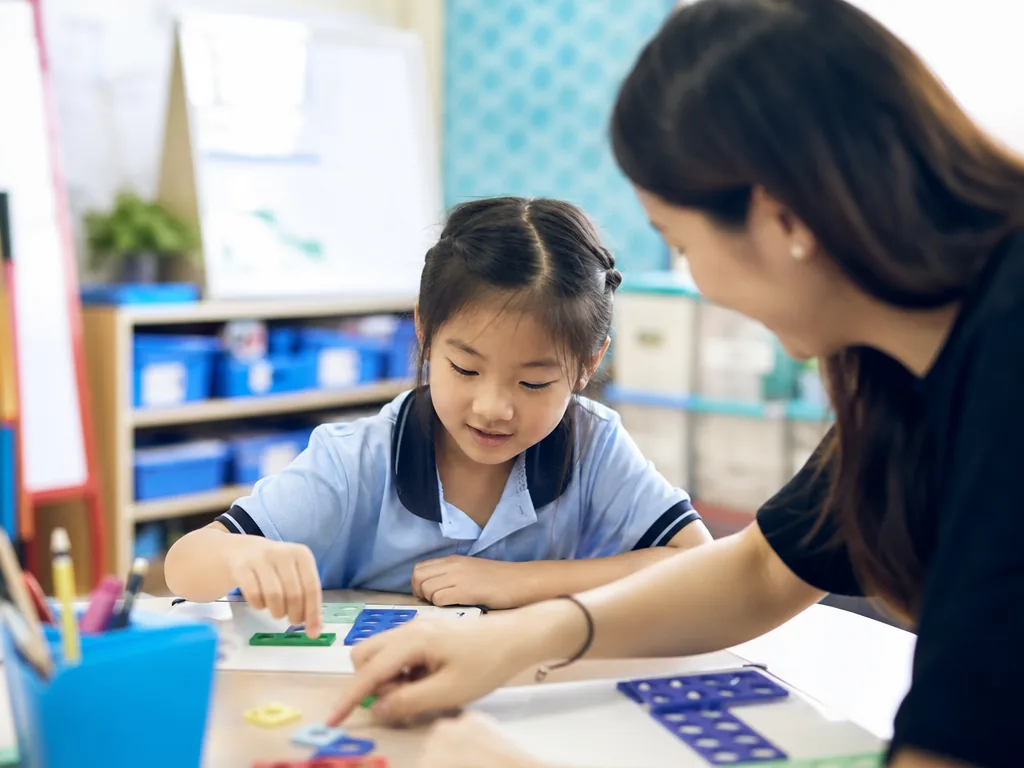
Primary Mathematics Curriculum: Building Strong Foundations: From Simple Concepts to Complex Thinking
The mathematics curriculum at most international schools in Hong Kong starts with basic number concepts and gradually introduces more complex techniques and knowledge, helping students build a solid mathematical foundation.
Numbers and Basic Operations
Young learners begin by recognizing numbers and mastering basic operations such as addition, subtraction, multiplication, and division. These fundamental skills form the core of mathematical understanding.
Comparing and Ordering Numbers
Students also learn to compare number values and arrange them in ascending or descending order—skills that are critical when advancing to higher-level math.
Operations and Techniques: Developing Computational Fluency
As students move through the grades, they are introduced to a wider range of operations and problem-solving techniques that sharpen their logical thinking and help them tackle more complex problems.
Multiplication and Division
Beyond addition and subtraction, students learn multiplication tables, division strategies, and mental math techniques that lay the groundwork for more advanced mathematics.
Fractions and Decimals
Upper primary students work with fractions and decimals, developing an understanding of proportions and applying their knowledge to real-world scenarios such as cooking, budgeting, or calculating discounts.
Geometry and Spatial Awareness: Exploring Shapes and Structures
Geometry is a key component of mathematics education that develops students’ spatial reasoning and logical thinking skills.
2D Shapes and Properties
Students learn about basic geometric shapes such as triangles, squares, circles, and rectangles. They explore properties like angles, lengths, and symmetry, and learn to calculate area and perimeter.
3D Shapes and Measurement
As they progress, students study three-dimensional shapes like cubes, cylinders, and rectangular prisms. They learn to calculate surface area and volume, and understand spatial relationships between objects.
Measurement and Data Handling: Practical Skills for Real Life
Measurement and data analysis are crucial skills emphasized in the primary curriculum, equipping students to engage with everyday mathematical applications.
Units of Measurement
Students practice measuring length, mass, volume, and time using standard units (e.g., centimeters, kilograms, liters, minutes) and learn how to convert between them.
Graphs and Data Interpretation
Learners collect, organize, and display data using charts such as bar graphs, line graphs, and tables. They also develop basic skills in interpreting and analyzing this information, which is essential for understanding statistics in everyday life.
Problem-Solving and Logical Thinking: Mathematics Beyond Numbers
Mathematics is more than just calculation—it’s a way of thinking. At international schools, students are encouraged to use math as a tool for solving problems and developing critical and creative thinking.
Word Problems
Students are taught to translate real-life situations into mathematical problems and apply appropriate operations to solve them. For example, calculating shopping totals or planning a travel itinerary.
Logic Puzzles and Reasoning
Teachers introduce logic-based questions that require reasoning beyond arithmetic. These activities help students develop clear, structured thought processes and improve their problem-solving strategies.
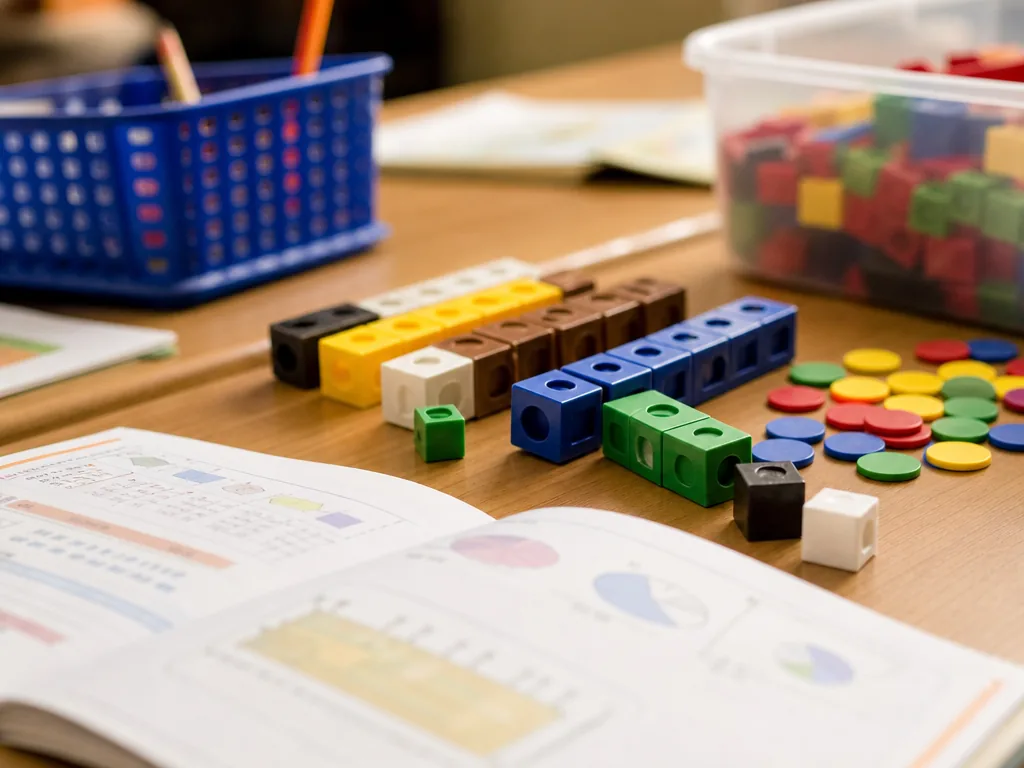
Math Games and Activities: Making Learning Fun and Engaging
To keep students motivated, many international schools in Hong Kong incorporate games and hands-on activities into math lessons, making learning both challenging and enjoyable.
Math Competitions
Schools often hold math contests covering speed calculations, logic problems, and shape puzzles. These events encourage students to apply their knowledge in fun and competitive settings.
Hands-On Projects
Activities like building geometric models or using manipulatives help students understand abstract concepts through practical experience.
Interdisciplinary Connections: Integrating Math Across Subjects
Interdisciplinary learning is highly valued in Hong Kong international schools, and math is frequently integrated with other subjects like science, technology, art, and even social studies.
Math and Science
Students use math in scientific experiments—for example, calculating speed, force, or energy. This reinforces the idea that math is a powerful tool for understanding the natural world.
Math in Everyday Life
Real-world applications are emphasized. Whether it’s budgeting for a class project, measuring ingredients for a recipe, or planning time for activities, students learn to see math as an essential life skill.
Conclusion: A Comprehensive and Progressive Curriculum
In summary, the primary mathematics curriculum at international schools in Hong Kong is both comprehensive and progressive. It equips students with essential numeracy skills, fosters logical thinking, and emphasizes the practical applications of mathematics in everyday life. From basic operations and geometry to problem-solving and data analysis, students develop the confidence and ability to apply math meaningfully.
If you’re looking for a well-rounded and engaging mathematics education that balances academic rigor with creativity and real-world relevance, the primary math programs at Hong Kong’s international schools are an excellent choice for your child.
Frequently Asked Questions (FAQ)
Q: What does the primary maths curriculum at Hong Kong international schools actually cover?
It spans number concepts and the four basic operations, multiplication and division, fractions and decimals, 2D and 3D geometry, measurement, data handling and graphs, plus problem-solving, logic and interdisciplinary applications — building from simple foundations to more complex thinking across the primary years.
Q: How is the teaching approach different from a traditional local-school maths programme?
International schools typically balance academic rigor with hands-on learning — math games, competitions, manipulatives and real-world projects — and place strong emphasis on reasoning, problem-solving and cross-subject application rather than rote calculation alone.
Q: How can parents support maths learning at home?
Practical, low-pressure activities help a great deal: cooking to explore fractions and measurement, shopping to practise budgeting and totals, and simple games or puzzles that build number fluency and logic in everyday situations.
Q: What should I look for when choosing an international primary school for maths?
Look for a curriculum that is progressive and comprehensive, with a clear progression from operations through geometry and data, an emphasis on problem-solving, and visible links between maths and other subjects such as science, technology and art.
Further Resources & Next Steps
- Official Resources — the school’s chosen curriculum framework (such as the IB Primary Years Programme or Cambridge Primary) publishes detailed maths learning objectives and progression documents for each grade.
- Further Reading — Mathematics Explained for Primary Teachers by Derek Haylock is a widely used reference for understanding how primary maths is taught.
- Parent Tips — keep practice playful: use shopping, cooking and board games to reinforce number sense, measurement and logic without turning maths into a chore.
Note: The information above is for reference only. Please consult professional education institutions for details.
This article was initially drafted and organised with AI. Editor / Professor Chan Kwok-wai; Managing Editor / Kong Yee-leung
Act Now: Find a Tutor / Register as a Tutor
For parents & students: looking for a home or online tutor for this subject? Click the button below to post a free tuition case (subject, level and preferred time) — TutorZone will match you with suitable tutors:
For tutors: do you teach this subject? Click the button below to register for free and receive more suitable cases — you pay only when a match is made: